Huawei Retaliates Against TikTok Sanctions
Starting January 1 Next Year, Punishment for Displaying the Five-Star Red Flag Upside Down
[Asia Economy Beijing=Special Correspondent Jo Young-shin] The Standing Committee of the National People's Congress (NPC) of China has passed an export control law that allows sanctions against companies or individuals threatening China's national security, according to the state-run People's Daily on the 18th.
The NPC Standing Committee passed the export control law at the 22nd session, which concluded the day before, and the law will take effect from December 1, the People's Daily reported.
The export control law prohibits Chinese authorities from exporting items that threaten national security to third countries.
Both Chinese companies and foreign companies, as well as individuals, are subject to sanctions.
The items subject to sanctions include ▲ items related to the design, development, and production of weapons of mass destruction and their delivery systems ▲ items intended for terrorist use such as nuclear weapons and biochemical weapons.
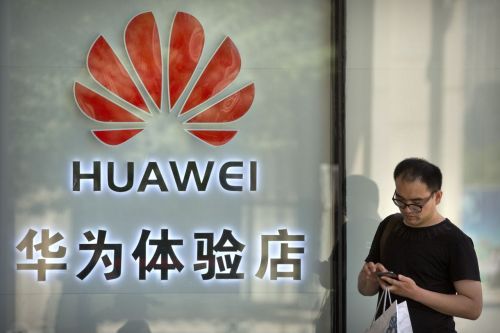
Although most of the sanctioned items are military-related, since most advanced technologies are related to military technology, general companies may also be subject to sanctions.
Foreign companies are equally subject to the relevant laws, so if they are placed on the sanctions list, they may suffer direct damage.
It appears that China passed the export control law in response to the U.S. sanctions on Chinese companies such as Huawei and TikTok, citing national security reasons. The dominant analysis is that China has established a legal basis to counter various U.S. sanctions on Chinese companies.
The Chinese Ministry of Commerce announced regulations related to the creation of a "list of unreliable companies" on the 20th of last month.
A source in Beijing explained, "In the ongoing and intensifying U.S.-China conflict, China's passage of the export control law seems to be aimed at creating a (legal) basis to retaliate against U.S. sanctions," adding, "Korean companies could also suffer direct damage if they fall under the sanctions."
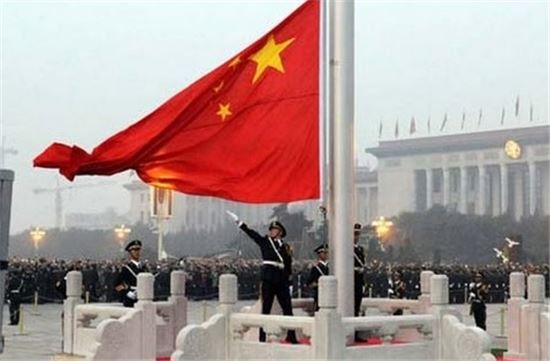
Meanwhile, the NPC passed amendments to the National Flag Law and the National Emblem Law. Accordingly, anyone who holds the Chinese national flag (Five-star Red Flag) upside down or disposes of it arbitrarily will be punished.
Also, the Five-star Red Flag must be mandatorily displayed at government offices and mass cultural facilities in Hong Kong and Macau. These amendments will apply to China, Hong Kong, and Macau starting January 1 of next year.
© The Asia Business Daily(www.asiae.co.kr). All rights reserved.
![User Who Sold Erroneously Deposited Bitcoins to Repay Debt and Fund Entertainment... What Did the Supreme Court Decide in 2021? [Legal Issue Check]](https://cwcontent.asiae.co.kr/asiaresize/183/2026020910431234020_1770601391.png)















