As of late September, Wando-gun's total population is 50,065... a decrease of 624 compared to December 2019
With an average monthly decrease of 69 since January, population expected to fall below 50,000 by late October
Population decline in
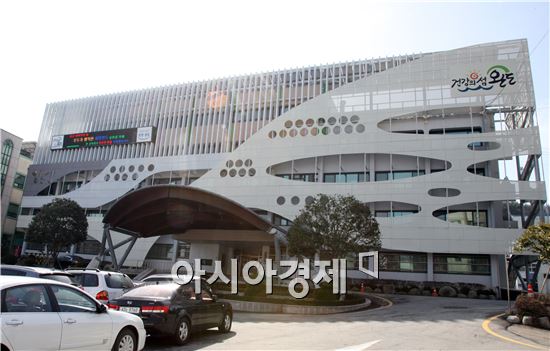 Wando County Office
[Wando=Asia Economy Honam Reporting Headquarters Reporter Choi Kyung-pil] The population of Wando-gun is on the verge of falling below 50,000. As of the end of September, the total population of Wando-gun was 50,065. This is a decrease of 624 compared to December 2019. If the trend of decreasing by an average of 69 people per month from January to September this year continues, the population is expected to fall below 50,000 by the end of this month. This means that after the population fell below 60,000 in 2005, it will fall below 50,000 for the first time in 15 years.
According to the Wando-gun Statistical Yearbook and the Wando-gun Chronicle (published in 2010), the population peaked at 146,743 in 1974, then continuously decreased from 141,074 in 1975, reaching 50,065 in 2020, a total decrease of 124,230 over 80 years. In 1940, the population of Wando was 62,488.
First of all, the fact that population decline is a nationwide trend makes the population decline countermeasures in Wando-gun even more challenging. As of September, the national population was 51,841,786, a decrease of 8,075 compared to the end of 2019. In Jeonnam Province, the population was 1,851,124, a decrease of 17,621 compared to the end of 2019.
The causes of population decline in Wando can be divided into natural population decrease due to aging and social population decrease due to migration. This year, Wando-gun's population decreased by 624, with 305 due to natural causes (births and deaths) and 327 due to social causes (in-migration and out-migration).
According to Wando-gun, reasons related to education and occupation played a major role in the social population decrease caused by migration. As of the end of September, 41 people moved into Wando for educational reasons, while 197 moved out, resulting in 156 more people leaving. Next is occupational reasons, with 1,174 people moving in compared to 1,283 moving out, meaning 109 more people left Wando.
By age group, compared to the end of 2019, those aged 80 and over increased by 279, while those in their 30s decreased by 350. Following that, the 60s decreased by 265 and the 50s by 242, indicating that the 30s experienced the largest population decrease due to education and occupational reasons.
By eup and myeon (town and township), the largest population decrease was in Wando-eup, which has the largest population, with a decrease of 250 compared to the previous year-end, followed by Gogeum-myeon with a decrease of 70. Nohwa-eup decreased by 60, Gunoe and Sinji-myeon both decreased by 52, Yaksan-myeon by 46, Geumil-eup by 37, Soan-myeon by 30, Bogil-myeon by 11, Cheongsan-myeon by 10, Saengil-myeon by 5, and Geumdang-myeon by 1.
© The Asia Business Daily(www.asiae.co.kr). All rights reserved.
















