76.5% of Office Workers "Experience Emotional Labor at Work"
9 out of 10 "Try Not to Show Emotions While Working"
Experts Warn "Exposure to Emotional Labor Situations Can Cause Serious Physical Issues"
[Asia Economy Reporter Kim Suwan] "It's a daily routine to watch my boss's mood at work."
Kim Mo (29), a third-year office worker, complained that he is suffering from emotional labor while working at his company. Kim said, "In fact, most office workers probably experience emotional labor. But in my case, it seems to be more severe. When I arrive at work in the morning, the start of my job is to check how my boss is feeling," adding, "When he is in a bad mood, I have to force myself to make jokes or buy coffee and do all sorts of flattery. Also, I have to accept unfair work orders with a smile." He continued, "I know it's wrong, but it seems unavoidable for the sake of team atmosphere," and lamented, "I've been living like this for three years now, so I've become numb to it, but hiding my emotions and being stressed every day is really exhausting."
Recently, the number of office workers who feel they are suffering from emotional labor has been increasing. Emotional labor is mainly known to be experienced in service and sales jobs dealing with customers, but it has been found that ordinary office workers also suffer silently without showing their emotions. Most of them have no choice but to act regardless of their own feelings, such as accommodating their superiors or colleagues or enduring unfair orders, causing significant psychological distress.
Emotional labor involves managing emotions to produce facial expressions or gestures visible to many people. It refers to performing emotions considered desirable within an organization and has recently become prominent among the millennial generation entering society.
The millennial generation refers to those born between 1980 and 2000, who are proficient in information technology using the internet and have clear self-assertion. Based on these characteristics, they tend to be negative toward the traditional rigid company management style and sometimes clash with their companies.
According to a recent perception survey on 'emotional labor' among office workers conducted by market research firm Embrain Trend Monitor targeting 1,000 male and female office workers aged 19 to 59, 76.5% of respondents answered that they "often perform emotional labor at work." By age group, the results were △20s 74.8%, △30s 80.8%, △40s 79.2%, and △50s 71.2%. This indicates that younger workers in their 20s and 30s are more vulnerable to emotional labor.
Consequently, the emotions these workers feel during their work life tend to be mostly negative. The most frequently felt emotion was "frustration" (38.7%, multiple responses allowed), followed by "irritation" (36.4%) and "boredom" (36.3%), which were also commonly experienced emotions.
Furthermore, the biggest cause of emotional labor was the proportion of work/tasks (40.4%), followed by issues with people (33.6%) and organizational life (23.8%). The people causing emotional labor were most often direct supervisors (52.6%, multiple responses allowed), followed by general customers (34.7%) and seniors within the team/department (33.7%).
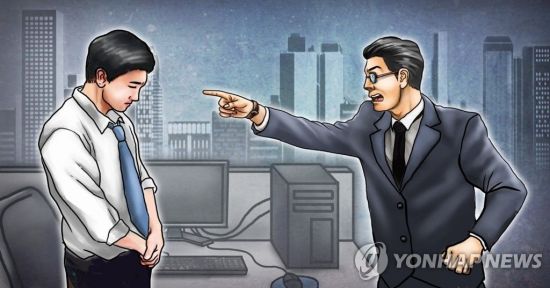
Meanwhile, office workers in their 20s and 30s usually try not to show these negative emotions. In the previous survey, 9 out of 10 respondents thought it was necessary to make an effort not to show emotions while working. They feel that since the company clearly separates work and personal matters, they should restrain their expressions.
The main reason for the need to suppress emotions was that it could potentially cause a big problem (30.5%, multiple responses allowed), followed by concerns that it might harm their work (30.3%), not wanting to ruin the atmosphere (25.5%), and fear of disadvantages (25%), which led them to perform emotional labor.
Given this situation, office workers suffering from emotional labor experience not only fatigue and anxiety but also depression. Last year, a mental health research team at Korea University College of Medicine revealed that workers who experienced high emotional labor had a higher incidence of depression.
According to the research team's findings, 18.5% of workers who experienced emotional labor suffered from depression, whereas only 10.4% of workers who did not experience emotional labor developed depression. This shows that emotional labor significantly contributes to the onset of depression among workers.
Experts pointed out that exposure to emotional labor situations can cause serious physical problems.
Yoon Seoyoung, director of the Emotional Labor Solution Research Institute, explained in a 2018 presentation on "Measurement of Emotional Labor and Psychological Aftereffects in Contact Centers" that emotional labor is "a conflict between external norms assigning a social role and the free, undamaged internal self," and that "the main source causing emotional labor for emotional laborers was their supervisors rather than customers."
She added, "In emotional labor situations, the stress hormone cortisol is secreted, which strongly affects the body and can cause symptoms such as anxiety, depression, shame, and post-traumatic stress disorder."
© The Asia Business Daily(www.asiae.co.kr). All rights reserved.


















