Number of Elderly Living Alone Increases by About 70,000 Annually
4170 Elderly Living Alone Without Spouse or Children Found Dead Alone in Last 5 Years
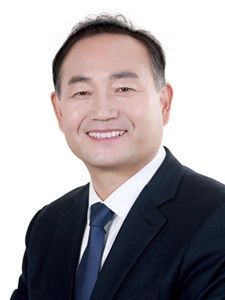 Won-i Kim, Member of the National Assembly (The Democratic Party of Korea, Mokpo-si, Jeollanam-do)
[Asia Economy Honam Reporting Headquarters Reporter Seo Young-seo] The relative poverty rate of elderly people aged 65 and over in South Korea was 45.7% as of 2018, which is much higher than the OECD average of 12.9%. The so-called ‘elderly solitary death,’ where elderly people die alone in loneliness, is increasing every year, indicating the need for effective government measures specialized for elderly living alone.
According to an analysis of data submitted by the Ministry of Health and Welfare to Kim Won-i, a member of the National Assembly from the Democratic Party of Korea (Mokpo City, Jeonnam), the number of elderly people aged 65 and over living alone in South Korea this year totaled 1,589,371, an increase of 24.6% compared to 2016.
The number of elderly living alone, which was 1,275,316 in 2016, rapidly increased to 1,346,677 in 2017, 1,430,748 in 2018, 1,500,413 in 2019, and 1,589,371 in 2020. This means an average annual increase of about 70,000 people.
By the 17 metropolitan cities and provinces nationwide, the number of elderly living alone was found to be highest in the Seoul metropolitan area, proportional to the total population. Over the past five years, the region with the largest elderly living alone population was Gyeonggi with 1,211,362 people, followed by Seoul with 1,088,766. Outside the metropolitan area, Gyeongbuk (600,752) and Gyeongnam (590,114) had many elderly living alone.
Due to rapid aging and the collapse of family structures, the number of single-person households has increased. The number of unclaimed deaths, also known as solitary deaths, where individuals die alone without family or relatives to conduct funerals, has also rapidly increased. Over the past five years, the total number of unclaimed deaths of people who died alone was 9,734.
Among all age groups, solitary deaths were most common among elderly people aged 65 and over living alone without spouses or children. The number of elderly unclaimed deaths over five years totaled 4,170, accounting for 42.8% of the total. The number of elderly unclaimed deaths increased by 55.8% from 2016 to 2019.
By year, the numbers were 735 in 2016, 835 in 2017, 1,067 in 2018, and 1,145 in 2019, with 388 recorded up to June 2020. By gender, there were 2,736 males and 1,434 females, with 1,302 more males than females.
Assemblyman Kim Won-i said, “Although the ‘Act on Prevention and Management of Solitary Deaths (Solitary Death Prevention Act)’ passed the National Assembly plenary session in March, the law will be enforced on April 1 next year, and there are no official statistics on solitary deaths among elderly living alone yet, so the number is still estimated based on unclaimed deaths.” He added, “This figure reflects only a part of all solitary deaths, and the actual number of solitary deaths among elderly living alone is believed to be higher.”
He continued, “The Ministry of Health and Welfare needs to establish practical national-level social safety measures to guarantee the safety of elderly living alone, who are in blind spots amid the prolonged COVID-19 situation, and to prevent elderly solitary deaths.”
© The Asia Business Daily(www.asiae.co.kr). All rights reserved.
![User Who Sold Erroneously Deposited Bitcoins to Repay Debt and Fund Entertainment... What Did the Supreme Court Decide in 2021? [Legal Issue Check]](https://cwcontent.asiae.co.kr/asiaresize/183/2026020910431234020_1770601391.png)















