More Than Half of Pregnant Women "Not Receiving Consideration from Others"
Extreme Conflicts Escalate Over Pregnant Women Discrimination
Some Citizens Complain, "Stop Forcing Consideration"
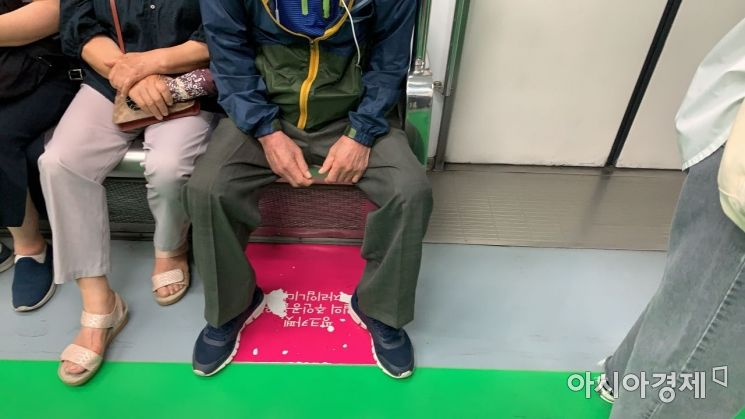 An elderly man is sitting in the pregnant women’s seat on Seoul Subway Line 2. The photo is unrelated to specific expressions in the article. Photo by Seulgi Kim, intern reporter sabiduriakim@asiae.co.kr
[Asia Economy Reporter Han Seung-gon] "Isn't giving up the seat for pregnant women a choice?", "You can show some consideration."
On the occasion of Pregnant Women's Day on the 10th, conflicts surrounding seats reserved for pregnant women persist. These seats are designated for pregnant women on public transportation such as buses and subways, but since they are not fixed seats, anyone can sit there, leading to disputes with some passengers who do not give up their seats.
According to one survey, more than half of pregnant women answered that they have never received consideration from others in their daily lives.
On the 8th, the Ministry of Health and Welfare reported that according to an online survey conducted by the Korea Population, Health and Welfare Association in celebration of 'Pregnant Women's Day,' 54.1% of pregnant women responded that they 'did not receive consideration.'
The survey was conducted online from the 14th to the 23rd of last month, targeting a total of 3,000 people, including 1,500 pregnant women and 1,500 general public members through the Pregnancy and Childcare Comprehensive Website.
When asked why they thought they did not receive consideration, 54.3% of respondents answered, "Because my belly is not showing, so it is not obvious that I am pregnant."
Regarding the types of consideration pregnant women received, more than half (59.9%) said household chores such as cleaning, laundry, and meals were shared. Additionally, 46.5% said they were offered seats on public transportation such as subways and buses.
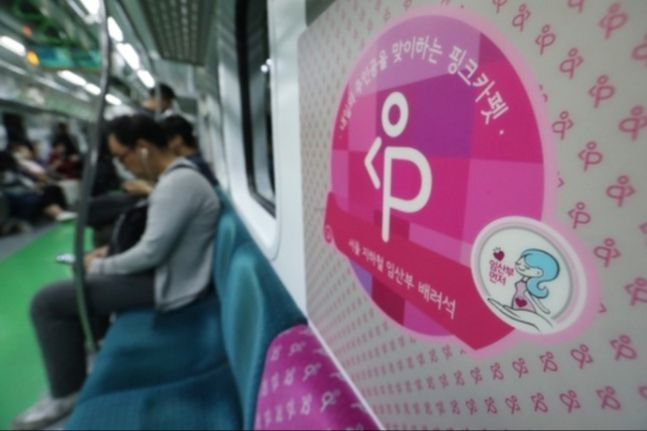
Opinions among citizens about giving up seats for pregnant women are divided. Kim, a man in his 30s who said he commutes using public transportation daily, said, "I think consideration for pregnant women’s seats is common sense," adding, "I don't think you necessarily have to sit in that seat." He continued, "Even if you are sitting there, you can immediately give up the seat when a pregnant woman appears."
On the other hand, there are opposing views. Some argue that consideration is a personal choice and should not be forced. Another office worker in his 30s, Lee, criticized, "Seats for pregnant women are about giving up seats through 'consideration,' but society seems to be forcing too much consideration." He added, "The person sitting there might also be unwell," and said, "I honestly feel that people are being too judgmental."
Given this situation, conflicts surrounding seats for pregnant women are not uncommon. According to Seoul Metro, the number of complaints related to seats for pregnant women reached 27,589 in 2018, averaging 75 complaints per day.
Also, it was found that 4 out of 10 subway users have sat in seats reserved for pregnant women.
In a survey conducted last June targeting 6,179 citizens using Seoul Subway Lines 1 to 8 (4,977 general public, 1,202 pregnant women), 39.49% of non-pregnant respondents reported having sat in seats reserved for pregnant women.
Among the reasons for sitting in these seats despite not being pregnant, the most common was "because the seat was empty" at 54.64%, followed by "because it is a considerate seat, not mandatory" (26.68%), and "because others were also sitting there" (8.9%).
When asked what they did if a pregnant woman was present while sitting in a considerate seat, the responses were: "I give up the seat if I know she is pregnant" (54.66%), "I give up the seat even if I don't know she is pregnant" (39.50%), and "I don't give up the seat because I don't know she is pregnant" (3.49%).
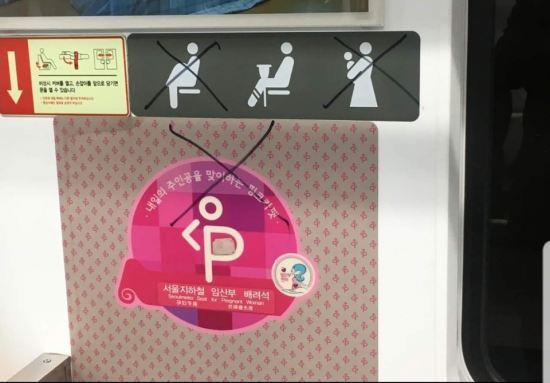 On February 17 last year, graffiti in the shape of an 'X' was found on a priority seat for pregnant women on Seoul Subway Line 4. Photo by Facebook page capture
Conflicts surrounding seats for pregnant women have also led to hate incidents. On the night of February 17 last year, around 11 p.m., graffiti in the shape of an 'X' was found on the emblem above a seat reserved for pregnant women in a subway car on Line 4.
This photo spread through online communities, sparking debates about seats for pregnant women. One SNS account posted photos with the caption, "Subway Line 4 taken today. Every car was like this. #PregnantWomenHate."
Netizens pointed out that this graffiti represented misogyny and hatred toward pregnant women. Comments included, "This is misogyny and hatred of the vulnerable," and "Looking for someone who wasn’t born from a pregnant woman’s belly."
Experts analyzed that a system to consider pregnant women is necessary. Professor Gu Jung-woo of the Department of Sociology at Sungkyunkwan University said, "There seems to be conflict over seats for pregnant women because there is no clear notice that these seats must be kept vacant," adding, "Rather than making it so that only pregnant women can use these seats, a flexible system is needed that allows other people who are uncomfortable in certain situations to also sit there."
© The Asia Business Daily(www.asiae.co.kr). All rights reserved.



















