Soup Base Determines Ramen Flavor: Top Concern and Core Technology for Ramen Producers
Nongshim's No.1 Secret 'Soup Technology'... Paldo Bibimmyeon Popularity Factor 'Liquid Soup'
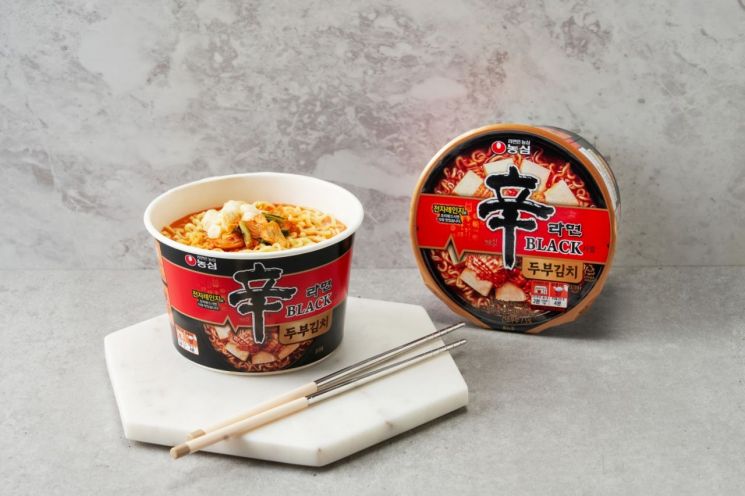
[Asia Economy Reporter Lee Seon-ae] Leading domestic ramen companies such as Nongshim, Samyang Foods, and Paldo continuously focus on soup base and noodle technologies to enhance the taste of ramen.
The Secret to Deep Flavor, the Magical Powder ‘Soup Base’
According to industry sources on the 9th, the taste of ramen is mostly determined by the soup base. There are about 50 different raw materials used to make the soup base for one pack of ramen.
Nongshim explained, “The soup base is made by gathering raw ingredients, boiling them thoroughly to make broth, then drying it into powder or liquid form, mixing them in the right proportions, and sealing it. How to preserve the original taste and aroma of all ingredients during this process is arguably the most important technology in the ramen industry.”
The beginning of soup base production is similar to how soup is made at home. Fresh vegetables and meats are placed in water and heated for a long time. Just as when cooking soup at home, the pot lid is closed to retain flavor and aroma, the raw materials for ramen soup base are simmered in a sealed container. However, the drying technology that follows is even more important. The key is how to remove moisture from the broth that has absorbed the flavors and aromas of various ingredients.
In the past, moisture was removed using hot air drying (AD) like dried noodles. However, this method had the drawback of losing some of the original aroma of the ingredients along with the air. The solution was vacuum drying (VD). When broth is placed in vacuum equipment, water begins to boil at temperatures lower than 100 degrees Celsius. This allows moisture to evaporate quickly at relatively low temperatures, preserving the flavor well.
The powdered soup base, where moisture has evaporated and flavor components are concentrated in powder form, has a moisture content below 8%. At this level, it can be sealed and stored at room temperature for 12 months without adding preservatives. This is longer than the 6-month shelf life of ramen itself. There is no need for preservatives because microorganisms such as bacteria and mold that spoil food find it difficult to grow below about 15% moisture content (water activity 0.8).
The reason Nongshim has established itself as the unrivaled number one company is also due to its soup base technology. Nongshim established the ‘Anseong Factory,’ a specialized soup base production facility, in 1982, and after a revolutionary improvement in soup base quality, it solidified its position as the top company with products like ‘Neoguri’ (1982), ‘Yukgaejang Sabalmyeon’ (1982), ‘Anseongtangmyeon’ (1983), ‘Jjapagetti’ (1984), and ‘Shin Ramyun’ (1986).
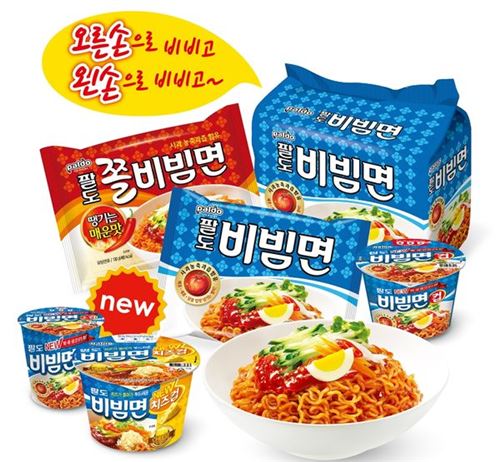
The popularity of Paldo Bibimmyeon is also due to its liquid soup base. A Paldo representative explained, “Unlike powdered soup base, which requires moisture removal from raw materials, liquid soup base is made by extracting essences, which preserves the original taste and aroma of the ingredients, but requires advanced know-how in the manufacturing process. Paldo benefited from the fermentation and microbial engineering technologies of Korea Yakult, which Paldo was part of at the time (Paldo spun off from Korea Yakult in 2012).” Paldo also annually improves the taste to maintain the original flavor of the ‘original bibim ramen’ in line with changing consumer preferences. In 2017, it applied Sunchang chili paste to enhance umami and spiciness, and recently has been using whole sesame seeds and sesame oil to add a nutty flavor.
The Reason for the Curly Shape
How is the curly shape of ramen noodles made? It is a simple principle using speed differences: if the conveyor belt receiving the noodles moves slower than the speed at which the noodles are extruded, the straight noodles become curly due to congestion.
The curly shape of ramen noodles has several advantages. First, it cooks quickly and tastes better. Curly noodles have a larger surface area exposed to heat, so they cook well. Also, the curly shape separates each strand of noodle, increasing heat and moisture penetration. Therefore, curly noodles absorb the soup flavor more evenly and cook faster than straight noodles.
Next is volume reduction. Curly noodles allow a meal portion to fit into a smaller package all at once. This is similar to how the small intestine, which is 6 to 7 meters long, is folded and curled inside the human body. Making ramen curly reduces volume and space, improving storage and distribution efficiency. For reference, if the noodle strand of one ramen is stretched out, it reaches about 50 meters in length.
Finally, the curly shape helps prevent breakage during distribution. Thin, straight noodles break easily with even slight impact. Even the hardest solid has differences in elasticity between straight and curly shapes. Elasticity is an indicator of how an object returns to its original shape and size after an external force is removed.
Nongshim explained, “It’s easy to understand if you think of knitted fabric: knitted fabric with curly patterns has much higher elasticity than woven fabric with vertical and horizontal crossings. Similarly, the curly shape of ramen slightly increases elasticity, and another advantage is that curly noodles are easier to pick up with chopsticks.”
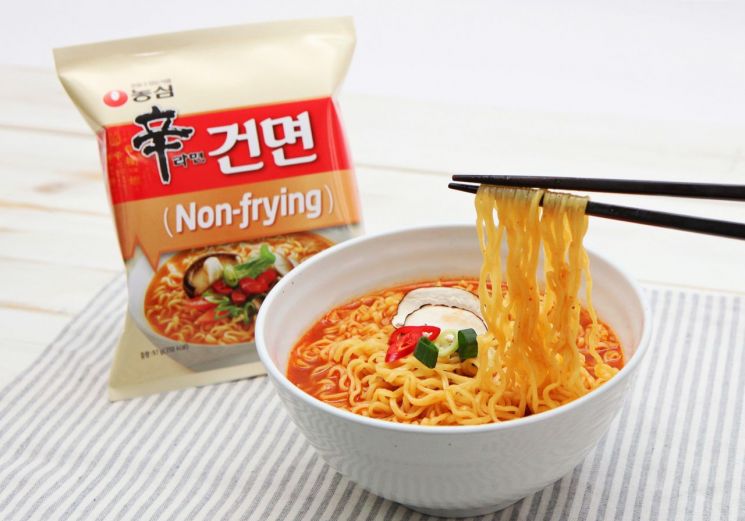
The domestic ramen noodle market has diversified with the introduction of refrigerated noodles, frozen noodles, fresh noodles, and recently, non-fried dried noodles. Shin Ramyun Non-fried Noodles is a strategic product developed by applying Nongshim’s dried noodle technology to the flagship product Shin Ramyun, and it gained tremendous popularity immediately after its release in early February last year.
To achieve a perfect combination of Shin Ramyun’s taste and the quality of dried noodles, Nongshim’s research center invested over two years in developing Shin Ramyun Non-fried Noodles. Since it involved reconstructing Korea’s representative ramen, all aspects of ramen development?noodles, soup base, seasoning packets, and packaging?were researched together from the initial planning stage. The project was named ‘Shin Ramyun Light,’ focusing on capturing both Shin Ramyun’s flavor and the clean taste of dried noodles. During this process, the soup base was newly adjusted to maintain Shin Ramyun’s original broth flavor, as changing the noodle properties alters the broth taste. Nongshim reconfigured the best combination of minced seasonings such as chili, garlic, and pepper with beef extract to create a unique beef stock for Shin Ramyun Non-fried Noodles. Additionally, shiitake mushrooms, a key to Shin Ramyun’s umami, were enhanced to improve flavor harmony. The deep flavor of Shin Ramyun was completed with seasoned oil.
Nongshim stated, “Shin Ramyun Non-fried Noodles are cleaner, lighter, and chewier because they are not fried in oil. To address the potential mismatch between noodles and broth compared to fried noodles, we separately added vegetable seasoned oil made by stir-frying onions and chili to enhance the broth’s taste and aroma.”
© The Asia Business Daily(www.asiae.co.kr). All rights reserved.


















