Kimchi-Making Cost for a Family of Four 437,770 Won
Packaged Kimchi Purchases Increase by Over 20%
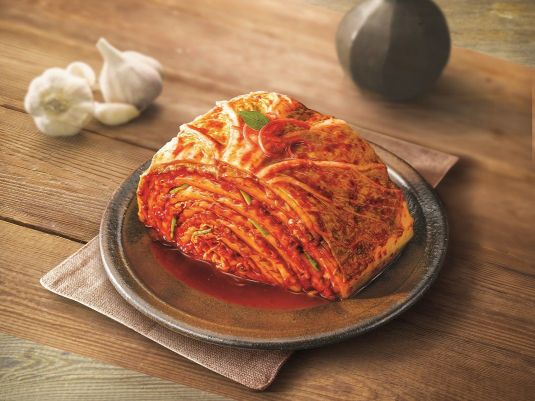
[Asia Economy Reporters Hye-seon Lim and Seung-jin Lee] Kang Seon-ok (61), a housewife living in Mapo-gu, Seoul, sighs whenever she thinks about making kimchi for the winter. With the price of one head of napa cabbage exceeding 10,000 won, the burden of making kimchi as in previous years has grown significantly. Kang said, "I used to make kimchi every year for my son and daughter’s families who both work, but this year I just can’t bring myself to do it," adding, "I think I will have to either make small amounts of kimchi as the seasons change or just buy it."
Due to the prolonged rainy season and the aftermath of typhoons, vegetable prices have surged sharply, making buying packaged kimchi cheaper than making it at home this year.
On the 6th, the Korea Agro-Fisheries & Food Trade Corporation (aT) analyzed the cost of making kimchi for a family of four last year and recent prices, revealing that the cost of making kimchi with 20 heads of napa cabbage this year is 437,770 won, which is more than 50.0% higher compared to the same period last year (291,899 won).
With typhoons continuing until late summer, poor growth and lower-than-average shipments caused prices to rise. The item with the steepest price increase was napa cabbage. The corporation explained, "Due to weak prices for highland napa cabbage last year, some regions switched crops, reducing cultivation area, and heavy rains caused crop damage, resulting in production dropping by more than 40,000 tons compared to last year." As of the 5th, the price of one head of napa cabbage was 11,657 won. Last year, 20 heads cost 125,819 won, but this year, purchasing the same amount costs nearly double at 233,140 won. Following napa cabbage, prices also rose for radish (39.0%), peeled garlic (45.0%), green onions (40.0%), scallions (59.0%), ginger (48.0%), and red pepper powder (17.0%). Including side ingredients such as apples, pears, and oysters, the total cost exceeds 500,000 won.
Packaged kimchi raised prices slightly this year due to increased costs but remained cheaper than making kimchi at home. Daesang increased the price of Jongga’s ‘Siwon Kkalkkeum Poggi Kimchi (3.3 kg)’ by 5.7% to 29,500 won, and CJ CheilJedang raised the price of ‘Bibigo Poggi Napa Cabbage Kimchi (3.3 kg)’ by 3% to 29,800 won. At large supermarkets, the price for Daesang Jongga and CJ Bibigo poggi kimchi (3.3 kg) is 26,800 won. Each 3.3 kg contains about 1.5 heads of napa cabbage. Buying 20 heads as packaged kimchi would cost 357,320 won. Even the Joseon Hotel poggi kimchi sold by Peacock is priced at 9,980 won per 1 kg, making hotel kimchi cheaper than homemade kimchi. Given this situation, sales of poggi kimchi are increasing. The food industry explained, "Demand for purchasing kimchi has increased by more than 20% compared to last year," adding, "Raw material costs have risen so much that selling kimchi is not profitable, and with reduced vegetable shipments, even securing kimchi supply is difficult."
© The Asia Business Daily(www.asiae.co.kr). All rights reserved.

















