Payment of 'Amount Equivalent to Livelihood Benefit for Single-Person Households (520,000 KRW/month, 12.5 million KRW total)' to 300 people monthly for 2 years, analysis of effects such as relationship changes... Characterized by continuous (24 months), fair (unconditional, universal, no income distinction), and bold payment (520,000 KRW) to youth... Basic income recipients are youth aged 24-29, unconditionally selected regardless of income, considering that the most common age to find the first job is 26-28 for men and 23-25 for women.
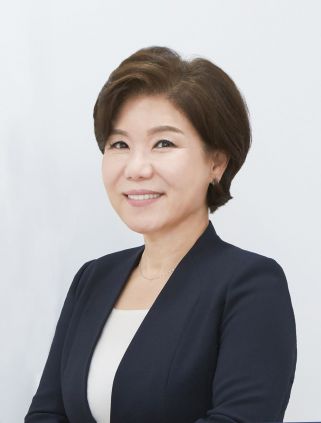
[Asia Economy Reporter Park Jong-il] Amid heated debates over the introduction of basic income in our society, Seocho-gu, Seoul (Mayor Cho Eun-hee) is conducting the nation’s first "social policy experiment for the introduction of youth basic income."
This is a preliminary experiment to verify the policy effects before the full-scale implementation of youth basic income. Seocho-gu announced on the 6th that, based on a research project conducted since June, it has completed the basic design of the "Youth Basic Income Social Policy Experiment" and submitted the related ordinance amendment to the district council.
If the ordinance, which serves as the legal basis for the policy experiment, is passed, the full implementation will begin next year.
Currently, there is no case in Korea where the introduction and effects of basic income policies have been systematically verified in advance through scientific evaluation.
This policy experiment by Seocho-gu is the first case in Korea to conduct systematic verification of a basic income policy, which requires enormous financial resources, at the frontline. It serves a role similar to a "preliminary feasibility study" in social policy by preventing budget waste and trial and error through prior effect analysis.
Moreover, it is expected to bring a paradigm shift in youth policy by leading scientific discussions instead of futile debates on basic income and by presenting feasible and sustainable implementation plans.
◇Key Details of the Youth Basic Income Policy Experiment
The social policy experiment to be implemented by Seocho-gu from 2021 will be conducted by dividing participants into a study group and a comparison group. Through mutual analysis between the two groups, the experiment plans to comprehensively verify the effects of youth basic income on employment, lifestyle, psychology, and more.
First, Seocho-gu will recruit 1,000 youths aged 24 to 29 who have lived in Seocho-gu for over a year through the Seocho-gu Office website. These participants will be divided into two groups: 300 selected as the study group will receive a monthly payment equivalent to the living allowance for single-person households (520,000 KRW per month based on 2020) for two years, while 700 in the comparison group will receive no support.
Over two years, regular online surveys and in-depth interviews will be conducted to investigate job-seeking activities, health and diet, marriage and childbirth, and social perceptions and attitudes. This will scientifically analyze and comprehensively evaluate the impact of youth basic income on the lives of young people. Notably, the experiment will provide public access to the changes during the experiment period through Korea’s first basic income monitoring app.
◇Why Conduct the Policy Experiment Targeting Youth?
Seocho-gu prioritizes conducting the basic income experiment on youth because they are the most vulnerable group living unstable lives amid the COVID-19 crisis. Economically vulnerable groups in our society include the elderly, children, youth by age, and women by gender. While the elderly and children receive support similar to basic income, such as old-age pensions and child allowances, youth have been left out of these welfare supports, creating a blind spot in the existing welfare system.
Amid severe employment difficulties, the youth of this era, often called the "N-po generation," are frustrated as even short-term part-time jobs have disappeared due to COVID-19. The youth perceived unemployment rate of 26.8%, the highest ever recorded, clearly illustrates this. Seocho-gu’s policy experiment aims to verify whether "youth basic income" can serve as a catalyst to invigorate and offer hope to the youth, who are the future driving force of Korea.
◇Characteristics of Seocho-gu’s Social Policy Experiment Design
This project by Seocho-gu is characterized by providing continuous (24 months), fair (unconditional, universal, no income distinction), and bold payments (520,000 KRW).
First, the basic income recipients are youths aged 24 to 29, selected unconditionally regardless of income status, considering that the most common age for finding a first job is 26-28 for men and 23-25 for women.
Second, the basic income amount is set at the level of the living allowance for a single-person household (520,000 KRW per month based on 2020). Basic income should support stable job-seeking activities and provide economic stability, thus it must be at least the minimum living cost. Seocho-gu’s support amount is significantly increased compared to Gyeonggi-do’s youth basic income of 1 million KRW per year and Seoul’s youth allowance of 3 million KRW over six months.
Third, the payment period is set at two years, considering that basic income affects individual life patterns over a long term, similar to Finland’s two-year basic income experiment.
This attempt by Seocho-gu is based on a practical spirit that large-scale social policies like "youth basic income" must undergo scientific verification at the frontline before full implementation. Just as the government conducts preliminary feasibility studies before large-scale development projects, even well-intended policies must be based on scientific evidence to reduce budget waste and trial and error.
Furthermore, the enormous financial resources required for policy implementation come from taxpayers’ hard-earned money, and once implemented, it is difficult to reverse, making thorough prior verification essential.
Seocho-gu plans to carry out this project with an annual budget of about 2.2 billion KRW, saved through reductions in routine projects, various event expenses, and consumptive administrative costs.
◇Scientific Pre-verification by Seocho-gu Compared to ‘Gyeonggi-do Youth Basic Income’
Seocho-gu’s scientific approach contrasts sharply with Gyeonggi-do’s youth basic income policy. Gyeonggi-do has been implementing a "partial youth basic income policy" that provides 250,000 KRW quarterly, totaling 1 million KRW annually, only to 24-year-olds. This has been criticized as a large-scale investment project costing about 150 billion KRW annually, executed solely by the highest decision-maker’s directive without a preliminary feasibility study.
In contrast, Seocho-gu’s youth basic income social policy experiment is designed and promoted based on expert research, securing scientific and objective empirical data, and will decide on full or partial policy expansion based on this evidence, distinguishing it from Gyeonggi-do’s approach.
◇Preparation Process and Future Plans
In June, when youth unemployment surged due to the prolonged COVID-19 pandemic, Seocho-gu commissioned a research project to the Basic Income Center of the Korean Presidential Studies Institute (Director: Professor Lee Sam-yeol of Yonsei University). Based on the report submitted in September, Seocho-gu developed the basic design of the policy experiment.
Professor Lee Sam-yeol explained, "The short-term goals of Seocho-gu’s experiment are to determine whether youth basic income supports stable job-seeking and successful employment, helps restore life balance, and provides psychological stability. The mid- to long-term goals are to see if it alleviates social structural polarization and increases marriage and birth rates."
Professor Lee Seung-yoon of Chung-Ang University, who will participate as an advisor, said, "Whether youths have no income or belong to the middle class, continuously accumulating data on their concerns and life changes over two years is expected to yield meaningful results regardless of whether youth basic income is implemented."
Starting October 15, Seocho-gu plans to hold two policy forums and briefing sessions within this year for the youth basic income social policy experiment, gathering broad opinions from residents, experts, and various sectors including youth. If other local governments or civic groups interested in youth issues wish to participate, the experiment will be conducted as an "open policy experiment" allowing joint discussions.
Additionally, Seocho-gu will establish a "Social Policy Experiment Steering Committee" composed of experts to conduct the experiment more systematically and scientifically. The committee will review details such as the number of recipients and payment amounts, comprehensively analyze effects, side effects, and policy improvements, and build a social consensus base on whether to introduce or expand "youth basic income."
Seocho-gu Council members Heo Eun (Democratic Party) and Choi Won-jun (People Power Party) jointly proposed the "Partial Amendment to the Seocho-gu Youth Basic Ordinance" on the 18th of last month, and the legislative notice was completed on the 23rd (supported by 7 members: 5 from the Democratic Party, 1 from the People Power Party, and 1 independent). However, some council members raised concerns about the large number of experiment participants and excessive budget, leading the executive branch to submit a revised ordinance reflecting these issues to the council on the 29th.
Seocho-gu Mayor Cho Eun-hee said, "These days, even short-term part-time jobs have disappeared due to COVID-19, causing suffering among youth. I want to wipe away their tears," adding, "It is urgent to provide a fair ladder of opportunity to young people struggling to enter society."
She also stated, "We must establish a sustainable 'youth basic income' policy based on scientific verification rather than guesswork to enhance effectiveness and sustainability," and added, "I hope this will become an opportunity to change the paradigm of social policy by encouraging other local governments and civic groups to join the experiment and jointly verify its effects and side effects."
© The Asia Business Daily(www.asiae.co.kr). All rights reserved.
![User Who Sold Erroneously Deposited Bitcoins to Repay Debt and Fund Entertainment... What Did the Supreme Court Decide in 2021? [Legal Issue Check]](https://cwcontent.asiae.co.kr/asiaresize/183/2026020910431234020_1770601391.png)
















