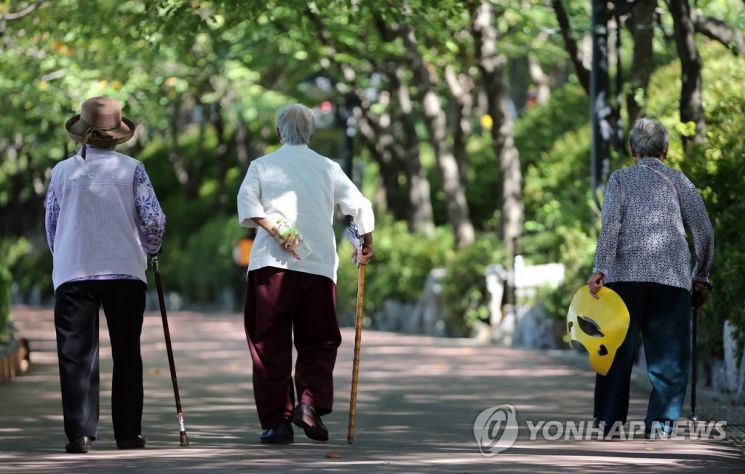
[Asia Economy Reporter Choi Eun-young] Recently, news of the lonely death of an elderly person living alone surfaced ahead of Chuseok, revealing that the number of elderly living alone in South Korea is increasing every year, along with the rate of lonely deaths among those aged 65 and older.
On the 29th, a man in his 60s living alone, Mr. A, was found dead in Gwangju Metropolitan City just before the Chuseok holiday.
The Gwangju Nambu Police Station responded to a neighbor's report of a foul odor coming from a house in Yangnim-dong, Nam-gu, Gwangju, and discovered Mr. A's body. It is estimated that Mr. A had been deceased for about 1 to 2 weeks.
It is known that Mr. A had been living alone after separating from his wife over 20 years ago and cutting off contact with his family. The police are investigating the exact cause of death, suspecting that Mr. A died from a chronic illness.
Meanwhile, as the number of elderly living alone increases every year, the number of lonely deaths among those aged 65 and older has also risen.
According to data received by Rep. Lee Jong-sung of the People Power Party from the Ministry of Health and Welfare on the 1st, the number of elderly living alone recorded up to August this year was 1,589,371, a 25% increase from 1,275,316 in 2016. The number of elderly living alone has shown a trend of increasing by about 5-6% annually since 2016.
Along with this, lonely deaths have also increased. Lonely death refers to cases where there are no surviving family members or the family refuses to claim the body, resulting in the local government of the area where the death occurred handling the unclaimed body, known as 'unclaimed body disposal.'
Last year, lonely deaths among those aged 65 and older reached about 2,500. This figure represents an increase of approximately 40% compared to three years ago.
Rep. Lee stated, "As the number of elderly living alone increases and old-age poverty overlaps, lonely deaths among those aged 65 and older have increased by about 1.6 times in three years," adding, "As we are expected to enter a super-aged society, it is necessary to thoroughly manage and ensure that no one falls through the cracks of the welfare system and fails to receive proper assistance."
© The Asia Business Daily(www.asiae.co.kr). All rights reserved.

















