Housing Complaints Surge to 50,442 from January to July
Disputes and Conflicts Rise with Each Measure... 30,000 Cases in July
House Prices Still Rising... Seoul Average 1 Billion Won
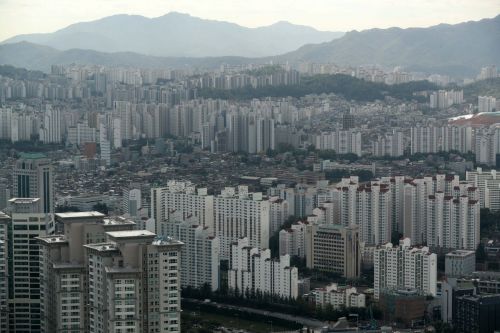
[Asia Economy Reporter Moon Jae-won] Since the launch of the Moon Jae-in administration, complaints related to housing policies have more than doubled. This is interpreted as a result of increased conflicts and disputes due to the government's introduction and strengthening of various regulations to curb soaring housing prices.
However, despite the government's successive policies, housing prices in Seoul and other metropolitan areas continue to show an upward trend. The average apartment sale price in Seoul exceeded 1 billion KRW for the first time this month, and the jeonse (long-term deposit lease) prices have also surpassed 500 million KRW and continue to rise.
On the 30th, data submitted by the Ministry of Land, Infrastructure and Transport (MOLIT) to Song Eon-seok, a member of the National Assembly Land, Infrastructure and Transport Committee from the People Power Party, showed that complaints related to housing policies received by MOLIT increased from 17,333 cases in 2017, when the current government took office, to 50,442 cases from January to July this year.
Although the full year has not yet passed this year, complaints have already increased more than 2.9 times compared to the entire year of 2017. According to MOLIT data, housing policy complaints slightly decreased from 16,325 cases in 2015 to 13,663 cases in 2016, then increased by 26.9% to 17,333 cases in 2017.
Since then, the number of complaints has shown an increasing trend every year, with 24,869 cases (43.5%) in 2018 and 29,424 cases (18.3%) last year.
In particular, since monthly complaint statistics began to be compiled last year, it has been confirmed that the number of housing policy complaints significantly increased in the month when the government announced real estate measures or the following month.
After the June 17 measures, which added new speculative overheated districts and strengthened mortgage loan regulations, complaints increased more than 3.4 times from 2,030 cases to 7,049 cases within one month. In July this year, when the July 10 measures including an increase in comprehensive real estate tax rates were announced, a staggering 31,893 complaints were received, 4.5 times more than the previous month.
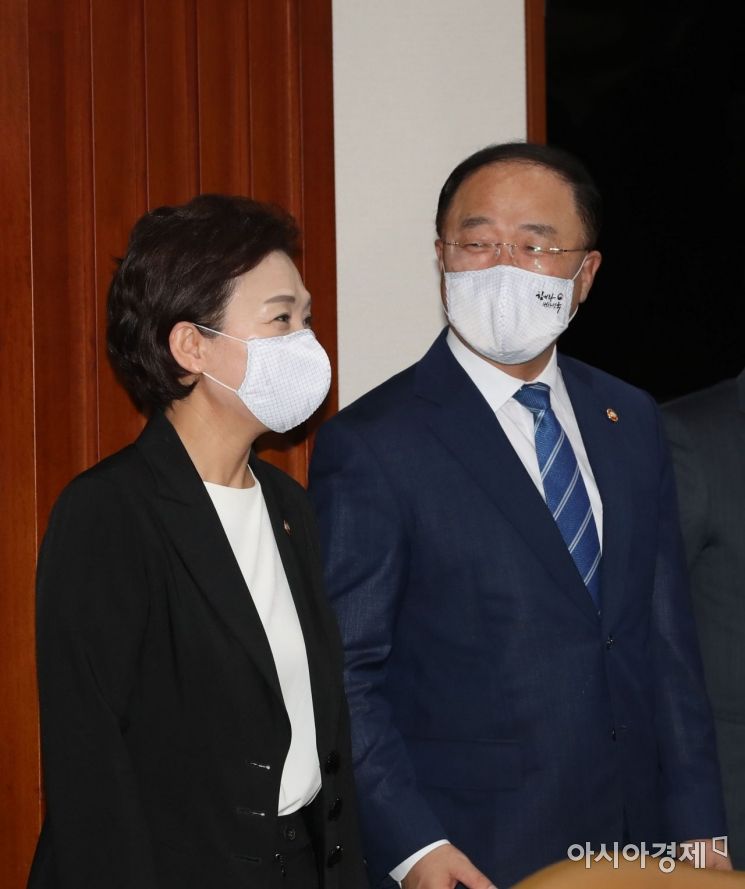 Deputy Prime Minister for Economy Hong Nam-ki (right) and Minister of Land, Infrastructure and Transport Kim Hyun-mi (left) are talking with attendees at the 2nd Real Estate Market Inspection Ministers' Meeting held on the morning of the 12th of last month at the Government Seoul Office in Jongno-gu, Seoul.
In fact, there is strong opposition to the government's successive real estate measures both online and offline. A representative example is the abolition of the registered rental housing system. The Ministry of Land, Infrastructure and Transport decided to effectively abolish the registered rental housing system through the 'Supplementary Measures for Housing Market Stabilization' announced on July 10.
Since the government actively promoted this system by announcing measures to revitalize rental housing registration as recently as December 2017, complaints surged among rental business operators whose investment plans were disrupted, accusing the government of flipping policies like turning over a hand.
Conflicts surrounding the 'two lease laws'?the contract renewal request system and the rent ceiling system?which have been in effect since the end of July, are also intensifying. Although these laws aim to protect tenants' rights, insufficient discussion before implementation has led to increased opposition among landlords, resulting in more disputes.
The problem is that despite these policy side effects, housing prices remain unstable. According to the monthly KB Housing Price Trend data from KB Kookmin Bank's real estate platform LiveOn, the average apartment sale price in Seoul in September reached 1,003,120,000 KRW, surpassing 1 billion KRW for the first time.
The average apartment sale price per 3.3㎡ in Gangnam-gu, where high-priced complexes are concentrated, exceeded 70 million KRW for the first time, reaching 70.85 million KRW. The median price, which represents the middle value when housing sale prices are arranged in order, was recorded at 920,170,000 KRW. Although it has slightly declined since reaching 927,870,000 KRW in July, it has risen by about 270 million KRW over two years compared to the price in September 2017 (650,290,000 KRW).
Assemblyman Song said, "The government should stop imposing policies that torment the people and switch to reasonable policies."
© The Asia Business Daily(www.asiae.co.kr). All rights reserved.


















