Statistics Korea, August Industrial Activity Trends
Total Industrial Production Down 0.9% MoM... Production Declines in Manufacturing, Services, and Construction
Manufacturing Average Operating Rate at 69.6%, Down 0.5%p MoM
Retail Sales Index Up 3.0% MoM... Increased Sales of Home Appliances and Food Products
Coincident Index Cyclical Component Up 0.4p · Leading Index Cyclical Component Up 0.6p... "Impact of Re-spread Not Reflected"
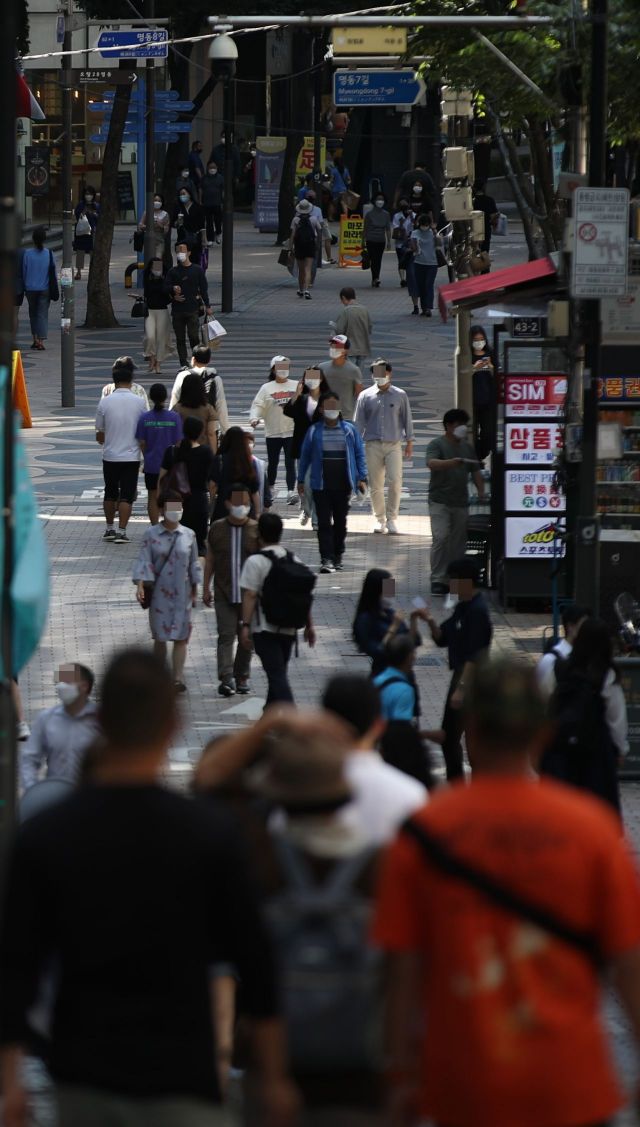
[Asia Economy Reporter Joo Sang-don] Total industrial production in August returned to a decline after three months. This was due to the impact of the re-spread of COVID-19 in mid-August. Manufacturing production decreased by 1% due to reduced exports, and service production turned to a decline for the first time in five months.
According to the 'August Industrial Activity Trends' released by Statistics Korea on the 29th, total industrial production (seasonally adjusted, excluding agriculture, forestry, and fisheries) decreased by 0.9% compared to the previous month. This is the first monthly decline in total industrial production in three months since May (-1.2%) this year. Ahn Hyung-jun, Director of Economic Trend Statistics at Statistics Korea, explained, "Industrial activity turned to a decline after three months due to the impact of the COVID-19 re-spread," adding, "Service production decreased for the first time in five months, and manufacturing also declined by 1.0% due to reduced exports."
Mining and manufacturing production decreased by 0.7% month-on-month, despite increases in electricity and gas industries. In particular, manufacturing production declined by 1.0% compared to the previous month, with decreases in food products (-7.3%) and automobiles (-4.1%). Manufacturing shipments increased in semiconductors (4.3%) and communication and broadcasting equipment (18.7%), but decreased in automobiles (-3.9%) and food products (-5.0%), resulting in a 1.4% decline month-on-month. Domestic demand decreased more significantly. Domestic shipments fell by 1.8% and exports by 0.9% compared to the previous month. Meanwhile, manufacturing inventories increased by 2.1% month-on-month. The inventory ratio rose by 4.1 percentage points compared to the previous month. The average operating rate in manufacturing was 69.6%, down 0.5 percentage points from the previous month.
Service production increased in finance and insurance (3.7%) and health and social welfare (0.4%), but decreased in accommodation and food services (-7.9%) and wholesale and retail trade (-1.5%), resulting in a 1.0% decline month-on-month.
The retail sales index rose 3.0% compared to the previous month, with sales of durable goods such as home appliances increasing by 12.7% and non-durable goods such as food products increasing by 0.9%, although semi-durable goods like clothing decreased by 4.4%. Director Ahn explained, "There are two factors: first, a base effect as the reduction in the individual consumption tax on automobiles decreased in July, which was very weak, then increased in August. Also, the longest rainy season on record and the end of the home appliance purchase rebate program affected retail sales decline."
Investment also failed to escape a downward trend in August. Facility investment decreased by 4.4% month-on-month due to declines in machinery such as special industrial machinery (-5.8%) and transportation equipment such as ships (-0.2%). Construction performance (constant prices) also fell by 7.1% compared to the previous month, with decreases in both building (-6.5%) and civil engineering (-8.5%) works.
The coincident index cyclical component, which reflects the current economic situation, rose by 0.4 percentage points month-on-month. The leading index cyclical component, which forecasts future economic phases, also increased by 0.6 percentage points. This is because the impact of the COVID-19 re-spread was not reflected. Director Ahn said, "The survey was conducted in mid-August and based on that, so the recent re-spread was not reflected," adding, "Looking at the cyclical component figures themselves, May this year (leading index 99.4, coincident index 96.8) was the lowest point, but since then there has been a base for an upward trend, showing signs of improvement."
© The Asia Business Daily(www.asiae.co.kr). All rights reserved.
!["The Woman Who Threw Herself into the Water Clutching a Stolen Dior Bag"...A Grotesque Success Story That Shakes the Korean Psyche [Slate]](https://cwcontent.asiae.co.kr/asiaresize/183/2026021902243444107_1771435474.jpg)
















