Partial Revision Including 'Ministry of Justice Sole Supervision of Investigation Rules Enforcement Decree'... Effective January Next Year
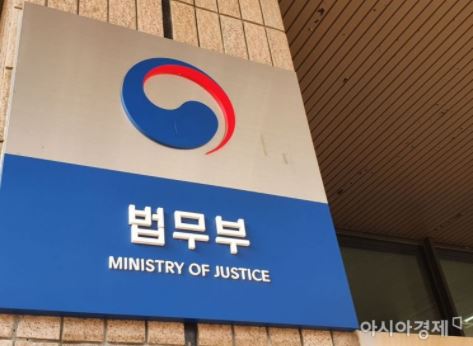
[Asia Economy Reporter Baek Kyunghwan] The enforcement decree for the adjustment of investigative authority between the prosecution and police has finally passed the Cabinet meeting. It has been eight months since the adjustment bill passed the National Assembly plenary session in January, and after the legislative notice ended on the 16th of this month, the review by the Ministry of Government Legislation and the vice-ministerial meeting proceeded smoothly. Amid strong opposition from the police, only some parts such as the 'Ministry of Justice's sole jurisdiction over the enforcement decree of investigative guidelines' and the 'scope of direct investigation initiation by prosecutors' were revised.
According to the Ministry of Justice on the 29th, the amended enforcement decrees of the Criminal Procedure Act and the Prosecutors' Office Act were passed at the Cabinet meeting that morning. The presidential decrees passed this time are subordinate laws to the amended Criminal Procedure Act and Prosecutors' Office Act for investigative authority reform. The main points include 'regulations on mutual cooperation between prosecutors and judicial police officers and general investigative guidelines,' 'regulations on the scope of crimes for prosecutors' investigation initiation,' and 'regulations on the enforcement date of partial amendments to the Prosecutors' Office Act and Criminal Procedure Act.'
First, the claim that the provision allowing prosecutors to request re-investigation of cases sent by judicial police officers should be deleted was not accepted. This was considered a necessary provision for protecting the rights and interests of the public and legal control, and the legislative notice draft was revised to clarify the requirements.
Regarding the claim that the investigative guidelines should be jointly managed by the Ministry of Justice and the Ministry of the Interior and Safety, the Ministry of Justice, which oversees the national criminal justice system, was maintained as the department in charge of the investigative guidelines. However, an additional provision was made to establish an advisory committee composed of external experts for the interpretation and revision of the investigative guidelines.
Regarding the opinion that drug import and export crimes should be excluded from the scope of prosecutors' investigation initiation, the legislative notice draft was maintained considering that only prosecutors have the authority to request controlled delivery of drugs detected during the import customs process and the need to maintain crime response capabilities by utilizing the prosecution's investigative expertise.
Previously, the enforcement decree for the adjustment of investigative authority between the prosecution and police had been criticized by both sides. The police pointed out that the enforcement decree of the Criminal Procedure Act is solely managed by the Ministry of Justice, that prosecutors can initiate investigations into drug and cyber crimes through exceptions, and that investigations by prosecutors who obtained search and seizure warrants are recognized, arguing that it goes against the purpose of prosecution reform.
About 5,000 opinions were submitted to the Public Participation Legislation Center during the 40-day legislative notice period, which was also due to this. The opinions received during this period also criticized the enforcement decree for being solely managed by the Ministry of Justice and for potentially expanding the scope of direct investigations by prosecutors. However, the prosecution also had complaints. Despite the Ministry of Justice overseeing the relevant laws, it was criticized for 'sole management by the Ministry of Justice,' the inclusion of the police's 'investigation suspension' clause, and limiting the number of prosecutors' re-investigation requests to one.
As criticism from the police, academia, and civil society continued, on the 25th, lawmakers from the Democratic Party held a closed meeting to review the enforcement decree contents and coordinate the party's position. It is known that this content was also reported to the president.
Until just before the Cabinet meeting on this day, the process of gathering and coordinating opinions among members of the ruling party's Legislation and Judiciary Committee and the Public Administration and Security Committee continued. On the 28th, it was confirmed that the possibility of bill amendments was discussed verbally and in writing, centered on the chairpersons of each standing committee.
With the enforcement decree for the adjustment of investigative authority between the prosecution and police passing the Cabinet meeting, it will now be promulgated in the official gazette after the president's approval. The enforcement will begin in January next year.
Considering that the Ministry of Justice made some revisions just before this Cabinet meeting, the possibility of additional revisions before the president's approval has practically disappeared. In fact, it is not easy to amend matters that have passed the legislative notice, Ministry of Government Legislation review, and vice-ministerial meeting almost unanimously. Creating a patchwork enforcement decree would cause considerable damage not only to the Blue House but also to Minister of Justice Choo Mi-ae, who has led the adjustment of investigative authority between the prosecution and police, and it is considered inappropriate for the ruling party to intervene again when only the president's approval remains.
A staff member of the Legislation and Judiciary Committee said, "Considering that even amid controversy, only systematic expressions were refined during the Ministry of Government Legislation review and vice-ministerial meeting without major revisions, it is unlikely that the ruling party, government, and Blue House will take on the political burden of further revising the content derived through discussions after passing the Cabinet meeting."
A Ministry of Justice official stated, "We will promptly complete the establishment of a new work system based on cooperation between the prosecution and police, as well as the enactment and revision of follow-up laws such as the Prosecutors' Case Handling Rules," and added, "Through the enforcement of the investigative authority reform laws starting January next year, we will ensure that the principle of checks and balances works properly from the public's perspective."
© The Asia Business Daily(www.asiae.co.kr). All rights reserved.

















