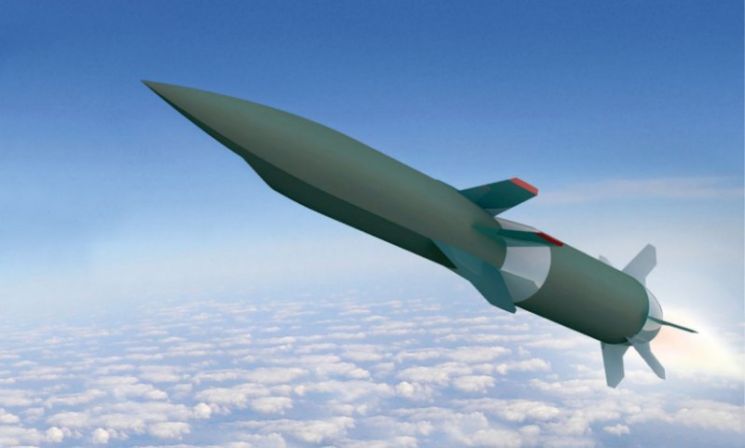
[Kim Byung-chan, Researcher of the Aviation Guidance Research Team 3, Defense Agency for Technology and Quality] The U.S. Defense Advanced Research Projects Agency (DARPA) and the U.S. Air Force (USAF) announced the successful completion of integration tests for two types of Hypersonic Air-breathing Weapon Concept (HAWC) systems.
DARPA has been advancing the production activities of HAWC prototypes under separate research contracts signed in September and October 2016 with Lockheed Martin Corporation and Raytheon Technologies, respectively.
The HAWC concept, a follow-up development to DARPA’s previously pursued integrated hypersonic weapon program, aims to provide a revolutionary capability to strike urgent or heavily defended targets from long distances.
This technology includes ▲advanced airframe structures capable of efficient flight ▲propulsion systems powered by hydrocarbon scramjets (supersonic combustion ramjets) that support sustained hypersonic cruise ▲thermal management approaches designed for high-temperature cruising ▲and cost-effective system design and manufacturing approaches.
The HAWC program, jointly pursued by DARPA and the Air Force Research Laboratory, is being utilized to develop hypersonic scramjet propulsion technology. Scramjet combustion occurs within supersonic airflow, where the engine relies on the vehicle’s high speed to forcibly compress incoming air before combustion.
Unlike ramjet engines that decelerate air to subsonic speeds before combustion, scramjet airflow maintains supersonic speeds throughout the entire engine, enabling scramjet engines to operate efficiently at extremely high speeds.
© The Asia Business Daily(www.asiae.co.kr). All rights reserved.
![Clutching a Stolen Dior Bag, Saying "I Hate Being Poor but Real"... The Grotesque Con of a "Human Knockoff" [Slate]](https://cwcontent.asiae.co.kr/asiaresize/183/2026021902243444107_1771435474.jpg)
















