North Korean Air Force Has About 810 Fighters VS Our Air Force About 410
North Korea Leads Numerically but Aircraft Are Aging and Maintenance Conditions Poor
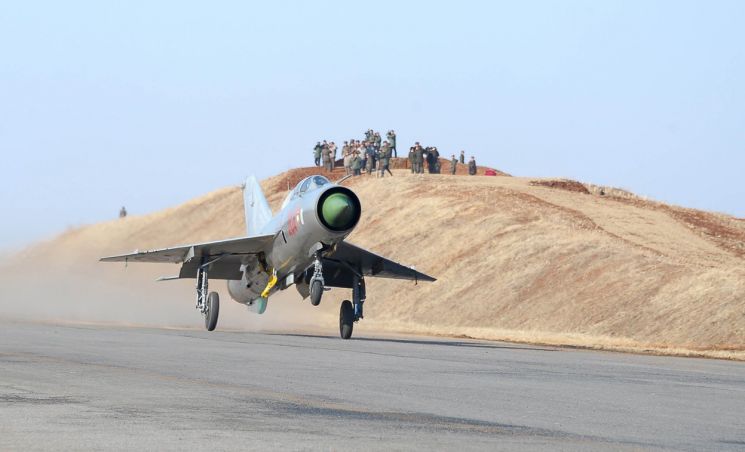
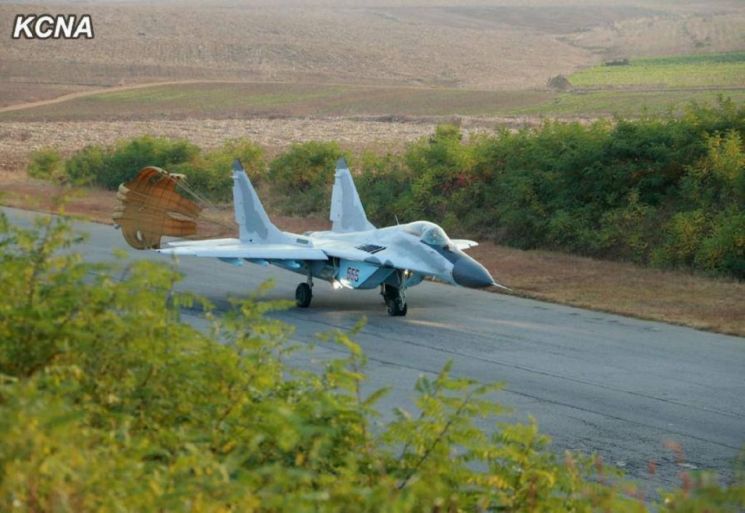
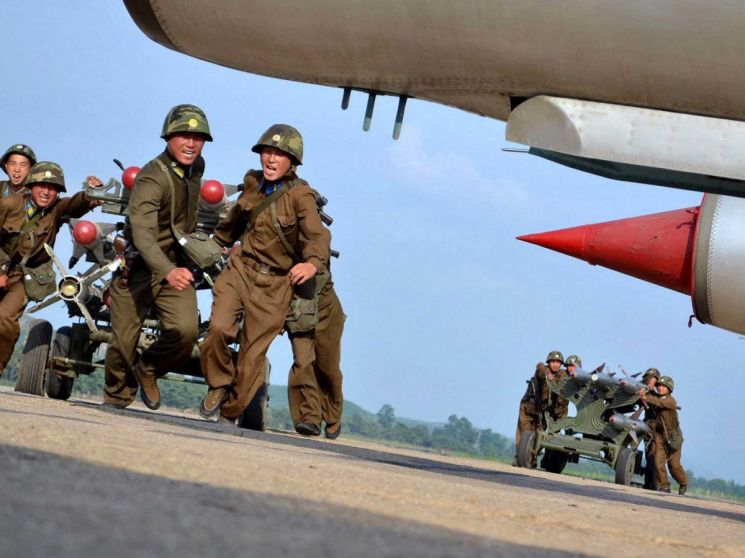
[Monthly Aviation Editor-in-Chief Kim Jae-han] Last April, Kim Jong-un, Chairman of the State Affairs Commission, inspected the Air and Anti-Aircraft Division of North Korea's western district. During the inspection, Chairman Kim emphasized the combat readiness by stating, "Our Party's reliable sky sentinels demonstrated that they are always prepared to sortie at a moment's notice upon command," and praised the efforts of the unit members. Although North Korea's current threats focus on asymmetric forces such as nuclear weapons and missiles, this highlights that air power also remains a potentially threatening factor that can be revealed at any time.
▲ Outdated North Korean Air Force Power = Learning from the lesson of being powerless against the United Nations forces' air superiority during the Korean War, North Korea devoted itself to strengthening its air force after the armistice. As a result, by the 1990s, North Korea's air force surpassed South Korea's air force both quantitatively and qualitatively. Among these, the quantitative aspect still overwhelmingly exceeds that of the South Korean Air Force. According to the <2018 Defense White Paper>, North Korea's air force has about 810 combat mission aircraft, roughly twice the approximately 410 aircraft of the South Korean Air Force, which is the most critical element in air warfare.
However, North Korea's combat mission aircraft mainly consist of old models from the former Soviet Union, including MiG-15, MiG-21, MiG-23, and MiG-29 fighters, IL-28 bombers, Su-25 attack aircraft, and Chinese-produced J-5, J-6, and J-7 fighters based on Soviet MiG-17, MiG-19, and MiG-21 designs. Except for the MiG-29, these are essentially outdated models from the Soviet era.
Along with outdated aircraft, the operating environment is also known to be poor. One major issue is fuel shortage. Testimonies from military defectors commonly state that the North Korean military struggles to operate equipment due to fuel shortages. This applies to the air force as well. Due to insufficient fuel for aircraft operation, pilots' flight hours remain low, and training relies heavily on theory and ground instruction.
▲ North Korean Air Force Still Threatening = Although North Korea's air force is assessed as outdated, it still poses certain threats. One such threat is North Korea's most modern MiG-29 fighter. While it may not be considered a significant threat compared to South Korea's F-15K, upgraded KF-16, and the currently procured F-35, the MiG-29 is still regarded as a high-performance fighter representing the former communist bloc. Additionally, North Korea possesses more than 50 MiG-23 fighters, which have performance similar to South Korea's F-4 fighters.
The IL-28 bomber is also considered a threatening asset. Although it is an old model that began operation in the 1950s, the IL-28 is equipped with radar capable of bombing targets even in poor visibility conditions and can carry chemical, biological, and nuclear bombs. Its range of approximately 2,400 km allows it to strike anywhere within South Korea. Particularly, its nuclear weapon delivery capability is evaluated as a significant threat to South Korea. The South Korean Air Force estimates that the IL-28 can carry nuclear bombs weighing 2 to 3 tons, and North Korea is believed to possess around 80 IL-28 bombers.
South Korean Air Force’s Biggest Concern: North Korea’s An-2 Aircraft
Capable of Special Forces Infiltration via Low-Speed, Low-Altitude Flight
Gliders Attached and Released for Covert Special Forces Infiltration
The An-2 aircraft, of which North Korea reportedly has about 300, is also a concern for the South Korean Air Force. This is because the An-2 can infiltrate special forces through low-speed, low-altitude flight. Particularly, the aircraft is made of wood and leather, making it difficult to detect by radar. Moreover, the An-2 can tow multiple gliders carrying special forces. Flying near the armistice line with gliders attached and then releasing them allows for even more covert infiltration of special forces.
North Korea's special forces are considered a significant threat even by South Korean military standards, with an estimated size of around 200,000 personnel. If North Korea uses the An-2 to infiltrate special forces, it would pose a major threat. In fact, North Korea has conducted infiltration and strike drills using the An-2 with Incheon International Airport as a simulated target.
Above all, North Korea's quantitative superiority in its air force itself is a threatening factor. Although most aircraft types are old and have inferior performance compared to South Korea's air force, if North Korea conducts surprise provocations early in a war using its numerical advantage, it may be difficult to respond solely with qualitative superiority.
For example, the MiG-15 and MiG-17, known to be outdated, are mainly used as trainers but are maintained with parts produced domestically in North Korea and relatively simple maintenance, resulting in a higher operational rate. This means they can be used for limited air interceptions and ground attacks in the short-depth battlefield of the Korean Peninsula. Provocations leveraging North Korea's quantitative superiority could be even more threatening.
▲ North Korea Possesses About 810 Combat Mission Aircraft = Meanwhile, according to the <2018 Defense White Paper>, North Korea's Air and Anti-Aircraft Command, the core of its air power, oversees five flying divisions, one tactical transport brigade, two air force sniper brigades, and air defense units. North Korea divides its territory into four sectors for air power deployment and possesses a total of about 1,640 air force aircraft.
Among these, about 810 are combat mission aircraft, with approximately 40% forward-deployed south of the Pyongyang-Wonsan line, enabling rapid attack readiness with minimal preparation, according to the Ministry of National Defense. Additionally, North Korea is known to possess reconnaissance and attack drones as well as light aircraft.
© The Asia Business Daily(www.asiae.co.kr). All rights reserved.



















