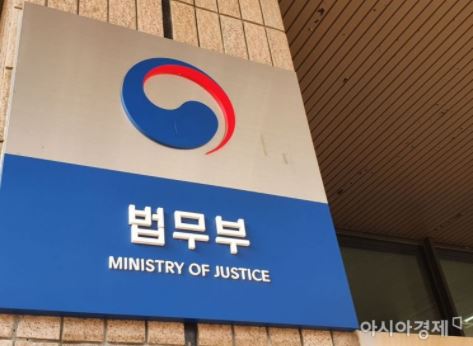
[Asia Economy Reporter Baek Kyunghwan] The Legal and Prosecutorial Reform Committee has recommended that internal regulations currently kept confidential by the Ministry of Justice and the Supreme Prosecutors' Office be disclosed according to certain standards. In cases where confidentiality is required due to constitutional fundamental rights or interests, the titles of such regulations should be made public on their websites.
On the morning of the 28th, the Reform Committee held the 50th meeting of its 2nd term and issued a recommendation titled "Disclosure and Transparency Enhancement of Confidential Regulations of the Ministry of Justice and the Supreme Prosecutors' Office," containing these provisions.
This meeting marked the final activity of the 2nd term Reform Committee under the Ministry of Justice, established following the inauguration of former Minister of Justice Cho Kuk, known as the 'No. 2 Directive,' with the main focus on issues related to the Supreme Prosecutors' Office's confidential directives and regulations.
The Reform Committee pointed out that the Ministry of Justice and the Supreme Prosecutors' Office maintain numerous directives and regulations as confidential based on arbitrary standards, undermining public trust in the prosecution. The prosecutorial organization has maintained even internal regulations directly related to constitutional fundamental rights as confidential, thereby damaging the rule of law and administrative transparency.
Currently, there are approximately 280 confidential internal regulations across all government ministries, with about 35% belonging to the Ministry of Justice and the Supreme Prosecutors' Office. Notably, the Supreme Prosecutors' Office holds nearly 30% of these confidential internal regulations.
For example, the convening of the Expert Investigation Advisory Group, as stipulated in the "Guidelines on the Operation of Consultative Bodies for Rational Decision-Making (Supreme Prosecutors' Office Regulation)," is directly related to the defendant's right to defense but remains confidential. Additionally, numerous internal regulations directly related to constitutional fundamental rights and interests, such as guidelines on handling sexual violence cases and victim protection support, operation of human rights supervisors, case assignment guidelines, and refugee recognition procedures, are also kept confidential based on arbitrary standards.
Accordingly, the Reform Committee recommended that the Ministry of Justice and the Supreme Prosecutors' Office disclose the internal regulations they have kept confidential according to certain standards and establish criteria for transparently managing newly enacted or amended internal regulations. They also advised that disclosure should be the principle when transparency in legal and prosecutorial administration requires it, even for administrative matters. However, if confidentiality must be maintained, the titles of the relevant internal regulations should be disclosed on the Ministry of Justice and Supreme Prosecutors' Office websites.
A Reform Committee official stated, "By disclosing and transparently managing regulations that were previously confidential but related to constitutional fundamental rights or interests, arbitrary exercise of prosecutorial power can be prevented."
© The Asia Business Daily(www.asiae.co.kr). All rights reserved.
![Clutching a Stolen Dior Bag, Saying "I Hate Being Poor but Real"... The Grotesque Con of a "Human Knockoff" [Slate]](https://cwcontent.asiae.co.kr/asiaresize/183/2026021902243444107_1771435474.jpg)











