Greenhouse Gas Comprehensive Information Center Confirms 2018 National Greenhouse Gas Emissions
727.6 Million Tons Recorded... Emissions Increased in Power Generation, Heat Production, Manufacturing, and Construction
2019 Emissions Estimated at 708 Million Tons... Power Generation Decreased by 3.4%

[Asia Economy Reporter Kim Bo-kyung] The national greenhouse gas emissions in 2018 amounted to 727.6 million tons, representing a 2.5% increase compared to the previous year, while the emissions in the past year (708 million tons) showed a 3.4% decrease from the previous year.
The Greenhouse Gas Comprehensive Information Center finalized the 2018 national greenhouse gas emissions on the 28th through the review of the 'National Greenhouse Gas Statistics Management Committee.' For the first time this year, the provisional emissions for the previous year were estimated and disclosed together to establish and monitor greenhouse gas reduction policies.
The 2018 greenhouse gas emissions were 727.6 million tons, an increase of 17.9 million tons (2.5%) compared to 707 million tons in 2017. The main causes were analyzed as increases in emissions from the power generation and heat production, chemical, heavy electrical equipment, and semiconductor and LCD sectors.
The power generation and heat production sector saw an increase of 17 million tons (6.7%) in greenhouse gas emissions compared to 2017, influenced by a 24.6% increase in natural gas power generation due to rising electricity demand.
A representative from the Greenhouse Gas Comprehensive Information Center explained, "If coal-fired power generation had been increased to meet the rising electricity demand, greenhouse gas emissions would have increased twice as much," adding, "Since natural gas emits about 60% of the greenhouse gases compared to coal, it had a relatively suppressive effect on the growth rate."
Emissions from manufacturing and construction increased by 50,000 tons (0.03%). By detailed sector, emissions in the chemical sector increased by 5.33 million tons (13.1%), while the steel sector decreased by 4.16 million tons (4.2%). The transportation sector decreased by 230,000 tons (0.2%) due to rising international oil prices and domestic fuel sales prices. Consumption of fluorinated greenhouse gases increased by 2.6 million tons (14.1%), mainly in the heavy electrical equipment and semiconductor and LCD sectors.
The finalized 2018 national greenhouse gas emissions statistics serve as nationally approved statistics submitted to the international community under the United Nations Framework Convention on Climate Change and are utilized for domestic greenhouse gas reduction policy formulation.
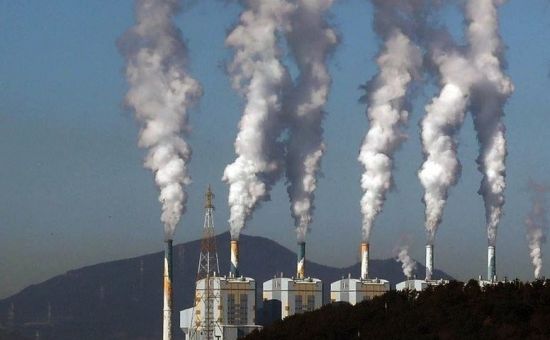
The 2019 greenhouse gas emissions are estimated at 708 million tons, a decrease of 24.9 million tons (3.4%) compared to 727.6 million tons in 2018.
The 19.6 million tons (7.3%) reduction in the power generation and heat production sector compared to 2018 is mainly attributed to a 7.3% decrease in total power generation, a 4.8% decrease in coal power generation due to fine dust countermeasures, and a 6.3% increase in renewable energy power generation.
Other sectors such as commercial, public, and residential saw a decrease of 2.1 million tons (4.0%) due to reduced heating fuel consumption caused by warmer temperatures, whereas the transportation sector is estimated to have increased by 1.7 million tons (1.8%) due to falling fuel prices.
Emissions per 1 billion KRW of Gross Domestic Product (GDP) were 380 tons/1 billion KRW, the lowest figure since greenhouse gas statistics began in 1990. Per capita emissions were 13.6 tons/person, showing a 3.6% decrease compared to 2018.
The Greenhouse Gas Comprehensive Information Center estimated the provisional 2019 greenhouse gas emissions based on the '2nd Basic Plan for Climate Change Response' established in October last year. They plan to use this data for evaluating greenhouse gas reduction policies in cooperation with related ministries.
The provisional 2019 greenhouse gas emissions were estimated based on related data such as the Monthly Energy Statistics Report and emissions trading system data, and may differ somewhat from the official statistics to be submitted to the United Nations next year. The 2018 national greenhouse gas emissions data can be accessed on the Greenhouse Gas Comprehensive Information Center website starting from the 29th.
© The Asia Business Daily(www.asiae.co.kr). All rights reserved.

















