- National Assembly audit shortened to around 8 days, concerns of 'weakness' within the Assembly as audited agencies also decrease
- Judiciary Committee struggles over witness selection related to Choo Mi-ae's son allegations
- Ruling party in the Political Affairs Committee refrains from requesting witnesses on the private equity fund issue
- 'Yoon Young-chan portal abuse' in the Science and ICT Committee, conflict over summoning portal company CEOs as witnesses
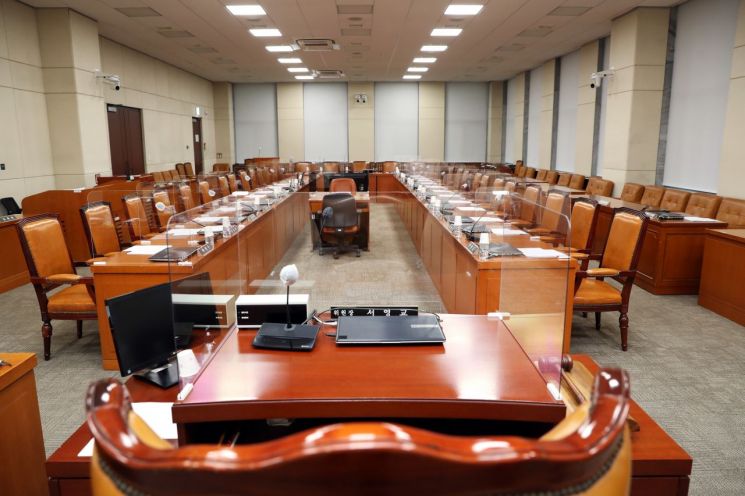
[Asia Economy Reporters Kim Hyemin and Kang Nahum] Amid concerns over the spread of the novel coronavirus infection (COVID-19) leading to a downsizing atmosphere for the National Assembly's audit, conflicts are arising as the ruling party insists on minimizing witness requests in each standing committee, while the opposition party argues for uncovering the substantive truth behind various issues.
According to political circles on the 24th, due to the impact of COVID-19, most standing committees have shortened their audit schedules. Typically lasting about 10 days, this year's audits have been reduced to around 8 days. The Planning and Finance Committee and the Land, Infrastructure and Transport Committee will conduct audits for 9 days, the Industry, Trade, Small and Medium Enterprises and Venture Businesses Committee and the Health and Welfare Committee for 8 days, and the Education Committee for 7 days.
Some standing committees have also reduced the number of agencies subject to audit. The Industry Committee, which oversees many large public institutions, excluded smaller public institutions from this year's audit. On-site inspections will not be conducted this time. The Land Committee had scheduled an on-site inspection on the last day of the audit but decided to proceed flexibly depending on the COVID-19 situation.
Although these measures consider the resurgence of COVID-19, concerns about a "watered-down" audit have emerged within the National Assembly. While the audit period for agencies under review has been shortened, the overall audit period, excluding holidays, remains 13 days, not significantly different from previous years. As a result, only the data preparation period has effectively increased.
A staff member said, "The total audit period agreed upon by both parties remains unchanged, but only the period for auditing agencies has been reduced. Many people will continue to come and go during the audit, but the opportunity to question agencies about a year's worth of work mistakes is simply being reduced."
The opposition party has expressed dissatisfaction, accusing the ruling party of using COVID-19 as an excuse to downsize the audit. Relatedly, in the Foreign Affairs and Unification Committee, the ruling and opposition parties are at odds over the method of embassy audits. Initially, most embassies were to be audited via video conference, with major embassies such as those of the United States, China, Japan, and Russia agreeing to send their diplomatic envoys to the National Assembly. However, the opposition claims the ruling party is demanding video audits out of concern for work gaps due to self-quarantine.
A member of the People Power Party in the Foreign Affairs Committee said, "If it doesn't work out, we propose conducting on-site audits ourselves while following quarantine rules. The audit is held once a year to check if embassies are doing their jobs properly, but video audits have clear limitations. There are ways to do it, but they are just making excuses to neutralize the audit."
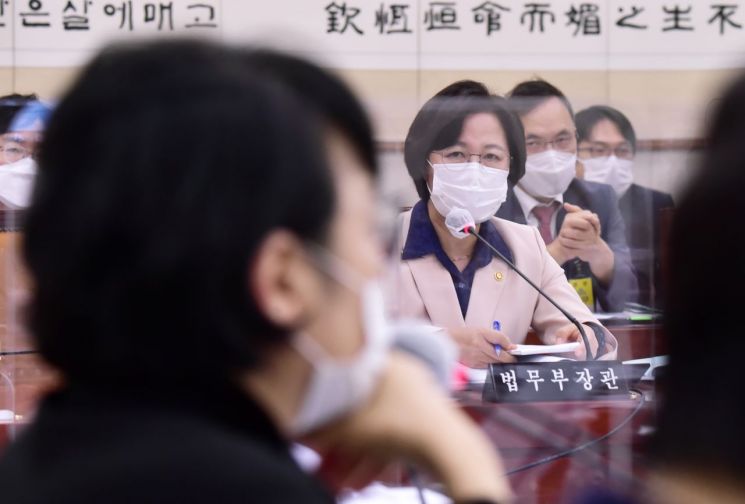
Meanwhile, fierce power struggles are unfolding in each standing committee over the adoption of audit witnesses. Among them, the most attention is focused on the Legislation and Judiciary Committee. The ruling and opposition parties are engaged in a tense standoff over the adoption of witnesses related to allegations of preferential military service for the son of Justice Minister Choo Mi-ae, Mr. Seo.
The People Power Party is demanding Mr. Seo himself as a witness. They are also considering calling 7 to 8 related witnesses, including military officers and KATUSA soldiers who served with Mr. Seo at the Uijeongbu US military base. However, the Democratic Party, which regards the allegations as a political attack, maintains its stance of not agreeing to any witness requests, and the disagreement remains unresolved.
In the Political Affairs Committee, the private equity fund scandal is the biggest issue. The opposition, including the People Power Party, argues that due to the significant damage caused by the scandal, heads of commercial banks and securities firms should be included on the witness list. On the other hand, the ruling party opposes witness adoption, citing concerns over the spread of COVID-19. In fact, Kim Byung-wook, the Democratic Party's secretary of the Political Affairs Committee, announced that he would not request any audit witnesses. He said, "I made this decision considering the national crisis situation where all efforts should be focused on preventing the spread of COVID-19 and revitalizing the economy."
In the Science, ICT, Broadcasting and Communications Committee, the ruling and opposition parties are clashing over the adoption of portal operators as witnesses following the Kakao text message controversy involving Democratic Party lawmaker Yoon Young-chan. On the 23rd, the People Power Party held a press conference stating, "The Democratic Party refuses to adopt the heads of the two major portal companies, Naver and Daum Kakao, as witnesses in this audit," urging the adoption of Lee Hae-jin, Naver's Global Investment Officer (GIO), and Kim Beom-su, Chairman of Kakao's Board of Directors, as audit witnesses.
© The Asia Business Daily(www.asiae.co.kr). All rights reserved.


















