Mapo-gu Holds 2021 Major Work Report Meeting... Presents 'Innovation Amid Environmental Changes'... Brain Lesion Disability Center, Smart Library, Underground Fire Station 'Underground Emergency Fire Extinguisher' and 57 Core Policies to Lead Happiness of Mapo Residents After COVID-19 Revealed
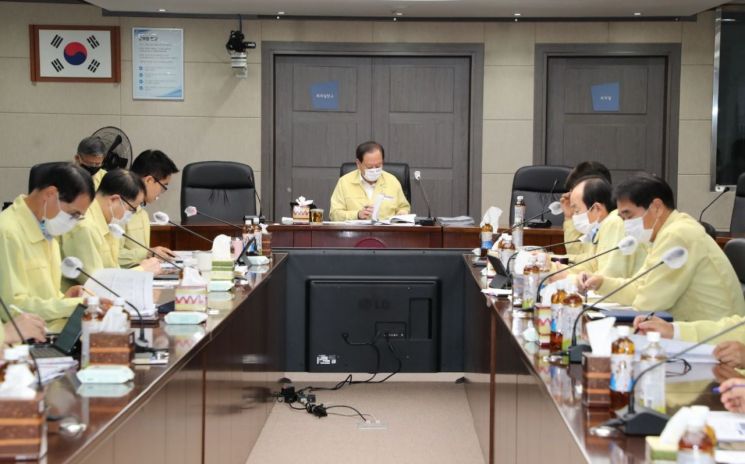
[Asia Economy Reporter Jong-il Park] Mapo-gu (Mayor Yoo Dong-gyun) held a major business report meeting on the 22nd to discuss policy projects for 2021 and presented future visions.
The major business report meeting held in the Mapo-gu Office main conference room was attended only by Mayor Yoo Dong-gyun and senior officials in accordance with social distancing quarantine guidelines, while all staff watched via online live streaming.
Mapo-gu established 368 projects as its major business plans for 2021. On this day, reports on 57 core projects by each department were presented.
The core projects of Mapo-gu for next year include ▲improvement of the household waste collection system ▲Mapo-style big data analysis and utilization smart administration ▲Mapo-naru tourism attraction project ▲online sales support for small business owners ▲operation of the Mapo-gu Brain Lesion Disabled Vision Center ▲installation of smart libraries ▲Hapjeong-dong urban regeneration project ▲installation of underground emergency fire extinguishing boxes, the ‘underground fire station’ ▲replacement of street vendor facilities ▲establishment of the Mapo Love quarantine map ▲and ICT-based non-face-to-face health management for the elderly.
According to the major business report materials, the district plans to improve the household waste collection system in the cleaning administration sector next year. The current collection cycle of three times a week will be expanded to five times a week to minimize residents’ inconvenience caused by waste disposal.
Also, a new mobile large waste collection system will be implemented. Residents can register photos of items to be disposed of using the mobile waste collection system ‘Ppaegi,’ allowing moving companies to assist with disposal or sell to secondhand trading companies.
Mapo-gu will also attempt customized big data analysis. The Mapo-gu commercial district map development project visualizes niche and themed commercial districts before and after the COVID-19 pandemic by cross-analyzing major routes and commercial districts of public bicycles (Ddareungi), enabling small business owners to utilize this through a commercial district analysis platform.
The Mapo-naru tourism attraction project will also proceed. By May next year, a photo wall visualizing the old Mapo-naru site (136-1 Tojeong-dong) will be installed to recreate the old Mapo-naru where specialties from eight provinces nationwide gathered. Cultural interpreters will be assigned to tell the history of Mapo-naru and provide on-site education for tourists and students.
In response to the expansion of non-face-to-face culture due to COVID-19 and the increase in residents’ online shopping and delivery consumption, support for open market sales channels for local small business owners will be provided. Among small business owners in Mapo-gu, initial entrants to online open markets such as Naver, Coupang, and Interpark will receive support for material production and marketing costs up to 1 million KRW per company.
For the first time nationwide, a dedicated facility providing customized comprehensive services for severely brain lesion disabled persons will be installed and operated. The Brain Lesion Disabled Vision Center will open on the 2nd floor of Uri Mapo Welfare Center this December, and from January next year, support programs in education, health, care, and culture will be operated.
Smart libraries will be installed in public places frequently used by residents or library underserved areas, offering 24-hour unmanned lending and return services. The smart library project, adopted through the Mapo-gu employee suggestion system, plans to install and operate two smart library kiosks in areas with high floating populations or underserved library areas targeting book lending members of Mapo Central Library.
The Hapjeong-dong urban regeneration revitalization project, selected in the 2020 Seoul-type urban regeneration contest, presented a vision for the next five years.
By 2024, urban regeneration revitalization projects will be promoted in an area of 93,000㎡ around 369 Hapjeong-dong, Mapo-gu, including ▲installation of resident convenience facilities such as community centers ▲historical and cultural regeneration projects linked to local resources such as Jeoldusan Holy Ground, Yanghwajin Historical Park, and Seoul Thermal Power Plant ▲housing repair, remodeling support, and street environment maintenance to improve residential environments.
‘Underground emergency fire extinguishing boxes’ accessible to anyone will also be installed in alley markets where fire truck access is difficult in case of fire. By June next year, the district plans to install a total of 10 underground emergency fire extinguishing boxes in three traditional markets: Mangwon Market, World Cup Market, and Ahyeon Market, minimizing casualties and property damage caused by fire.
A project supporting the improvement of business environments for street vendors is also planned. The old street vendor stalls will be replaced with uniquely designed facilities characteristic of Mapo-gu to improve urban aesthetics and enhance the business environment for street vendors.
In addition, in the health sector, the ‘Mapo Love Quarantine Map’ service will be provided, which discloses real-time quarantine status on the health center website and offers services such as quarantine cycle notifications and quarantine applications. AI and IoT-based non-face-to-face health management services will be provided to improve the self-management ability of the elderly.
Mayor Yoo Dong-gyun, who regards residents’ happiness as the philosophy of district administration, plans to lead residents’ happiness through policy projects that promote communication, change, and innovation.
On this day, Mayor Yoo Dong-gyun said to the staff, “Let us always think about how to operate district administration that satisfies residents within limited budgets and rapidly changing environments,” and added, “COVID-19 is changing our society and creating new standards. Let us become administrative experts who foresee and prepare for these changes.”
© The Asia Business Daily(www.asiae.co.kr). All rights reserved.

















