Selected for Ministry of Land, Infrastructure and Transport Environmental Culture Contest... 2.1km Nuri-gil Trail Created
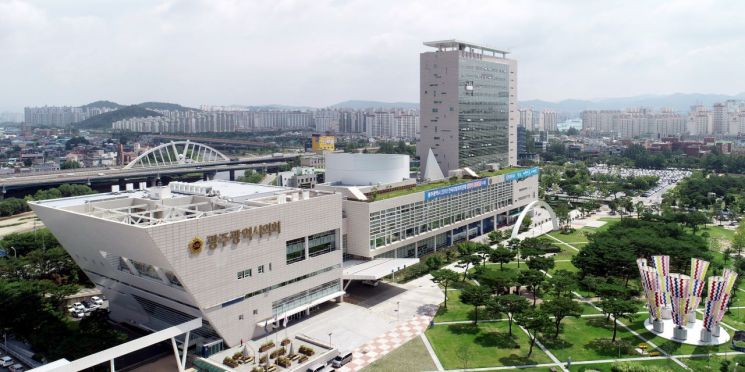
[Asia Economy Honam Reporting Headquarters Reporter Park Seon-gang] Gwangju Metropolitan City announced on the 22nd that it will actively begin building infrastructure to develop Pyeongchon Village, located on the northern foothills of Mudeungsan National Park, into an ecotourism destination.
Pyeongchon Village is a natural village consisting of four areas?Dongnim, Daman, Useong, and Dakkmoe?situated on the northern foothills of Mudeungsan. It is a region where the natural ecology is well preserved, allowing observation of fireflies, which have disappeared from urban areas.
Along the Pungamcheon Stream, legally protected species such as otters (Natural Monument No. 330, Endangered Wildlife Class II) and yellow-throated martens (Endangered Wildlife Class II) inhabit the area, contributing to its rich biodiversity.
This area is also a traditional cultural space. It is home to the Pyeongchon pottery workshop, which produced Buncheong ware during the Joseon Dynasty, and the Mudolgil rest area, embodying the artistic spirit of the Namdo region along with living history and tradition.
However, due to triple regulations including development restriction zones, national park management zones, and cultural heritage protection, there has been a consistent need to expand ecotourism infrastructure that supports residents' stable lives and allows urban citizens to participate.
Accordingly, since last year, Gwangju City has been promoting the Nurigil creation project as a wise way to preserve and utilize the natural resources and humanities values around Pyeongchon Village.
Furthermore, the Pyeongchon Bandi Village Nurigil creation project, selected in 2021 by the Ministry of Land, Infrastructure and Transport’s Development Restriction Zone Environmental Culture Contest, will be implemented. This project will invest a total of 1 billion KRW to create an ecological forest trail and ecological exploration path connecting the village over a 2.1 km section, along with establishing exploration base facilities and convenience and guidance facilities.
Additionally, from 2021, in cooperation with the Ministry of Environment, operating expenses for ecotourism programs will be supported for Pyeongchon Village (consortium), which was designated as the 10th nationally recognized premium village and Gwangju’s first ecotourism area in 2015.
Gwangju City expects that with the expansion of eco-friendly infrastructure and activation of ecotourism programs, seasonal experiential activities will help preserve nature and cultural heritage while generating income for local residents.
In particular, when linked with nearby sites such as the Lake Ecological Garden, Gasamunhak Museum, and Soswaewon?located within a 5-minute distance?the synergy effect will be further enhanced by the harmonious combination of natural ecology and cultural resources.
Song Yong-su, Director of the Environmental Policy Division of the city, said, “The Pyeongchon Village area is a prime location for ecotourism, with well-preserved natural ecology, beautiful scenery, and abundant traditional cultural resources nearby,” adding, “We will develop it as the number one ecotourism destination so that Gwangju citizens can find rest for both body and mind.”
© The Asia Business Daily(www.asiae.co.kr). All rights reserved.
!["The Woman Who Threw Herself into the Water Clutching a Stolen Dior Bag"...A Grotesque Success Story That Shakes the Korean Psyche [Slate]](https://cwcontent.asiae.co.kr/asiaresize/183/2026021902243444107_1771435474.jpg)
















