Emergency Suspension of Free Influenza Vaccine Inoculation
Issues Found in Some Products Among 5 Million Doses
No Problems with Previously Vaccinated Infants' Supplies
Resumption Timing to Be Decided After Expert Review
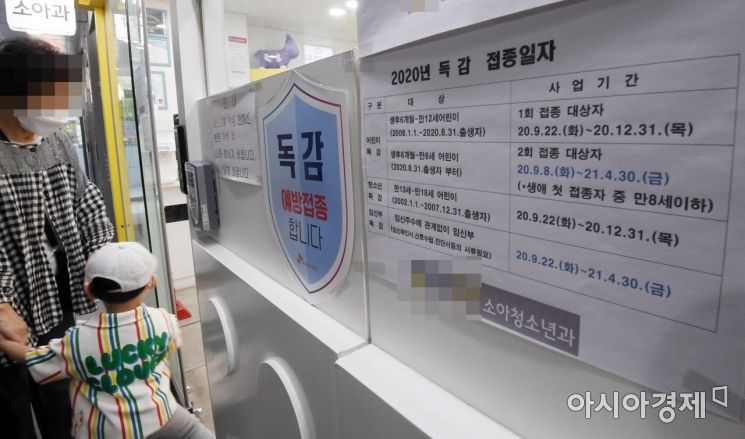 Amid the temporary suspension of the national free influenza vaccination program, a notice for free flu vaccinations is posted at a hospital in Seoul on the 22nd. The Korea Disease Control and Prevention Agency announced in a press release on the 21st, "We plan to temporarily suspend the national influenza vaccination program starting today due to issues found in the distribution process of the contracted influenza supply company." Photo by Kim Hyun-min kimhyun81@
[Asia Economy Reporter Choi Dae-yeol] The free influenza (flu) vaccination program, which was scheduled to begin on the 22nd targeting adolescents and students, has been suspended. This emergency measure was taken following reports of issues during the vaccine distribution process. It has been identified that some products among the 5 million doses (1 dose equals one injection) had problems. Vaccines previously administered to infants and young children have been confirmed to be safe.
Jung Eun-kyung, Director of the Korea Disease Control and Prevention Agency (KDCA), stated at a briefing that "a report was received yesterday afternoon that some products were exposed to room temperature during the distribution process, where refrigerated trucks delivered vaccines to various regions," adding, "While a thorough investigation is needed to determine the exact quantity affected, we decided to temporarily suspend the program as a safety precaution."
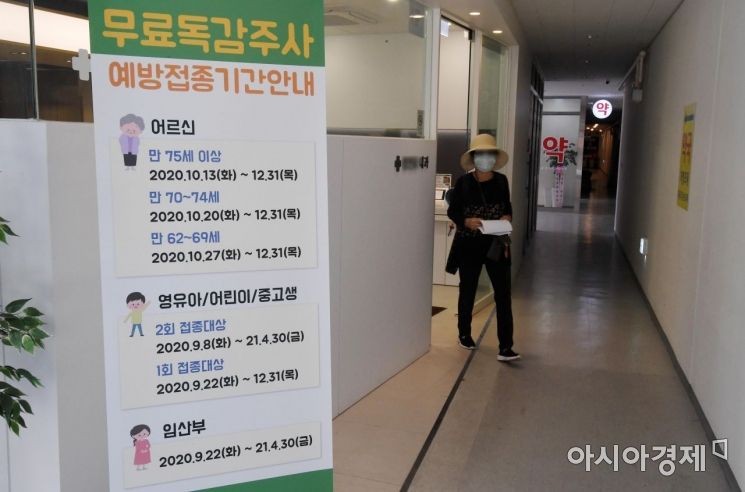 Amid the temporary suspension of the national free influenza vaccination program, a notice for free flu vaccinations is displayed at a hospital in Seoul on the 22nd. The Korea Disease Control and Prevention Agency announced in a press release on the 21st, "We have identified issues in the distribution process of the influenza procurement contractor and plan to temporarily suspend the national influenza vaccination program starting today." Photo by Kim Hyun-min kimhyun81@
Vaccines Previously Administered to Infants Confirmed Safe
Some Doses Exposed to Room Temperature Among 5 Million Doses
The reported batch was supplied by Shinsung Pharmaceutical, a vaccine distribution specialist contracted by the government. Under the national influenza vaccination program, free vaccinations began on the 8th for infants aged six months and older and children under nine years old, with plans to start vaccinating children and students aged 13 to 18 from the 22nd. Director Jung added that the vaccines administered to infants were from supplies already distributed to existing medical institutions and are unrelated to the reported batch.
The contracted supplier agreed to provide 12.59 million doses, of which 5 million doses have been delivered so far. No individuals have received vaccines suspected of being compromised, as the government urgently canceled vaccinations. Since only a potential issue in the distribution process has been raised, there is currently no decision to discard all 5 million doses.
Director Jung stated, "The influenza vaccine is an inactivated vaccine, which is less sensitive to temperature compared to live vaccines like measles or chickenpox," but added, "Proper cold chain management is essential to ensure vaccine efficacy, and we will review the situation with experts to determine further actions."
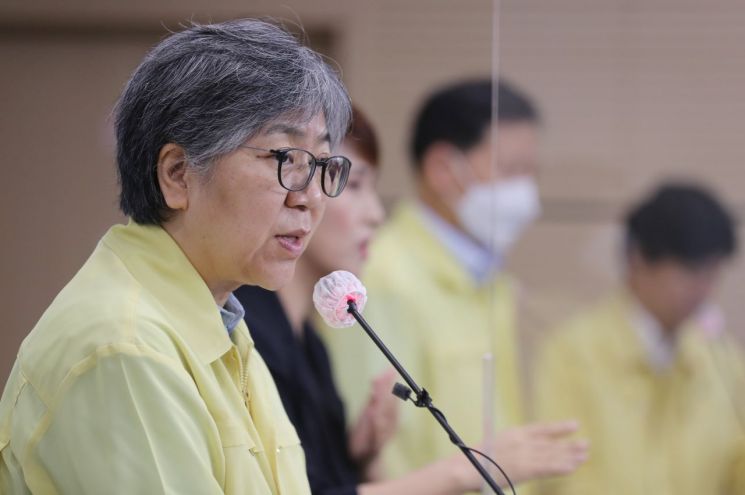 Jung Eun-kyung, Commissioner of the Korea Disease Control and Prevention Agency, is holding a briefing on the temporary suspension of the influenza vaccination program on the 22nd.
 Free Vaccination Expanded to Prepare for Simultaneous Flu and COVID-19 Outbreaks
Program Stumbles at the Start, Potential Disruptions to Future Schedules
The national vaccination program targeting children and the elderly has transitioned from a trivalent vaccine to a quadrivalent vaccine this year, and expanded eligibility to include those aged 13 to 18 and those 62 and older. Due to the similarity of symptoms between COVID-19 and influenza, the strategy was to minimize outbreaks by promoting influenza vaccination to reduce confusion at frontline medical institutions.
Paid vaccinations for adults are expected to proceed without major issues, as supplies are already distributed to medical institutions. However, the resumption of the free vaccination program remains uncertain pending investigation. The authorities plan to verify the facts of the report, review related documents, conduct on-site inspections, and assess the quality of vaccines exposed to room temperature. The vaccination schedule, which prioritized students from the 2nd year of middle school to the 3rd year of high school, may be affected sequentially due to the suspension.
The Ministry of Food and Drug Safety (MFDS) will conduct quality tests on the affected vaccines based on inspection requests from the KDCA, focusing on factors that could impact vaccine quality. The government expects this process to take about two weeks. Moon Eun-hee, Director of the Biologics Quality Control Division at MFDS, said, "If stored at high temperatures, the protein content may decrease," explaining, "This means the vaccine's effectiveness could be slightly reduced, and we will also check for any potential safety issues."
© The Asia Business Daily(www.asiae.co.kr). All rights reserved.
![Clutching a Stolen Dior Bag, Saying "I Hate Being Poor but Real"... The Grotesque Con of a "Human Knockoff" [Slate]](https://cwcontent.asiae.co.kr/asiaresize/183/2026021902243444107_1771435474.jpg)


















