Comprehensive 4th Dementia Management Plan to be Announced Late This Month... First Lady Kim Jeong-suk Sends Video Message
[Asia Economy Reporter Seo So-jeong] The government will invest 200 billion won over nine years starting this year to promote research on diagnosing the causes of dementia and developing treatment technologies.
On the 21st, the Ministry of Health and Welfare held an event to review the achievements of the Dementia National Responsibility System over the past three years in commemoration of the 13th Dementia Overcoming Day and announced this plan.
The Ministry of Health and Welfare will establish and announce the "4th Comprehensive Dementia Management Plan (2021?2025)" by the end of this month, focusing on building a dementia patient management system according to care pathways and strengthening dementia management projects.
In particular, moving forward, the ministry plans to promote the expansion of non-face-to-face programs using information technology (IT) and outdoor activities that allow sufficient social distancing to prepare for infectious disease situations such as the novel coronavirus infection (COVID-19). Additionally, it will continue to expand dementia infrastructure such as dementia-specialized long-term care institutions and dementia-specialized hospital wards.
At the event, Kim Jung-sook, the wife of President Moon Jae-in, conveyed a video message, saying, "As someone who also has a mother suffering from dementia, I would like to express my gratitude to those who have worked hard to overcome dementia." She added, "Since the implementation of the Dementia National Responsibility System, a major pledge of the Moon Jae-in administration, over the past three years, I expect that the pain and burden of dementia patients and their families have somewhat lessened." Furthermore, Mrs. Kim said, "I hope that the nation and society will continue to think together and show interest so that we can overcome the high wall called dementia."
All 256 Dementia Safety Centers Nationwide Officially Opened
Long-term Care Services Expanded to Mild Dementia Patients
In September 2017, the Ministry of Health and Welfare announced the "Dementia National Responsibility System" promotion plan to strengthen the responsibility of the nation and society to alleviate the economic and psychological burdens of dementia patients and their families. According to this plan, a comprehensive dementia support system has been established, including providing integrated dementia services through dementia safety centers, expanding long-term care services, strengthening medical support, and creating dementia-friendly environments.
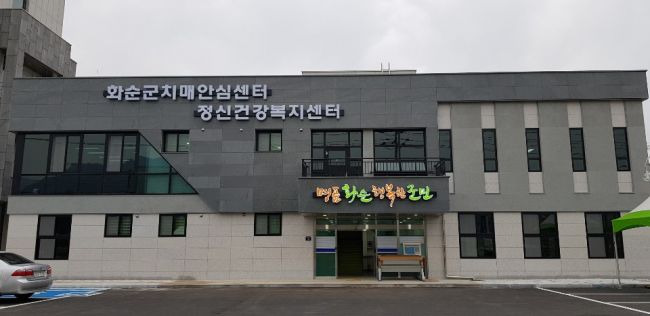
According to the ministry, as of December last year, all 256 dementia safety centers nationwide have been officially opened with adequate personnel and functions, providing integrated services such as counseling, screening, and one-on-one case management to dementia patients and their families. So far, 3.72 million elderly people aged 60 and over (500,000 dementia patients) have visited dementia safety centers for counseling and screening.
With the implementation of the Dementia National Responsibility System, long-term care services have also been expanded to mild dementia patients. Since January 2018, a cognitive support grade has been newly established, allowing mild dementia patients to receive long-term care grades and use long-term care services. As of July this year, 16,984 mild dementia patients have newly received the cognitive support grade. Additionally, in August 2018, the ministry expanded the scope and extent of reductions in out-of-pocket long-term care expenses to alleviate the burden on dementia patients and their caregivers.
In October 2017, through health insurance system improvements, the Ministry of Health and Welfare significantly reduced the medical expense burden ratio for severe dementia patients from a maximum of 60% to 10%. Since January 2018, high-cost dementia tests such as neurocognitive tests and magnetic resonance imaging (MRI) have been covered by health insurance, reducing out-of-pocket expenses. Accordingly, the MRI examination cost at tertiary hospitals has been lowered from 600,000 won to between 140,000 and 330,000 won.
Furthermore, 339 dementia-friendly villages are operating nationwide, where local residents understand dementia and support dementia patients and their families. To protect the decision-making rights of dementia patients who have difficulty making decisions due to mental limitations, the dementia public guardianship system has been implemented since September 2018. Guardians support dementia patients' decision-making regarding bank account management, issuance of official documents, welfare service applications, hospital visits, and medication prescriptions. As of August this year, 122 elderly dementia patients have been receiving assistance from public guardians.
© The Asia Business Daily(www.asiae.co.kr). All rights reserved.