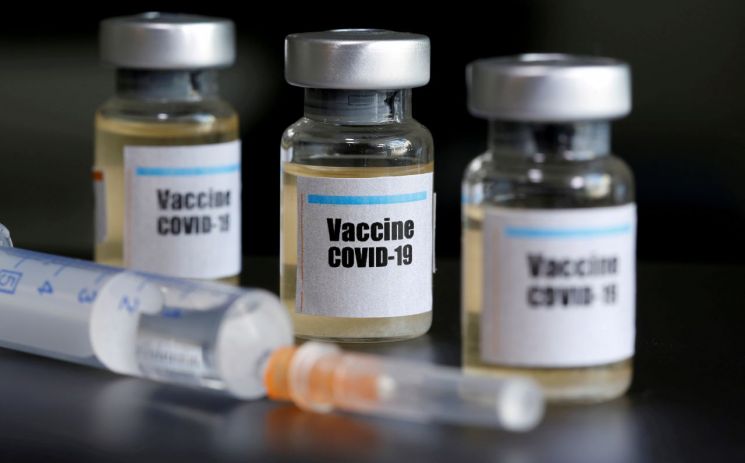
[Asia Economy Reporter Kim Eun-byeol] Even if a vaccine for the novel coronavirus infection (COVID-19) is developed, actual vaccination may be delayed, and the emergence of vaccine nationalism could prolong the end of COVID-19, according to forecasts.
On the 20th, the Bank of Korea stated in its 'Overseas Economic Focus' report, "It is expected that some vaccines will be developed by the second half of next year," but added, "There are many hurdles to overcome, such as ensuring safety, so it will take considerable time before large-scale vaccination of the general public can be carried out."
According to the Bank of Korea, as of September, there are 35 vaccine candidates that have entered clinical trials on humans. Among these, nine have entered Phase 3, the final stage of drug testing before market approval.
The Bank of Korea noted, "Thanks to the application of existing Severe Acute Respiratory Syndrome (SARS) vaccine manufacturing technology and the reduction of clinical trial phases, the development period is expected to be significantly shortened," but also stated, "There are many hurdles to overcome, such as establishing large-scale production capacity and ensuring safety, so it will take considerable time before vaccination of the general public can be realized."
It was also forecasted that even after a COVID-19 vaccine is developed, the widespread prevalence of 'vaccine nationalism' could delay the end of COVID-19. Countries competing to secure vaccines and underdeveloped countries unable to obtain vaccines may face limited vaccination, thus prolonging the end of the pandemic. The Bank of Korea said, "The World Health Organization (WHO) adopted a resolution on May 19 urging appropriate and equitable distribution and access to COVID-19 related treatments and vaccines, but the United States rejected it."
Furthermore, the Bank of Korea predicted that it will take considerable time for COVID-19 vaccines to be commercialized, and the global economy is expected to continue a very gradual recovery for the time being. Amid this, risks such as the US-China technology and trade disputes, difficulties in Brexit negotiations (the United Kingdom's withdrawal from the European Union), and political instability in major countries have been highlighted as factors that could cause volatility in international financial markets. Additionally, it added, "At this point, it is difficult to predict the winner of the US presidential election, and uncertainty after the election is high, so the future developments should be closely monitored."
© The Asia Business Daily(www.asiae.co.kr). All rights reserved.
![User Who Sold Erroneously Deposited Bitcoins to Repay Debt and Fund Entertainment... What Did the Supreme Court Decide in 2021? [Legal Issue Check]](https://cwcontent.asiae.co.kr/asiaresize/183/2026020910431234020_1770601391.png)















