Samsung Electronics Newsroom Releases Video Highlighting Academic Efforts on 'World Alzheimer's Day'
Domestic Professors Actively Research Brain Neurological Diseases and Brain Studies Supported by Samsung
Samsung Future Technology Development Project Leads New Research Culture with Support for Challenging and Innovative Research... "Failure is an Asset"
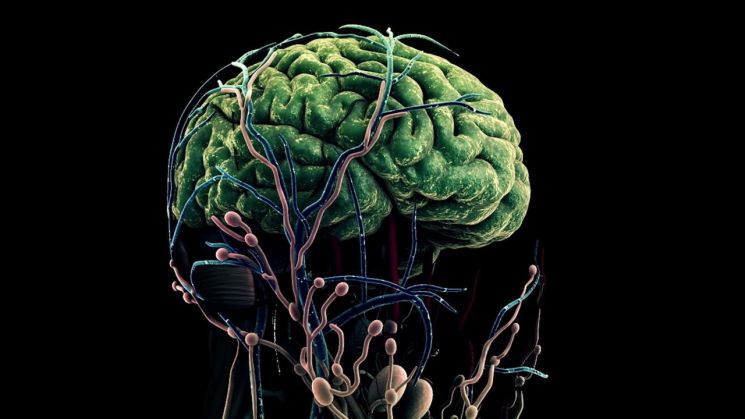
[Asia Economy Reporter Ki-min Lee] Samsung Electronics is actively supporting domestic professors to lay the foundation for conquering Alzheimer's disease.
On the 20th, Samsung Electronics Newsroom released a video introducing researchers striving to overcome Alzheimer's disease with support from the Samsung Future Technology Development Project.
Alzheimer's disease is a condition where amyloid-beta or tau proteins accumulate in the brain, causing toxicity and deterioration of cognitive functions. Among South Korea's elderly aged 65 and over, 10% suffer from dementia, and 74.9% of dementia cases are due to Alzheimer's, making it a commonly seen disease. According to Statistics Korea, Alzheimer's ranked 9th among causes of death in 2018. However, early diagnosis of Alzheimer's is difficult, its exact cause remains unknown, and there is currently no cure.
Samsung Electronics supports various basic research related to Alzheimer's diagnosis and treatment through the Samsung Future Technology Development Project. According to Samsung Electronics, so far, 15 basic research projects contributing to overcoming Alzheimer's have been supported in fields such as brain injury treatment, brain imaging magnetic resonance imaging (MRI), neurogenetics, brain homeostasis, memory, and neural circuits.
◆'Laying the Foundation for Conquering Alzheimer's through Basic Research'... Domestic Professors Actively Conduct Research in Neurodegenerative Diseases and Brain Studies
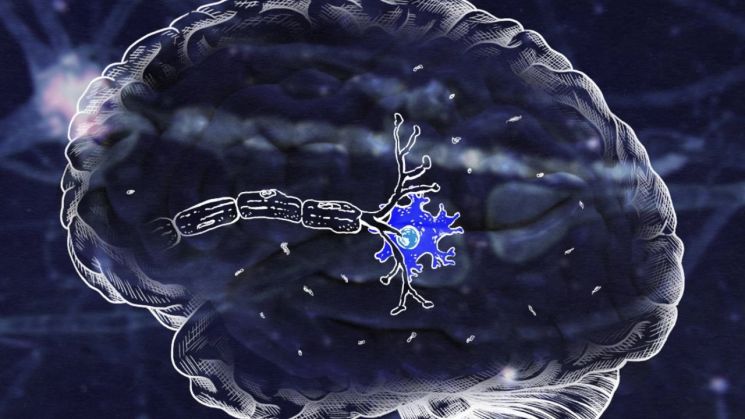 A graphic depicting the abnormal phenomenon of immune cells in the brain attacking healthy synapses.
 Research-related graphic by Professor Seonghong Park of KAIST studying the excretion pathways of waste products generated by the brain's metabolic activity
Jeong Won-seok, a professor in the Department of Biological Sciences at the Korea Advanced Institute of Science and Technology (KAIST), is researching "a new mechanism regulating brain homeostasis in sleep and aging." Synapses, the junctions of neurons, are known to decrease with sleep and aging. Professor Jeong is elucidating how glial cells, which are responsible for immune functions in the brain, regulate the maintenance of synapse numbers and how excessive synapse removal can be prevented.
He is also studying methods to directly remove amyloid-beta or tau proteins by reversing the phagocytic activity of glial cells that eliminate synapses. Particularly, by investigating how these functions change with sleep and aging, he aims to reveal mechanisms regulating brain homeostasis, which is expected by the academic community to offer new approaches to suppress brain aging and prevent or treat diseases like Alzheimer's.
Professor Park Sung-hong of KAIST's Department of Bio and Brain Engineering is researching "new brain imaging techniques." Through this, he is conducting studies to clarify the pathways through which brain waste is discharged via meningeal lymphatic vessels. Waste is generated as a byproduct of metabolic activity in the brain and is discharged, but this waste removal function declines with aging.
Using animal experiments, Professor Park confirmed through brain MRI imaging technology that waste impairing brain function and causing disease exits the brain through meningeal lymphatic vessels located at the base of the brain. If the waste discharge pathways in the human brain are identified, stimulating these pathways intensively could present new directions for treating degenerative brain diseases such as dementia.
Professor Jeong Ho-sung of Yonsei University College of Medicine is researching the "RNA operon of degeneration-resistant axons." Axons are projections located at the far end of neurons that transmit excitations occurring in nerve cells to other nerve cells. Healthy neurons transmit signals to other cells through axons, but if axons degenerate, normal neuronal activity becomes impossible. Studying axonal degeneration can reveal why neurons die and the principles of inhibiting degeneration in normal cells, raising hopes in academia that it could provide new treatments not only for Alzheimer's but also for neurodegenerative diseases like Parkinson's and Lou Gehrig's disease.
Professor Park Hye-yoon of Seoul National University's Department of Physics and Astronomy is researching "imaging technology for memory traces in the living brain." This is a study of imaging technology that can identify in real time where and how the processes of memory formation, storage, and retrieval occur in the living brain.
Professor Park differentiated her research by directly imaging beta-actin RNA, a genetic material known to be associated with long-term memory formation, in living animals. Her research is expected to be used as an objective and quantitative indicator for Alzheimer's by revealing differences between normal long-term memory retrieval processes and pathological states.
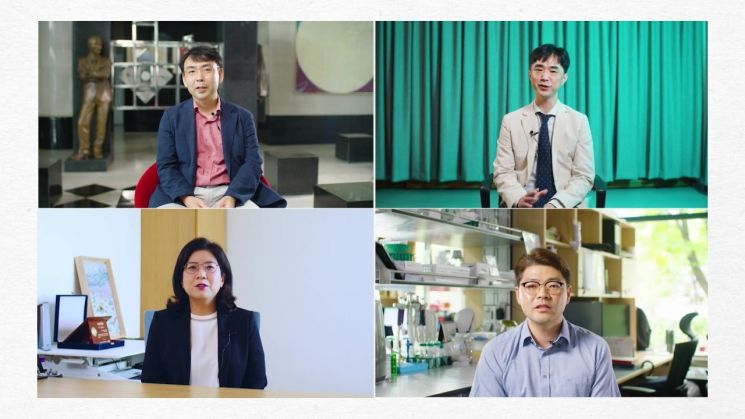 Researchers conducting Alzheimer's-related studies supported by the Samsung Future Technology Development Program.
Professors Seonghong Park (KAIST), Hoseong Jeong (Yonsei University), Wonseok Jeong (KAIST), and Hyeyoon Park (Seoul National University) (clockwise from top left)
◆"Failure is an Asset"... Samsung Future Technology Development Project Leads a New Research Culture by Supporting Challenging and Innovative Research
Samsung Electronics has been implementing the Samsung Future Technology Development Project since 2013, investing 1.5 trillion KRW to foster science and technology responsible for Korea's future.
Researchers autonomously propose research topics, goals, budgets, and durations, and no quantitative targets such as the number of papers or patents are set for research goals. Annual research reports are limited to two pages, and annual and mid-term evaluations have been eliminated to allow researchers to focus autonomously on their work. Moreover, even if challenging research fails to meet goals, no accountability is imposed, and failure causes are utilized as knowledge assets.
The Samsung Future Technology Development Project also operates various programs such as the "Annual Forum," where researchers share results and exchange new ideas; the "R&D Exchange Meeting," to enhance industrial application of research outcomes; and "IP Mentoring," which supports intellectual property applications. So far, 603 projects have been funded with 772.9 billion KRW, and a total of 1,246 papers have been published in international journals. Among these, 97 papers have appeared in top-tier international journals such as Nature (3 papers) and Science (5 papers).
Under the corporate social responsibility (CSR) vision "Together for the Future! Enabling People," Samsung Electronics carries out win-win activities and youth education social contribution activities through the Samsung Future Technology Development Project, smart factories, C-Lab Outside, and the partner company win-win fund.
© The Asia Business Daily(www.asiae.co.kr). All rights reserved.