[Asia Economy Reporter Cho Hyun-ui] As concerns grow over the simultaneous spread of the novel coronavirus infection (COVID-19) and influenza (flu), known as the 'twindemic,' political circles continue to clash over free flu vaccinations for the entire population.
The opposition party is advocating for securing additional vaccines to vaccinate the entire population, while the government and health authorities maintain that the current supply of 30 million doses, enough for 57% of the population, is sufficient.
On the 17th, the National Assembly's Health and Welfare Committee approved the Ministry of Health and Welfare's fourth supplementary budget as originally proposed but decided to continue discussions on flu vaccines in the National Assembly's Budget and Accounts Special Committee. Accordingly, related controversies are expected to continue for the time being.
◆Why 57%?
The government has secured 29.64 million doses of influenza vaccine this year. This amount is sufficient to vaccinate 57% of the entire population. Health authorities believe that a supply covering 57% of the population can provide a certain level of immunity and cover high-risk groups. Kwon Jun-wook, Deputy Director of the Central Disease Control Headquarters, stated, "The currently prepared vaccination volume is sufficient to manage influenza," adding, "Influenza has a slightly lower reproduction number compared to COVID-19." The reproduction number (R0) refers to the number of people directly infected by one patient.
◆Are there preventive measures besides the flu vaccine?
Health authorities emphasized that there is no need to feel excessive anxiety since influenza treatments are also sufficiently supplied in the market. Deputy Director Kwon said, "Unlike COVID-19, influenza spreads from one day before symptom onset and has a short incubation period," adding, "We have secured a solid foundation to manage influenza more thoroughly by strictly implementing social distancing and sufficiently stockpiling antiviral drugs."
◆Isn't it safer for everyone to get vaccinated anyway?
The health authorities explain that expanding free vaccination to the entire population is practically excessive. Minister of Health and Welfare Park Neung-hoo drew a line on free vaccination for all, saying, "Medically, more is not always better." He added, "Experts commonly agree that securing enough vaccines to cover 60% of the population is sufficient," and "No country in the world vaccinates more than half of its population against influenza. We have medically overstocked by more than 10 percentage points compared to that."
◆If additional doses are secured, is it possible to vaccinate the entire population within this year?
Even if an agreement is reached on free vaccination for all, securing doses within this year is technically impossible. Vaccine production takes up to six months due to preparations such as fertilized eggs or cell culture facilities. Even if production starts now, supply would only be possible after February or March next year. Even importing vaccines is difficult to secure additionally at this point because contracts are made 5 to 6 months before vaccination. Jung Eun-kyung, Director of the Central Disease Control Headquarters, explained, "The World Health Organization (WHO) announces which virus strains will circulate in February or March. Then, four circulating virus strains are received and grown in cells or fertilized eggs to produce vaccines, which takes 3 to 4 months, or 5 to 6 months including the inspection process."
◆How much do other countries secure?
According to health authorities, vaccinating more than 50% of the population against influenza is the theoretical basis for managing outbreaks in global disease control. Accordingly, most countries secure supplies for 50% or less of their populations. In fact, Australia has secured 42.6% relative to its population, and New Zealand 35.4%. Director Jung evaluated the domestic flu vaccine supply, saying, "Compared to other countries supplying around 50%, it is not a small amount."
◆Who are the priority groups for vaccination?
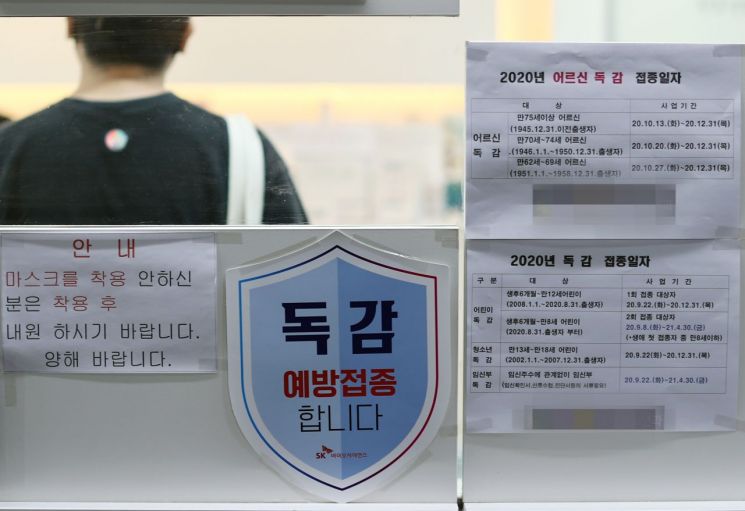
The free vaccination targets include children aged 6 months to 18 years, pregnant women, and the elderly aged 62 and above. This year, considering the COVID-19 pandemic, the free vaccination target has been expanded to include not only children under 12 but also adolescents aged 13 to 18 who live in group settings. The 11 million doses supplied to the private sector for paid vaccination should prioritize chronic patients and high-risk groups.
© The Asia Business Daily(www.asiae.co.kr). All rights reserved.

















