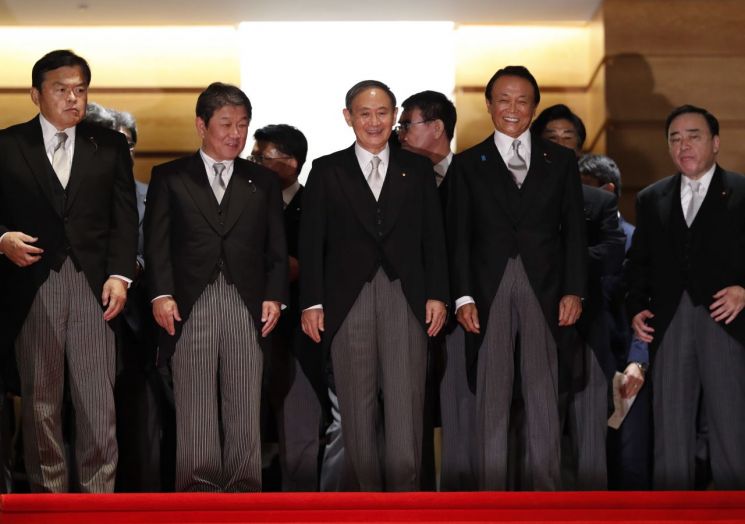
 On the night of the 16th, Japanese Prime Minister Yoshihide Suga (third from the left), Deputy Prime Minister and Finance Minister Taro Aso (fourth from the left), Foreign Minister Toshimitsu Motegi (second from the left), and other new cabinet members are adjusting their positions for a photo.
 [Image source=EPA Yonhap News]
[Asia Economy Reporter Jeong Hyunjin] The Yoshihide Suga Cabinet of Japan officially kicked off on the 17th.
According to NHK and other broadcasts, Suga, who was elected as the next Prime Minister at the Japanese National Diet the day before, entered the Prime Minister's Official Residence in the morning and told reporters, "I feel tense," adding, "I want to start a cabinet that works for the people, achieve definite results, and meet the expectations of the citizens."
On the afternoon of the previous day, Prime Minister Suga announced the list of ministers participating in the new cabinet through Chief Cabinet Secretary Kato Katsunobu, and held the first Cabinet meeting at night. At a press conference held the same day, he stated that he would inherit the policies of the Abe Cabinet, aim to balance COVID-19 and socio-economic activities, and focus on regulatory reform and digitalization.
Prime Minister Suga instructed the newly appointed Minister in charge of Administrative Reform, Kono Taro, to create a system that can collect information on regulations that do not fit the actual situation by referring to the opinions of the public. In response, Minister Kono told reporters on the same day, "Until now, administrative reform has been about cutting costs, but this time, we must focus on regulatory reform that creates new value from the perspective of the public and society."
New Chief Cabinet Secretary Kato Katsunobu expressed his determination to break down vertical administration at his first regular briefing, saying, "We will check whether administrative services are reaching the people, and if there is anything wrong, we will definitely correct it."
Prime Minister Suga will attend the opening ceremony of the extraordinary Diet session held in the afternoon. At the extraordinary Diet session convened the day before (from the 16th to the 18th), Suga was elected Prime Minister with the majority of votes from both the House of Representatives and the House of Councillors.
© The Asia Business Daily(www.asiae.co.kr). All rights reserved.

















