KDI 'Evaluation and Improvement Directions for Policy-Based Microfinance Products'
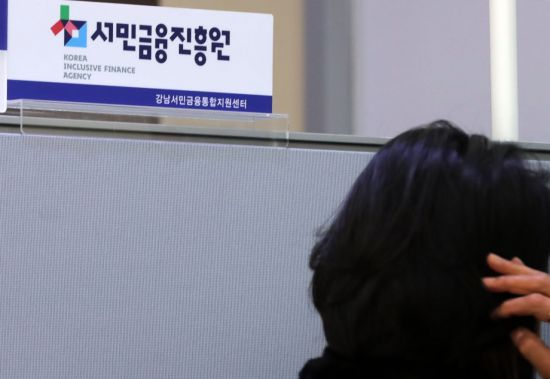 (Photo) [Image source=Yonhap News]
[Sejong=Asia Economy Reporter Joo Sang-don] The Korea Development Institute (KDI) advised on the 15th that "the operation of policy-based microfinance products should shift from focusing on expanding current supply performance and promoting support amounts to supporting the credit improvement of individual debtors."
On this day, KDI Research Fellow Oh Yun-hae announced the report titled 'Evaluation and Improvement Directions for Policy-Based Microfinance Products' containing these details.
Before and after 2010, as a policy consideration for the financial exclusion of the low-income class, financial authorities launched policy-based microfinance products such as Microcredit, 햇살론 (Haetsal Loan), and 새희망홀씨 (New Hope Seed), providing credit loans at significantly lower interest rates than the market to low-credit and low-income low-income groups. The cumulative supply scale reached 36.9 trillion KRW as of May 2018, and the supply volume has shown an increasing trend every year. 햇살론 (Haetsal Loan) is a guarantee product operated based on lottery fund financial support and contributions from mutual finance and savings banks sectors, initially planned for temporary operation. However, in December last year, the Financial Services Commission announced plans to amend the 'Act on Support for Financial Life of the Low-Income Class' to secure additional guarantee funds by imposing contribution fees on all financial sectors and including continuous government funding.
Research Fellow Oh said, "If users of policy-based microfinance can convert existing high-interest loans into low-interest loans to improve their debt structure, their credit scores will improve, leading to a virtuous cycle effect where long-term interest costs are further reduced." However, he pointed out, "If users fail to improve their debt structure, for example by increasing their dependence on high-interest loans again after using policy-based microfinance, such policy support could become a case of 'pouring water into a bottomless jar.'"
According to Research Fellow Oh's analysis, the positive effect of policy-based microfinance users reducing high-interest loan usage and improving their debt structure through low-interest funds was maintained only in the short term. Afterwards, they were found to use more high-interest loans than non-users. Furthermore, low-interest policy-based microfinance products delayed the timing of debt adjustment applications and usage rather than reducing the probability of such applications by improving users' debt structures.
Research Fellow Oh suggested, "It is necessary to provide credit management education and credit counseling more actively during the supply and management of policy-based microfinance products," adding, "It may also be considered to mandate credit management education and credit counseling provided by institutions such as the Korea Inclusive Finance Agency for borrowers using policy-based microfinance above a certain amount."
© The Asia Business Daily(www.asiae.co.kr). All rights reserved.
![Clutching a Stolen Dior Bag, Saying "I Hate Being Poor but Real"... The Grotesque Con of a "Human Knockoff" [Slate]](https://cwcontent.asiae.co.kr/asiaresize/183/2026021902243444107_1771435474.jpg)















