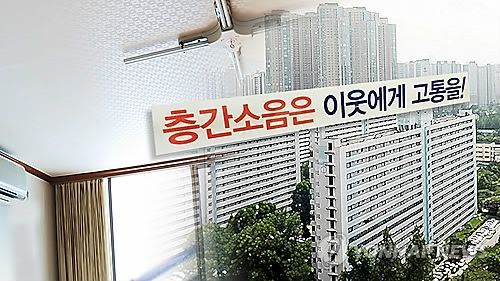
[Asia Economy Reporter Donghoon Jeong] Kang In-ho (36), who lives in Seongbuk-gu, Seoul, said his stress levels have increased since starting telecommuting two weeks ago. The cause is the inter-floor noise that he normally wouldn't hear in the office. From the first week of telecommuting, he filed several complaints with the apartment security office, but the noise did not subside. Kang said, "It seems like there is a child upstairs, but the constant thumping noise all day makes it difficult to concentrate on work." Due to noise stress, he said he risks infection and moves to a nearby cafe to work.
With children attending kindergarten, elementary, middle, and high school students, as well as office workers all staying 'Jipkok' (staying cooped up at home), many residents have been complaining about conflicts over inter-floor noise. According to the Neighborly Relations Center of the National Noise Information System operated by the Ministry of Environment, the number of noise mediation requests received via call center and online increased from 1,920 in January to 2,667 in February and 3,110 in March this year. Since the first confirmed case of COVID-19 (January 21), conflicts over inter-floor noise appear to have increased by more than 60%. In the five days from the 30th of last month, when 'Social Distancing Level 2.5' was implemented, over 130 noise complaints were submitted online through the Neighborly Relations Center website.
Conflicts over inter-floor noise have also led to violent retaliatory acts. In July, Mr. A, who lives in Buk-gu, Gwangju, lured men to the upstairs apartment under the pretense of meeting through an anonymous chat app to retaliate against inter-floor noise. The upstairs residents, who have elementary school daughters, were reportedly anxious as unknown men rang their doorbells from early morning trying to visit.
According to Article 3 of the Minor Offenses Punishment Act, making excessively loud sounds from musical instruments, televisions, or loud talking can result in a fine of up to 100,000 won, but police reports and other measures often cause bad feelings between neighbors, triggering further conflicts.
The Seoul Metropolitan Government recommends forming resident-centered 'Inter-floor Noise Management Committees' for each apartment complex to resolve issues. The committee should be composed of the complex manager, one representative from each building, one member each from the women's association and senior citizens' association, one election committee member, and one experienced resident. However, as of last year, only 773 out of 2,163 apartment complexes in Seoul had established such committees.
Professor Kim Ho-ki of Yonsei University's Department of Sociology said, "In the emergency situation of COVID-19, people inevitably become more sensitive. It is natural for children to run and play, but parents should properly control this indoors, and neighbors should be more considerate of each other."
© The Asia Business Daily(www.asiae.co.kr). All rights reserved.
![Clutching a Stolen Dior Bag, Saying "I Hate Being Poor but Real"... The Grotesque Con of a "Human Knockoff" [Slate]](https://cwcontent.asiae.co.kr/asiaresize/183/2026021902243444107_1771435474.jpg)











