Jeju, 9 o'clock Gihae Typhoon Warning
Storm Eve in Busan as Typhoon Approaches
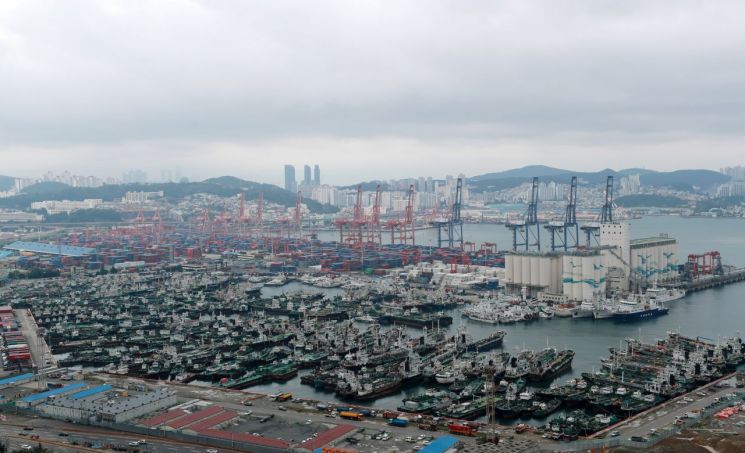
[Asia Economy Reporter Seongpil Cho] With the northward approach of Typhoon 'Haishen', the entire country has begun to come under its influence, starting with Jeju. Busan and Jeju, which are closest to the typhoon's path, were busy on the weekend of the 6th preparing to prevent damage. Thousands of ships at the ports either docked at piers or moved to mooring areas.
An apartment complex in Nam-gu, Busan, faced Haishen without any windows. Last week, when Typhoon Maysak (No. 9) made landfall, dozens of balcony windows were broken, and with repairs still incomplete, they had to endure another typhoon. As a temporary measure, broken windows were reinforced with plywood, and windows that were intact were secured with tape.
At high-rise buildings in Haeundae, where glass windows were shattered by strong building winds, glass reinforcement work was carried out throughout the day. Many exterior walls of Haeundae's high-rise buildings were torn off during the previous typhoon, and with an even stronger typhoon approaching, there are concerns about additional damage.
Busan Port suspended operations from 3 p.m. that day. All arrivals and departures of passenger ships traveling between Busan and Jeju were completely restricted. Fishing boats staying at major ports and harbors either sought shelter or were hauled ashore.
Typhoon Haishen is expected to be closest to Busan at 9 a.m. on the 7th. It is forecasted to approach within 90 km southeast of Busan and then move northward along the east coast.
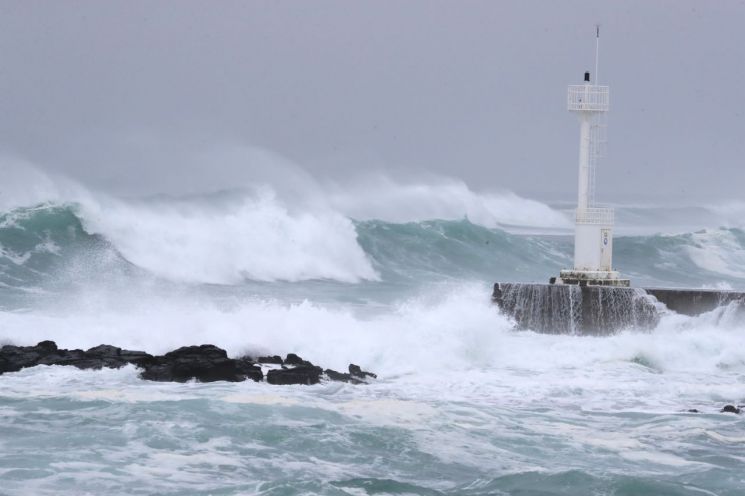
Jeju is already within the typhoon's influence. The Jeju Regional Meteorological Administration issued a typhoon advisory for the land areas of Jeju Island and the western and northern seas at 9 p.m. on the 6th, and a typhoon warning for the eastern and southern seas of Jeju Island. Haishen is forecasted to pass about 310 km east of Seogwipo at 3 a.m. on the 7th. Waves as high as 12 meters are expected across all seas around Jeju Island. Accordingly, 1,956 vessels have completed evacuation from ports within Jeju, including Seogwipo Port, to avoid the high waves at sea.
There are differing forecasts regarding Haishen's path. The Korea Meteorological Administration expects the typhoon to bypass Busan and move northward along the East Sea, while meteorological agencies in the United States and Japan predict the typhoon will make direct landfall in Busan. As of 6 p.m. that day, data forecasted the typhoon to make landfall in Busan and then pass through Daegu, Gyeongbuk, and Gangwon consecutively. Previously, during Maysak, the Korea Meteorological Administration predicted the path more accurately than the US and Japan agencies.
© The Asia Business Daily(www.asiae.co.kr). All rights reserved.


















