Abenomics Led Economic Recovery
Structural Reforms and Other Challenges Failed
Monetary Easing Policies Remain Unavoidable
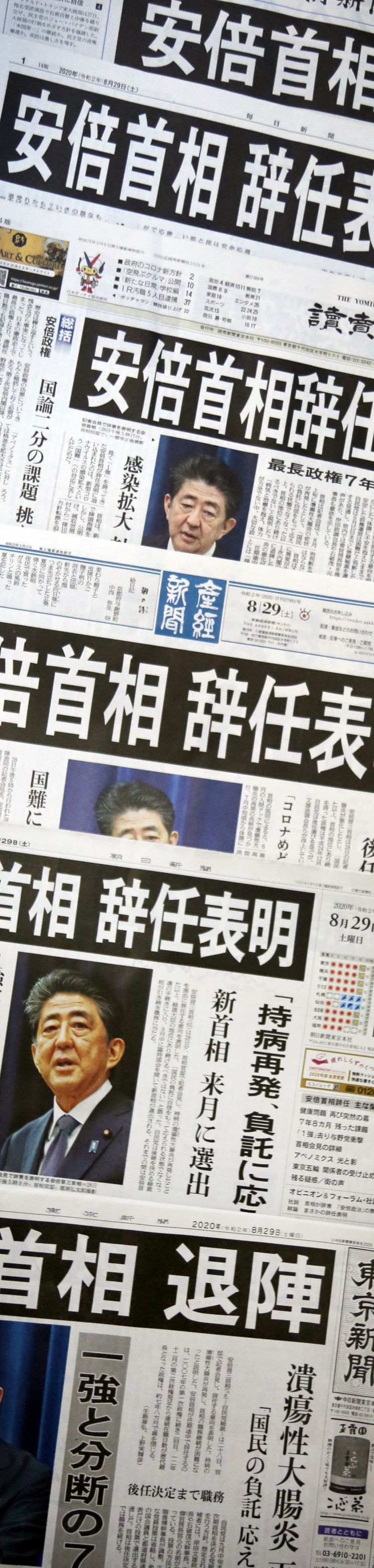 Japanese media announcing the resignation of Japanese Prime Minister Shinzo Abe
 [Image source=Yonhap News]
[Asia Economy Reporter Naju-seok] With the resignation of Japanese Prime Minister Shinzo Abe, 'Abenomics' has also come to an end for the time being. While it was credited with bringing about economic recovery, there were also criticisms that structural reforms were not properly implemented. The Japanese economy in the era of the novel coronavirus infection (COVID-19) is also expected to continue facing crises.
On the 29th, Japan's Nihon Keizai Shimbun viewed that changes to Abenomics are inevitable following Prime Minister Abe's resignation. However, it is expected that the monetary and fiscal policy stance will continue as is amid the COVID-19 crisis.
Abenomics has led the economic recovery phase through aggressive fiscal and monetary policies. Because of this, it achieved considerable economic results, but it is still evaluated that the structure of the Japanese economy has not been changed. Moreover, the economic recovery phase already ended in October 2018.
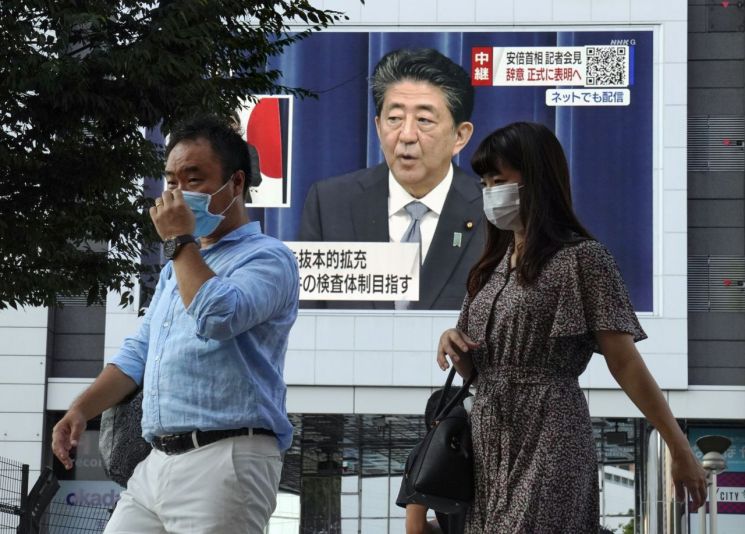 The press conference of Japanese Prime Minister Shinzo Abe's resignation is being broadcast on the 28th.
 [Image source=EPA Yonhap News]
Now, it is a situation where economic stimulus measures must be continuously implemented amid the COVID-19 crisis.
The situation is even worse. When Abenomics began, institutions like the Bank of Japan still had room for monetary policy, but currently, negative interest rate policies and unconventional measures have been fully deployed. The capacity for additional policy measures is increasingly depleted. Having used a significant portion of its ammunition through Abenomics and other measures, there are not many tools left to deploy in the COVID-19 crisis phase.
Furthermore, there are criticisms that the original goals of Abenomics were not properly achieved. Regulatory reforms and employment practices such as lifetime employment still remain. Flexibility, such as labor moving to growth industries, has not been secured. The low birthrate and aging population structure persist, so Japan's potential economic growth rate does not exceed 1%.
The fiscal situation is even more serious. Initially, there was a plan to shift Japan's finances from deficit to surplus by 2025, but this is not easy. Even the Japanese media express concerns that if this goal is not achieved, negative impacts such as a downgrade of government bond credit ratings could occur.
The sudden resignation inevitably causes disruptions in next year's budget formulation. The Japanese government must prepare the budget by the end of September this year. However, personnel changes including the prime minister and cabinet members are unavoidable, so it is inevitable to formulate the budget without confirmed policy directions. A Japanese government official said, "We don't know what will happen. We can only swallow our saliva and watch."
© The Asia Business Daily(www.asiae.co.kr). All rights reserved.


















