Powell "Most Ambitious Change Since 2012 Inflation Targeting Introduction... Applying Recent Lessons"
Reflecting Shift in View That Falling Unemployment Causes Overheating
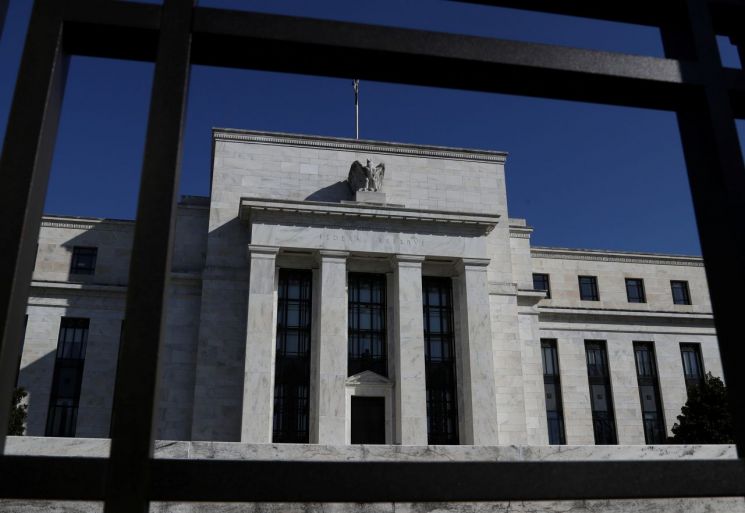
[Asia Economy Reporter Jeong Hyunjin] The U.S. Federal Reserve (Fed) has significantly shifted its monetary policy focus from inflation to employment by tolerating inflation rises above 2%. This move breaks the prejudice that falling unemployment rates necessarily trigger inflation and positions the Fed as a champion of reviving the employment market shaken by the COVID-19 pandemic. Foreign media have evaluated this as a new strategy that breaks Fed’s 30-year-old practice.
On the 27th (local time), the Fed’s Federal Open Market Committee (FOMC) announced in a statement that it had unanimously adopted an "average inflation targeting" framework as part of its long-term monetary policy strategy. Until now, the Fed had set an inflation target of 2% and proactively adjusted interest rates to prevent inflation from exceeding this level. However, by applying an average, the Fed clearly communicated to the market that it will maintain near-zero interest rates for some time even if inflation exceeds 2%, without responding immediately with rate hikes.
Fed Chair Jerome Powell said in a virtual speech at the Jackson Hole meeting in Wyoming that this was "the most ambitious change to the policy framework since the 2% inflation target was first approved in 2012."
This monetary policy shift was influenced by the fact that U.S. inflation has consistently remained below 2% since the adoption of the inflation targeting framework, and that employment market instability has increased due to the COVID-19 crisis. Regarding the background of the policy change, Chair Powell mentioned that it "reflects lessons learned recently," implying that it takes into account employment instability and low inflation.
The Fed indicated that employment will become the top priority consideration in monetary policy. Since 2012, the Fed’s long-term monetary policy strategy has included the phrase that "inflation, employment, and long-term interest rates move and respond in economic and financial crisis situations," but this time it placed employment ahead of inflation to emphasize its importance. Chair Powell explained, "Because the economy is always evolving, the FOMC’s strategy to achieve its goals must adapt to new challenges," adding, "This subtle change reflects our view that a strong labor market can be sustained without causing rapid inflation."
Former Fed Chair Ben Bernanke evaluated, "If investors trust Fed communications, this change will enhance the policy’s flexibility." This means the market expects a more accommodative policy, which will increase the economic stimulus effect.
Meanwhile, the Bank of Korea is unlikely to pursue a policy prioritizing employment like the Fed. This is because the economic structures differ from those of the U.S., and adding employment as a target could conflict with other objectives. Article 1, Paragraph 1 of the current Bank of Korea Act defines the Bank’s purpose as "price stability."
© The Asia Business Daily(www.asiae.co.kr). All rights reserved.
![A Woman Who Jumps Holding a Stolen Dior Bag... The Mind-Shaking, Bizarre Con of a "Human Knockoff" [Slate]](https://cwcontent.asiae.co.kr/asiaresize/183/2026021902243444107_1771435474.jpg)
















