Consumer Harm from Undisclosed Ads Increasing Daily... YouTubers Cannot Be Punished
Fair Trade Commission to Strengthen Crackdown Next Month, but Effectiveness in Doubt
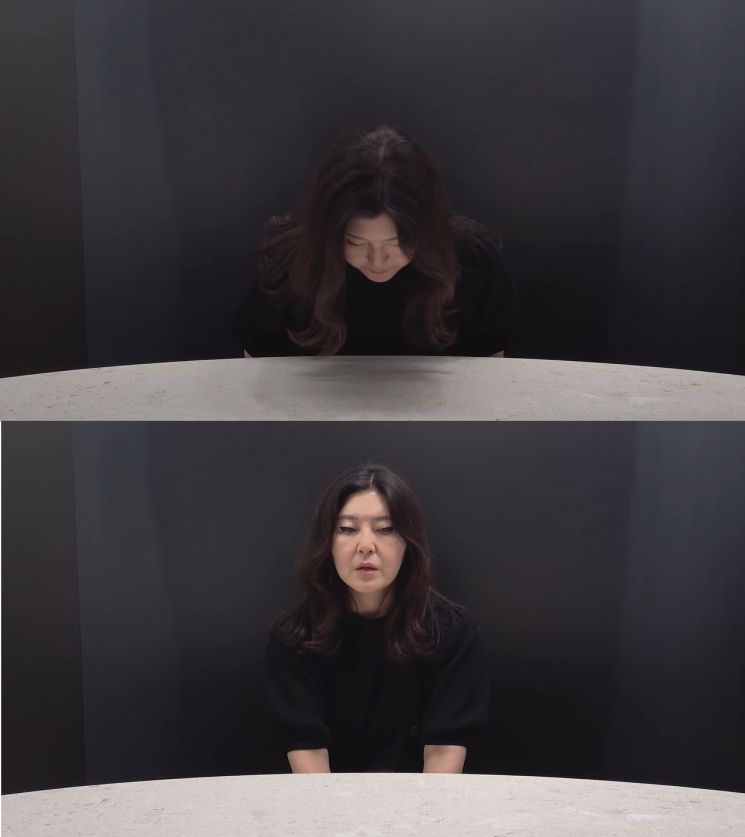
[Asia Economy Reporter Jin-gyu Lee] Famous YouTubers and influencers are bowing their heads one after another amid controversies over 'dwit-gwang-go' (the act of promoting products while hiding sponsorship). The viewers watching this are only coldly looking on. As consumer damage caused by dwit-gwang-go increases, voices calling for strong punishment of YouTubers who abuse dwit-gwang-go are growing louder. However, there is still no proper way to regulate dwit-gwang-go.
Last month, famous stylist Han Hye-yeon and singer Kang Min-kyung caused a big controversy by posting content with dwit-gwang-go on their YouTube channels, making it appear as if it was 'naedonnaesan' (items bought with their own money). Following this, Tzuyang, a mukbang YouTuber with 2.68 million subscribers, declared retirement earlier this month after a dwit-gwang-go controversy. Popular YouTubers Moon Bok-hee, YangPang, and Hamji also admitted to omitting advertisement disclosures and posted apology videos on their channels one after another.
Some viewers argued that despite the repeated apology videos from YouTubers, they should be punished for fraud, but under current law, there are limits to applying fraud charges to dwit-gwang-go. However, regulatory laws on online advertising include the 'Act on Fair Labeling and Advertising' (Fair Labeling Act), the Information and Communications Network Act, and the Electronic Commerce Act, but even these only allow punishment of the businesses that requested unfair advertisements. Ultimately, there are still no punishment regulations for YouTubers who post content with dwit-gwang-go.
Consumer damage caused by dwit-gwang-go in SNS commerce is increasing day by day. According to data from the Korea Fair Trade Commission, from 2019 to last month, there were a total of 458 cases of 'SNS market consumer-related law violations.' Among these, 277 cases (60%) were violations of the Fair Labeling Act for failing to properly disclose advertisements. SNS markets include web and mobile transactions through YouTube, Instagram, Facebook, Twitter, Kakao, Naver Cafe, and others. The number of consumer consultations related to SNS markets at the Korea Consumer Agency has increased every year: 2,093 cases in 2017, 2,387 in 2018, 3,307 last year, and 1,879 cases as of August this year.
As consumer damage caused by dwit-gwang-go increases like this, the Fair Trade Commission plans to implement a revised 'Guidelines on Labeling and Advertising for Recommendations and Endorsements' prohibiting dwit-gwang-go starting next month on the 1st. The guidelines are specific standards applied when reviewing unfair labeling and advertising under the Fair Labeling Act. Advertisements that do not follow these standards will be judged as unfair advertisements in the Fair Trade Commission's review. The revision requires YouTubers to clearly state phrases such as 'sponsored' or 'advertisement' when posting content in exchange for economic compensation.
Businesses that engage in unfair advertising will be fined up to 2% of related sales or income or up to 500 million KRW. If prosecuted by the prosecution, they may face imprisonment of up to 2 years or fines up to 150 million KRW. Here, businesses generally refer to advertisers who requested the advertisement, but the Fair Trade Commission is considering treating influencers who earn profits from dwit-gwang-go as businesses and cracking down on them. However, some voices express concerns that the Fair Trade Commission may not be able to monitor every dwit-gwang-go video among the vast amount of YouTube content being uploaded in real time.
© The Asia Business Daily(www.asiae.co.kr). All rights reserved.
![Clutching a Stolen Dior Bag, Saying "I Hate Being Poor but Real"... The Grotesque Con of a "Human Knockoff" [Slate]](https://cwcontent.asiae.co.kr/asiaresize/183/2026021902243444107_1771435474.jpg)
















