<동작구> Ordinance to Support Households Suspected of Hoarding Announced and Enforced on the 13th: Establishing Institutional Support System... Targeting Households Suspected of Hoarding with Resident Registration in Dongjak-gu and Actual Residence ▲Recipients of Benefits ▲Persons with Disabilities... ▲Household Waste Collection ▲Administrative and Financial Support Possible through Linkage with Public Health Centers and Mental Health Institutions
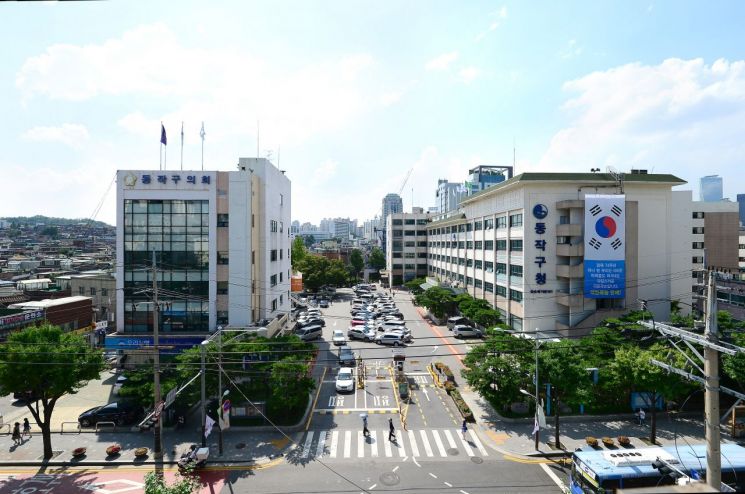
[Asia Economy Reporter Park Jong-il] Dongjak-gu (Mayor Lee Chang-woo) has enacted and implemented the 'Seoul Special City Dongjak-gu Ordinance on Support for Hoarding Disorder Suspected Households' to support a comfortable living environment for households suspected of hoarding disorder.
Recently, with the increase in single-person households, family-centered care functions and community safety nets have weakened, leading to a rising trend in socially isolated households and households suspected of hoarding disorder.
Hoarding disorder is a behavioral disorder, a type of obsessive-compulsive disorder, characterized by continuously keeping any items regardless of their use, and feeling unpleasant and uncomfortable if not doing so.
Hoarding disorder is recognized as a social problem because the foul odors and unsanitary environments caused by accumulated items and trash inside and outside the home cause distress not only to the individual but also to neighbors.
According to the 2016 Seoul City Hoarding Disorder Discovery and Crisis Intervention Status, Dongjak-gu had 28 cases, higher than the Seoul city average of 12.5 cases.
From 2018 to the first half of 2019, the district supported free cleaning and disinfection services for 8 households under integrated case management, and in the second half of last year, secured citizen participation budget to support 15 households through the ‘Clean Our Home Cleaning and Organizing Support Project.’
However, during the support process, intervention was impossible if the individual refused due to privacy invasion issues, and each neighborhood had to persuade and obtain consent from the target households to support trash cleanup, revealing insufficient institutional support measures.
With this ordinance revision, legal grounds for administrative and financial support have been established, enabling proactive discovery and systematic management of households suspected of hoarding disorder.
The support targets are households suspected of hoarding disorder who are registered residents and actually reside in Dongjak-gu, including ▲low-income groups ▲emergency support targets ▲single-parent families ▲households with disabilities, etc.
For households suspected of hoarding disorder who have given consent themselves or through their guardians, support such as ▲collection of household waste ▲linkage with mental health professional institutions like public health centers will be provided. However, if there is no guardian, the decision will be made through deliberation by the local community security council of the resident registration jurisdiction neighborhood.
Additionally, the ordinance includes provisions for ▲establishing a community cooperation system with Dongjak-gu Volunteer Center and related social organizations ▲payment of actual expenses to volunteers dispatched on site.
Yoo Won-sik, Director of Welfare Policy Division, said, “We will help the target residents become self-reliant through the promotion of support policies for households suspected of hoarding disorder,” and added, “We will continue to do our best to discover and support welfare policies for residents in welfare blind spots in cooperation with the local community.”
© The Asia Business Daily(www.asiae.co.kr). All rights reserved.
![User Who Sold Erroneously Deposited Bitcoins to Repay Debt and Fund Entertainment... What Did the Supreme Court Decide in 2021? [Legal Issue Check]](https://cwcontent.asiae.co.kr/asiaresize/183/2026020910431234020_1770601391.png)















