The Secret of the Villous Crypts in the Small Intestine
Revealing the Direct Mechanism of Fat Absorption
A New Chapter in Treating Metabolic Diseases like Obesity and Diabetes
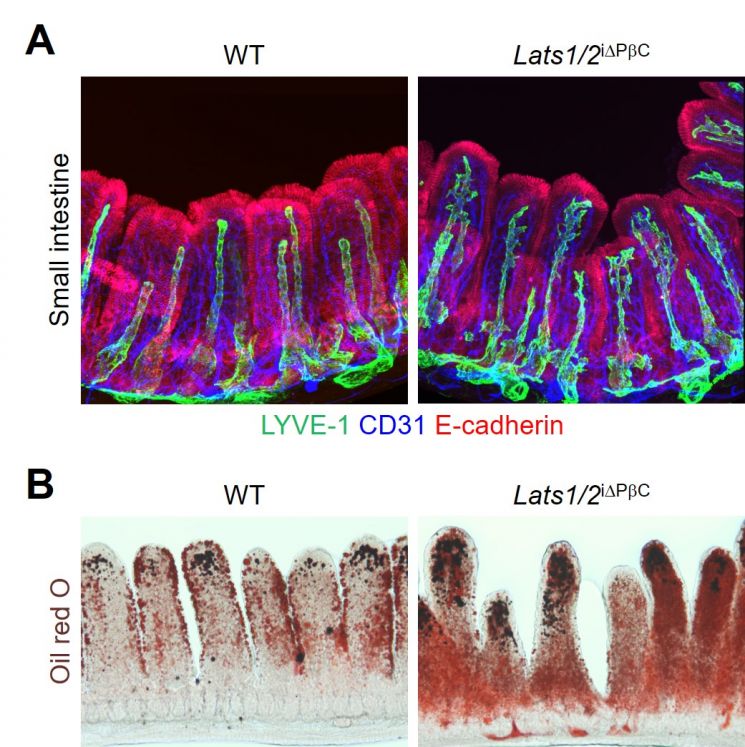 As a result of excessive activation of YAP/TAZ in stromal cells within the villous chorion, abnormal sprouting and proliferation of the cancerous duct (green) leading to morphological changes (A) and reduced fat (red) absorption function (B) are observed.
[Asia Economy Reporter Junho Hwang] Inside our small intestine, there are finger-shaped projections. These projections move according to the autonomic nervous system and absorb nutrients. In particular, within these villi is a lymphatic vessel called the lacteal, which is known to play a role in absorbing fat-soluble nutrients in our body. The exact mechanism by which the form and function of this lacteal are maintained was previously unknown, but domestic researchers have uncovered this secret. By revealing how the organ responsible for fat absorption in our body operates, there is growing interest in whether this will open new avenues for obesity treatment in the future.
Unlocking the Secret of the Lacteal... The Key to Fat Absorption
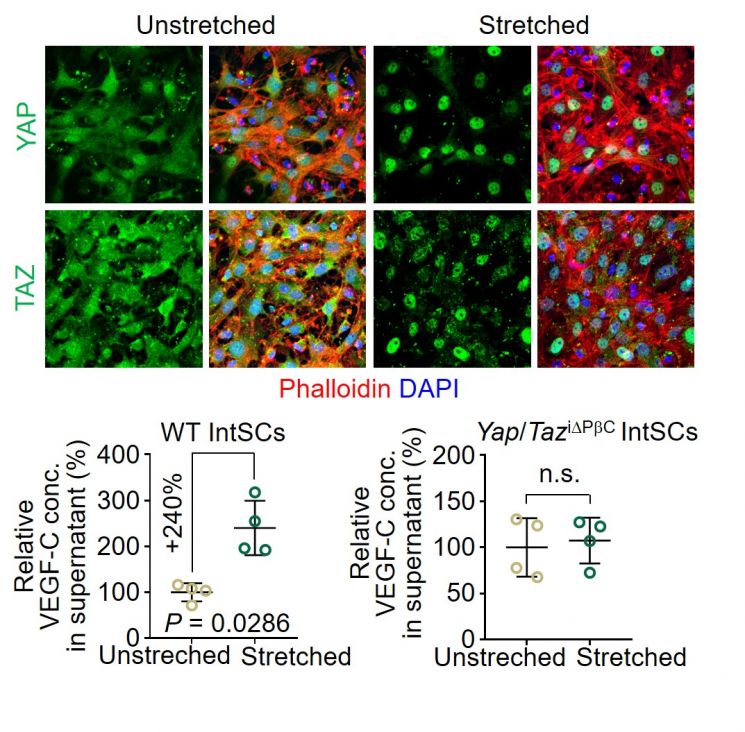 Regulation of VEGF-C Production According to Contraction and Relaxation Movements of the Small Intestine
The research team led by Kyuyoung Ko, head of the Vascular Research Group at the Institute for Basic Science (Distinguished Professor at the Graduate School of Medical Science and Engineering, Korea Advanced Institute of Science and Technology), announced that they identified that stromal cells constituting the small intestine are key elements regulating the function of the lacteal. Their related research paper was published on the 14th at 6 PM (Korean time) in the international journal Nature Communications.
The research team revealed the previously veiled mechanism of lacteal function. They discovered a new group of stromal cells that regulate the function and morphology of the lacteal. Furthermore, they elucidated the operating mechanism of this cell group at the molecular biological level.
To understand the influence of stromal cells around the lacteal, the team observed the area near the lacteal. Through this, they confirmed that various stromal cells express YAP/TAZ proteins, which are Hippo signaling pathway molecules responding to physical stimuli. They then hyperactivated these proteins and found that secretion of VEGF-C, a lymphangiogenic factor, increased, causing abnormal sprouting and proliferation of the lacteal, which impaired fat absorption function. Conversely, when YAP/TAZ expression was suppressed, VEGF-C decreased, the lacteal shortened, and fat absorption function was also impaired.
Senior researcher Sunpyo Hong, the first author of the study, stated, "Excessive expression of YAP/TAZ proteins impairs lacteal function, while suppression affects its morphology. We confirmed that these proteins control the regulation of the lacteal’s form and function by stromal cells in the small intestine."
Potential Applications in Obesity Treatment and More
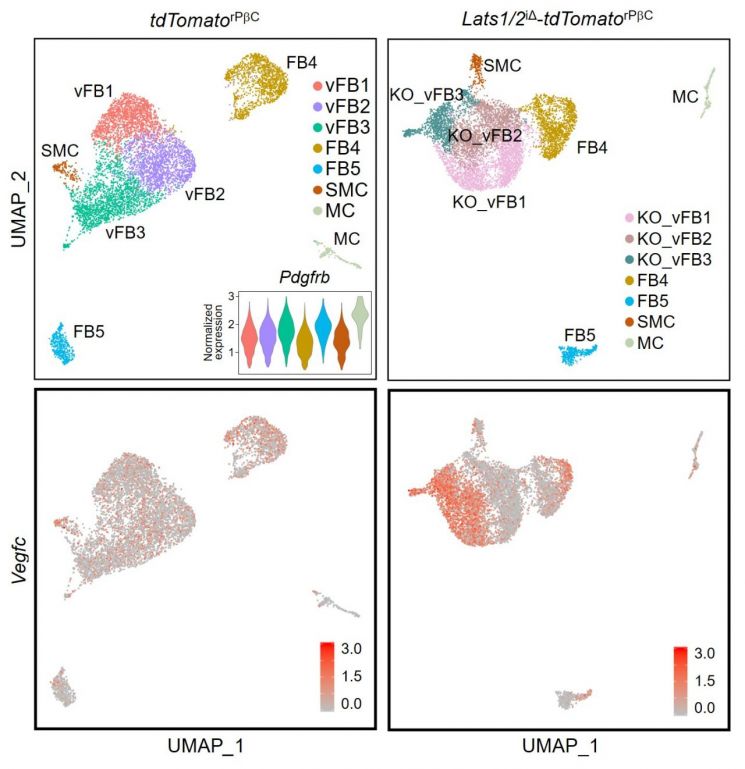 Research results identifying the diversity of stromal cells in the small intestine using single-cell genome analysis and characterizing specific stromal cells that secrete VEGF-C.
Additionally, the research team used single-cell genomic analysis, which can analyze the genome of individual cells, to discover a new group of stromal cells that regulate VEGF-C secretion. When these cells were subjected to physical stimuli similar to the contraction and relaxation movements of the small intestine, YAP/TAZ was activated, increasing VEGF-C secretion. This confirmed that the periodic movements of the small intestine regulate YAP/TAZ activity in stromal cells and control VEGF-C expression, thereby maintaining the normal morphology and function of the lacteal.
Although this study revealed the operating mechanism of the lacteal, the research team anticipates that further studies will be necessary to apply these findings to the treatment of metabolic diseases such as obesity and diabetes.
Researcher Hong said, "Further research is needed to understand exactly how the lacteal absorbs fat and whether diseases related to YAP/TAZ protein expression exist. Through such studies, we hope to present an important milestone for the treatment of metabolic diseases like obesity and diabetes."
© The Asia Business Daily(www.asiae.co.kr). All rights reserved.
![Clutching a Stolen Dior Bag, Saying "I Hate Being Poor but Real"... The Grotesque Con of a "Human Knockoff" [Slate]](https://cwcontent.asiae.co.kr/asiaresize/183/2026021902243444107_1771435474.jpg)


















