Difficulty in Facility Restoration Due to Drifted Gonpo Silage
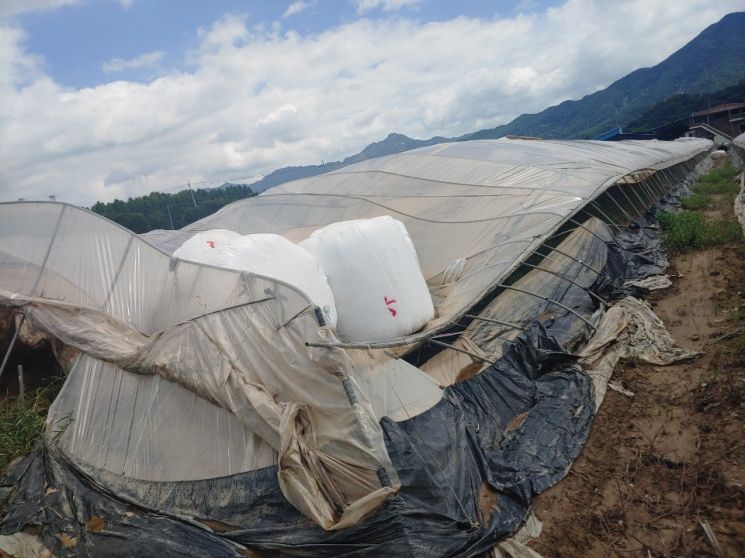
[Asia Economy Honam Reporting Headquarters Reporter Kim Chunsu] The specialized greenhouse crop cultivation complex in Gokseong-gun was completely submerged, suffering significant damage due to the flooding that occurred from the 7th to the 9th.
According to Gokseong-gun on the 14th, as of the 12th, crop damage was confirmed in 1,691 greenhouse facilities.
In particular, large-scale greenhouse complexes cultivating melons and strawberries in Gokseong-eup, Ogok-myeon, and Godal-myeon suffered heavy damage. Additionally, organic ginseng cultivation areas in Okgwa-myeon and papaya farms in Ip-myeon are experiencing difficulties due to flooding.
The representative crop of Gokseong-gun, melons, which were being cultivated targeting the Chuseok holiday, must all be discarded. Not only the greenhouses but also the APC and Gokseong Melon Corporation suffered flood damage, making sorting and shipping operations difficult. The 12 members of the Gokseong Premium Melon Research Association, who had been sweating through the hot summer aiming for harvest, were left speechless at the flood site.
The greenhouse facilities revealed as the water receded were in a disastrous state due to the corn silage washed in by the heavy rain. The corn silage, sealed in plastic with rice straw, pressed down the pipes not only on top of the greenhouse steel frames but also between the greenhouses. This has made opening and closing the greenhouses impossible and caused foul odors, delaying restoration work and causing great difficulties.
Due to the heavy weight of the corn silage, it is difficult to remove it manually, and the narrow spaces between greenhouses make it hard for equipment to enter. Currently, Gokseong-gun is focusing on assessing the status of greenhouses that are difficult for equipment to access and seeking ways to remove the scattered corn silage from the greenhouse facilities.
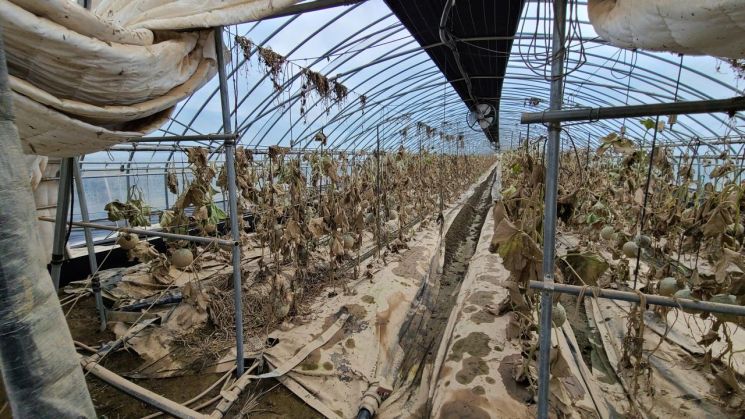
There are also concerns about strawberry cultivation. In the greenhouse complexes, strawberries are planted in September, but 92% of the locally produced seedlings suffered from waterlogging damage. Efforts have been made to restore plant vigor through rapid drainage, soil removal, and pesticide application, but full recovery is expected to be difficult.
Gokseong-gun urgently arranged for 130,000 surplus seedlings from local nurseries to be supplied to affected farms. Additionally, with assistance from the Rural Development Administration and Jeonnam Agricultural Research & Extension Services, they are identifying an additional 8.5 million surplus seedlings nationwide to help secure strawberry seedlings for the damaged farms.
A county official stated, “We will prepare measures to remove the corn silage and do our utmost to ensure there are no problems with autumn crop planting.”
© The Asia Business Daily(www.asiae.co.kr). All rights reserved.


















