Replacing Leaded Steel Fully Dependent on Imports... Enhancing National Industrial Competitiveness through Domestic Material Localization
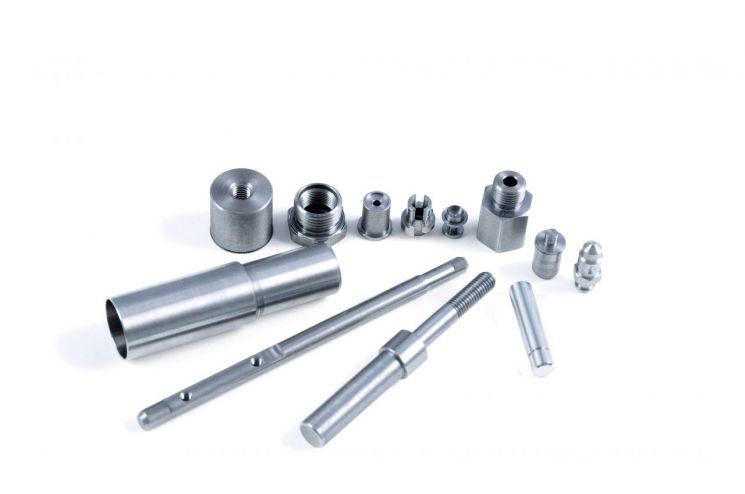
[Asia Economy Reporter Hwang Yoon-joo] POSCO has succeeded in developing the world's first mass-produced eco-friendly graphite free-cutting steel (PosGRAM) and has officially begun expanding its sales. PosGRAM, developed by POSCO, can replace leaded free-cutting steel, which was entirely dependent on imports, and is expected to significantly enhance the national industrial competitiveness.
Free-cutting steel is a type of wire rod product with a circular cross-section that is thin and long, characterized by clean and fast cutting surfaces. It is mainly used in the production of precision parts for automobiles, electrical and electronic devices, and office automation equipment where complex shapes or dimensional accuracy are critical.
Traditional free-cutting steel contains added lead to improve machinability, but lead can disperse into the air as microscopic particles (micrometers in size) during production, processing, and recycling, potentially causing inflammation or nervous system damage to workers.
Accordingly, international guidelines restricting hazardous substances such as RoHS and ELV limit the lead content in products to a maximum of 0.1%. However, leaded free-cutting steel, for which no alternative material exists, is granted a special exemption allowing up to 0.35%. Nevertheless, the trend of banning lead-containing parts is expanding among global companies, and regulations restricting lead use are expected to tighten further.
POSCO's development of graphite free-cutting steel is significant in that it uses eco-friendly graphite to achieve superior machinability compared to leaded free-cutting steel. The homogeneous microstructure realized through heat treatment provides uniform machinability regardless of the cutting direction, enhancing processing efficiency. Additionally, its property of easily magnetizing under surrounding magnetic fields makes it suitable for precision control parts such as solenoid valves.
POSCO began developing free-cutting steel in 2017 by developing technology to control the distribution of graphite particles and completed the development last year by establishing mass production standards on the production line. Earlier this year, POSCO formed a company-wide task force encompassing research, sales, and production to facilitate early market adoption, and in June, it received positive quality evaluations from customers and started sales.
The global free-cutting steel market is estimated at about 1 million tons annually, with lead-containing products accounting for more than half. Since there are no domestic manufacturers of leaded free-cutting steel, 23,000 tons are entirely imported annually from overseas countries such as Japan. POSCO expects PosGRAM mass production to replace a significant portion of the imported free-cutting steel.
To expand PosGRAM sales, POSCO is providing solution support tailored to the cutting conditions and tool selection according to the equipment characteristics of each customer and is also pursuing component certification targeting domestic and international automobile and home appliance companies.
© The Asia Business Daily(www.asiae.co.kr). All rights reserved.

















