"Tonghapdang suffered a crushing defeat for failing to gain centrist support"
New party platform and policies include "expansion toward the center"
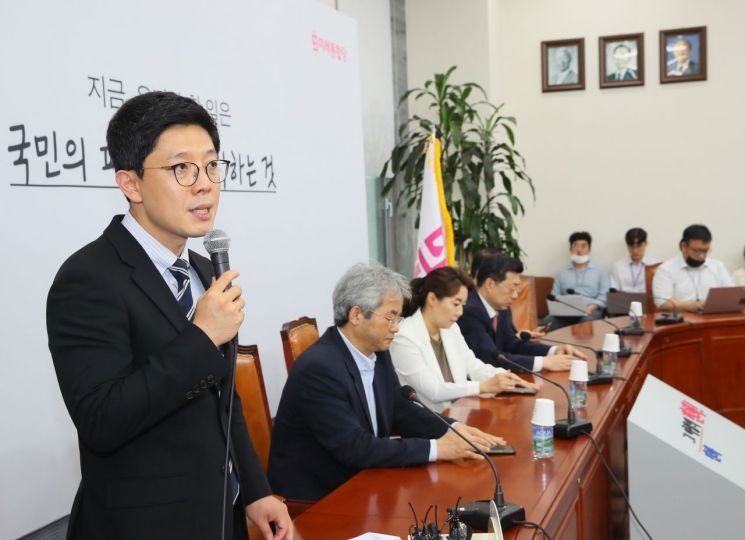
[Asia Economy Reporter Kim Hyemin] On the 13th, the United Future Party analyzed the causes of its defeat in the recent general election and revealed the party's new direction. After about a month and a half of work, they released the 'General Election White Paper' along with new party principles and policies. This is the first tangible outcome under the emergency committee led by Kim Jong-in, with the overarching value being an 'expansion toward the center.'
The Special Committee for Revising Party Principles and Policies and the Special Committee for Producing the General Election White Paper, both under the United Future Party's emergency committee, reported their activities to the emergency committee that morning and then made the party principles, policies, and white paper public. The purpose was to review the results of the worst defeat in history and to announce the party's new identity.
Both the general election white paper and the new party principles and policies commonly emphasize expanding the support base toward the centrist voters. The white paper cited the 'failure to regain support from the centrist voters' as a major cause of defeat. It pointed to controversies over offensive remarks that surfaced mid-election and conflicts between the nomination management committee and party leadership, which highlighted internal strife and led to failure in attracting centrist voters. Going further back, the lack of a clear party stance on former President Park Geun-hye was also identified as one of the reasons for defeat. The failure to clarify the party's position after the impeachment led to a decline in favorable views toward the conservative camp.
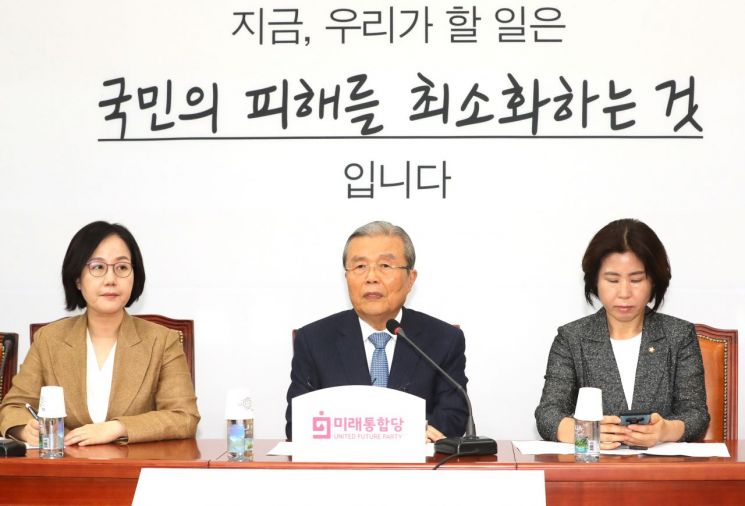
The new party principles and policies contain many measures to overcome these issues. For the first time, the newly released party principles explicitly state the inheritance of the democratic spirit of the May 18 Gwangju Democratization Movement. The term 'market economy,' which was a core value of traditional conservatism, was removed, and issues previously considered progressive, such as resolving social polarization, economic democratization, and workers' rights, were included. However, the party maintained its existing identity by including security policies such as 'complete denuclearization of North Korea.'
As concrete policies supporting the party principles, 'basic income' was specified in the first clause. A political reform task includes a provision banning four consecutive terms for members of the National Assembly. It also specifies plans to legislate mandatory nomination of youth candidates for local councils and lowering the eligibility age for candidacy in major elections to 18 years old.
The United Future Party's recent volunteer activities at flood damage sites in the Honam region and its plan to visit the May 18 Democratic Cemetery in Gwangju next week are seen as efforts to use Honam as a foothold to attract centrist support.
However, the party principles and policies will be finalized after passing through the party caucus and the national committee. The key challenge is persuading senior lawmakers who express concerns about the ban on four consecutive terms and hardline conservatives who oppose the expansion toward progressive agendas. In fact, during the production of the general election white paper, limitations were pointed out as the party failed to clearly specify responsibility due to internal opposition.
As the party enters a phase of recovering approval ratings, it is expected that genuine recognition will come only when these policies are implemented in actual legislative activities. A party official said, "If it remains just words, it could backfire with even greater criticism."
© The Asia Business Daily(www.asiae.co.kr). All rights reserved.
![Clutching a Stolen Dior Bag, Saying "I Hate Being Poor but Real"... The Grotesque Con of a "Human Knockoff" [Slate]](https://cwcontent.asiae.co.kr/asiaresize/183/2026021902243444107_1771435474.jpg)

















