Installation of Real Estate Supervisory Body: Opinions from 10 Experts
7 Opposed... 1 Supported, 2 Undecided
'Concerns Over Rooftop Structure' Most Frequent
[Asia Economy Reporters Inho Yoo and Chunhee Lee] Concerns are growing that the real estate market supervisory organization promoted by the government will become an all-powerful "roof-top" organization. In a situation where the government controls policies and laws to effectively dominate the real estate market, creating an organization that even monitors individuals' real estate transactions and information could undermine the fundamentals of market principles. Above all, experts question the necessity of establishing a new organization when the government already monitors real estate prices through various institutions.
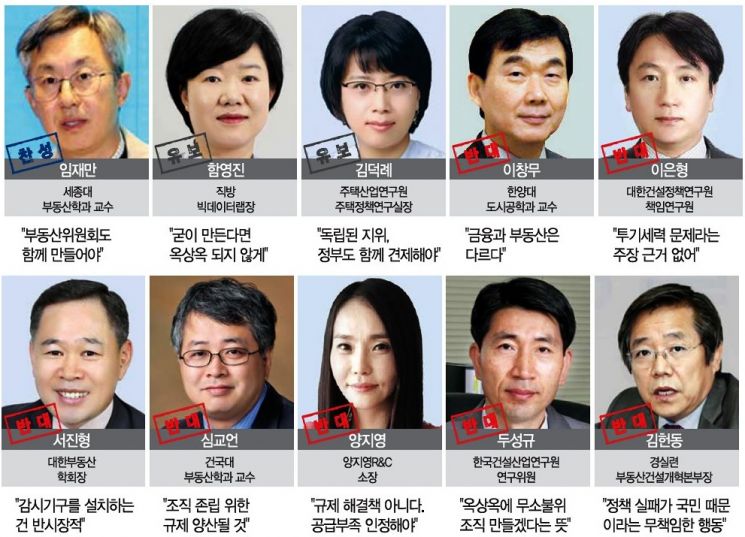
On the 13th, Asia Economy surveyed 10 experts from academia, private research institutes, and civic groups regarding the establishment of a new real estate market supervisory organization. Only one person expressed support, seven opposed the creation of the organization, and two showed conditional support with reservations.
'Roof-top' and all-powerful organization concerns... Criticism that policy failures are being shifted onto the public
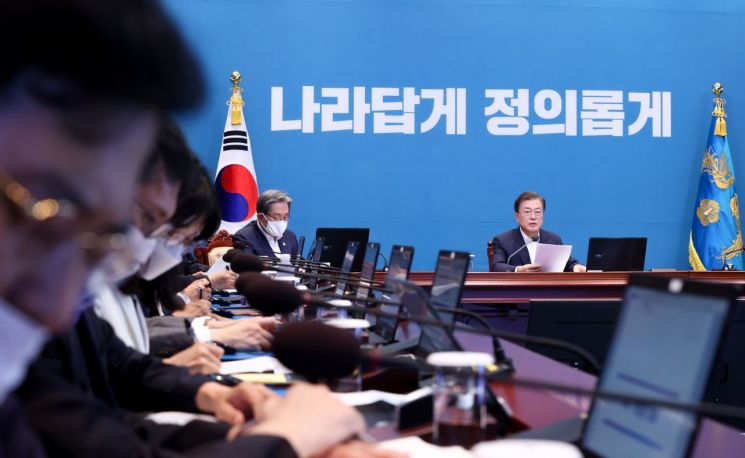 President Moon Jae-in is presiding over a senior secretaries and aides meeting at the Blue House on the afternoon of the 10th. On this day, President Moon said, "To ensure the effectiveness of (real estate regulation) measures, we will also consider establishing a real estate market supervisory organization if necessary." [Image source=Yonhap News]
The opposition mainly cited "anti-market regulation" and "unnecessary roof-top organization" as reasons. Some even pointed out that "the government’s attempt to blame the public for policy failures is irresponsible behavior."
Lee Eun-hyung, senior researcher at the Korea Construction Policy Institute, said, "There are already organizations such as the Ministry of Land, Infrastructure and Transport that monitor real estate speculation," adding, "It is doubtful that increasing their scale tenfold or twentyfold to strictly supervise the real estate market will eliminate illegal or illicit activities or stabilize housing prices." Shim Kyo-eon, professor of real estate at Konkuk University, emphasized, "If a supervisory organization is created, it will continuously create regulations to justify its existence, and eventually, the real estate market will become a 'mess of strange regulations'."
Lee Chang-moo, professor of urban engineering at Hanyang University, pointed out, "There is no precedent worldwide for a real estate supervisory organization itself," adding, "Such organizations are not created unless in abnormal situations like Venezuela." Seo Jin-hyung, president of the Korea Real Estate Society (professor at Gyeongin Women's University), also noted, "Although the government keeps citing foreign cases, such systems are almost nonexistent in free democratic market economies."
In fact, in Singapore, the Housing and Development Board manages housing supply and transactions, but over 80% of the housing is already nationalized, making the situation different from ours. Experts also point out that in Venezuela, the Fair Price Supervision Agency controls market prices, but mainly manages daily necessities rather than housing.
The effects of establishing the organization are also viewed negatively. Yang Ji-young, head of Yang Ji-young R&C, said, "Even now, special judicial police and response teams are deployed for investigations, but the effectiveness is limited," expressing the view that expanding the organization will not change much. Doo Sung-gyu, research fellow at the Korea Institute of Construction Industry, criticized, "Creating a huge organization under the Ministry of Land with judicial and investigative powers means establishing an all-powerful roof-top organization."
From the civic groups’ perspective, there is even a call for monitoring government policies rather than the market. Kim Heon-dong, head of the Real Estate and Construction Reform Division at the Citizens’ Coalition for Economic Justice (CCEJ), said, "Creating a new organization is an irresponsible act that assumes housing prices rose not because of their own policy failures but because of the public," and pointed out, "An organization should be established to supervise those who formulate real estate policies."
Some argue that a comprehensive 'control tower' should rather be established
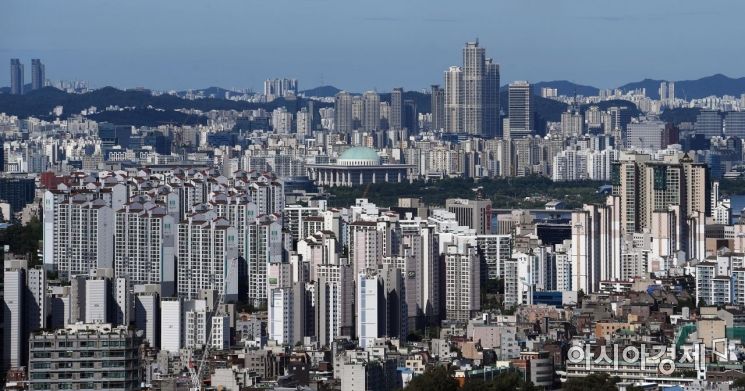
However, some suggest that not only market supervision but also policy functions should be included in a comprehensive 'control tower.'
Im Jae-man, professor of real estate at Sejong University, said, "Since supervisory and policy functions are scattered across multiple ministries, it is necessary to consider a real estate committee and supervisory agency system to strengthen the two-track approach of policy and post-management," proposing, "A real estate committee should be created to handle overall policies, and a real estate supervisory agency should perform monitoring functions to establish transaction order."
Meanwhile, the government is reportedly considering introducing a model similar to the Financial Supervisory Service, a public institution with independent authority that monitors and supervises the financial market. There are discussions about establishing the organization as a 'semi-public, semi-governmental' body under the Ministry of Land, Infrastructure and Transport. To ensure independence, there is also consideration of placing the organization directly under the Prime Minister’s Office.
Considering opposition to the organization’s scale, it is difficult to create a mammoth organization, but it is expected to be around 100 personnel. Based on the current 'Real Estate Market Illegal Activities Response Team,' which consists of 15 dispatched staff from the Ministry of Land, prosecutors, police, National Tax Service, and Financial Services Commission, the workforce could be expanded at least four to ten times. The Ministry of Land stated, "No decisions have been made regarding the organization’s form or size," adding, "We are reviewing the establishment of a supervisory organization if necessary to enhance market transparency."
© The Asia Business Daily(www.asiae.co.kr). All rights reserved.



















