"Important Data for Understanding the Sewage System in Seongnae during the Joseon Dynasty"
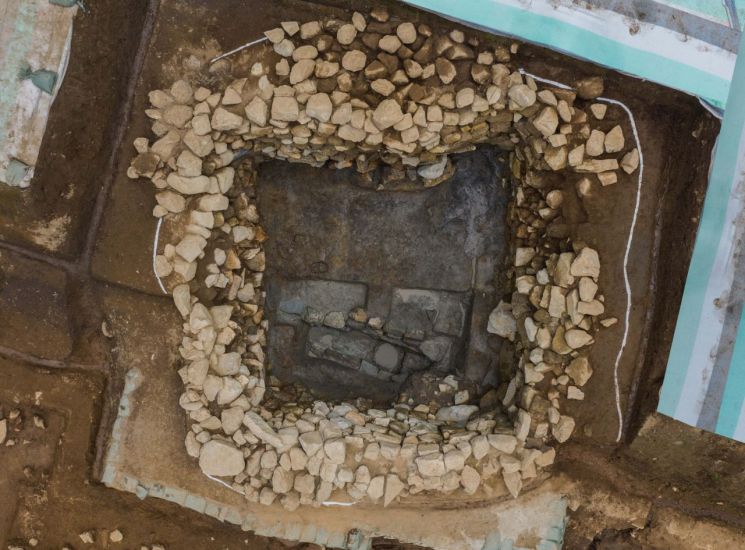
On the 13th, the Cultural Heritage Administration announced that during the excavation of Buyeo Garimseong (Historic Site No. 4), conducted jointly with Buyeo County and the Baekje Ancient Capital Cultural Foundation, two water collection wells used during the Unified Silla and Joseon periods were discovered. A water collection well is a well prepared to collect water inside a fortress.
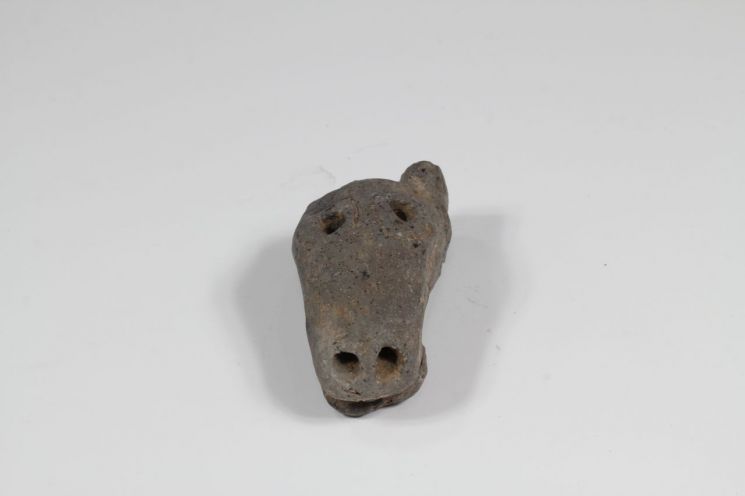
The Joseon period water collection well measures 4.9m in length, 4.5m in width, and 2.3m in depth. Its floor plan is square-shaped. Inside, fragments of Joseon period Buncheong ceramics, roof tiles, and horse head-shaped clay figurines were excavated. The Cultural Heritage Administration stated, "It is estimated to have been constructed in the mid-Joseon period and used until the 17th to 18th centuries when Garimseong was abandoned." They added, "Together with the sluice gate (a facility to drain water inside the fortress) found at the northern fortress wall, it is important data for understanding the drainage system inside the fortress during the Joseon period."
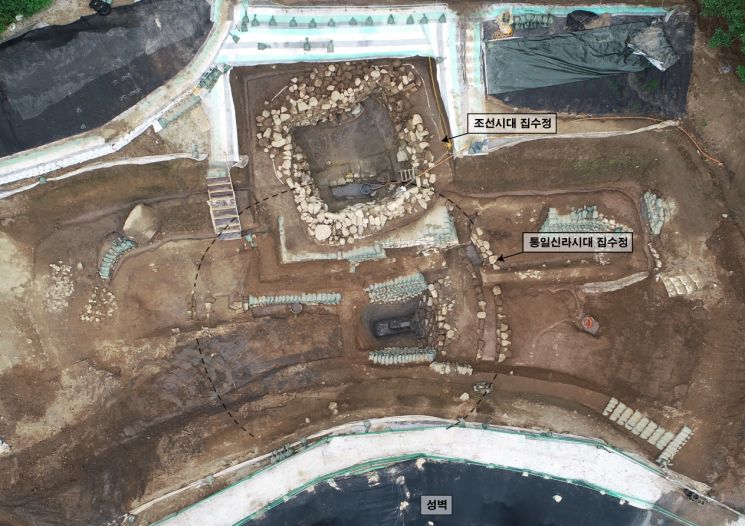
The Unified Silla period water collection well was found between the lower layer of the Joseon period well and the northern fortress wall of Garimseong. It measures 15m in length and more than 2.8m in depth. Its floor plan is circular. A Cultural Heritage Administration official said, "There are facilities blocking water outside the well and drainage channels," adding, "Its form is similar to the water collection wells confirmed at Buyeo Seokseongsanseong." They also said, "We will investigate the internal and surrounding soil layers to clarify the initial construction period and method."
Buyeo Garimseong is known as a strategic mountain fortress that protected the Sabi capital along with Seokseongsanseong, Jeungsanseong, and Cheongmasanseong. According to the Samguk Sagi, it was built in the 23rd year of King Dongseong of Baekje (501). It is the only Baekje fortress whose construction date and place name at the time are known. Since 1996, starting with excavations of the east and south gates, six excavations have been conducted here. As a result, the construction forms of the east and south gates, Baekje period fortress wall construction methods, traces of reconstructed fortress walls, Joseon period sluice gates, and building sites located on the flattened summit area have been confirmed.
© The Asia Business Daily(www.asiae.co.kr). All rights reserved.

![Clutching a Stolen Dior Bag, Saying "I Hate Being Poor but Real"... The Grotesque Con of a "Human Knockoff" [Slate]](https://cwcontent.asiae.co.kr/asiaresize/183/2026021902243444107_1771435474.jpg)

















