Results of Kobaco Consumer Behavior Survey
No Discomfort with Boycott of Japanese Products
Highlighted as Alternatives to Korean Products
Respondents Say They Will Continue Boycott for Over 2 Years
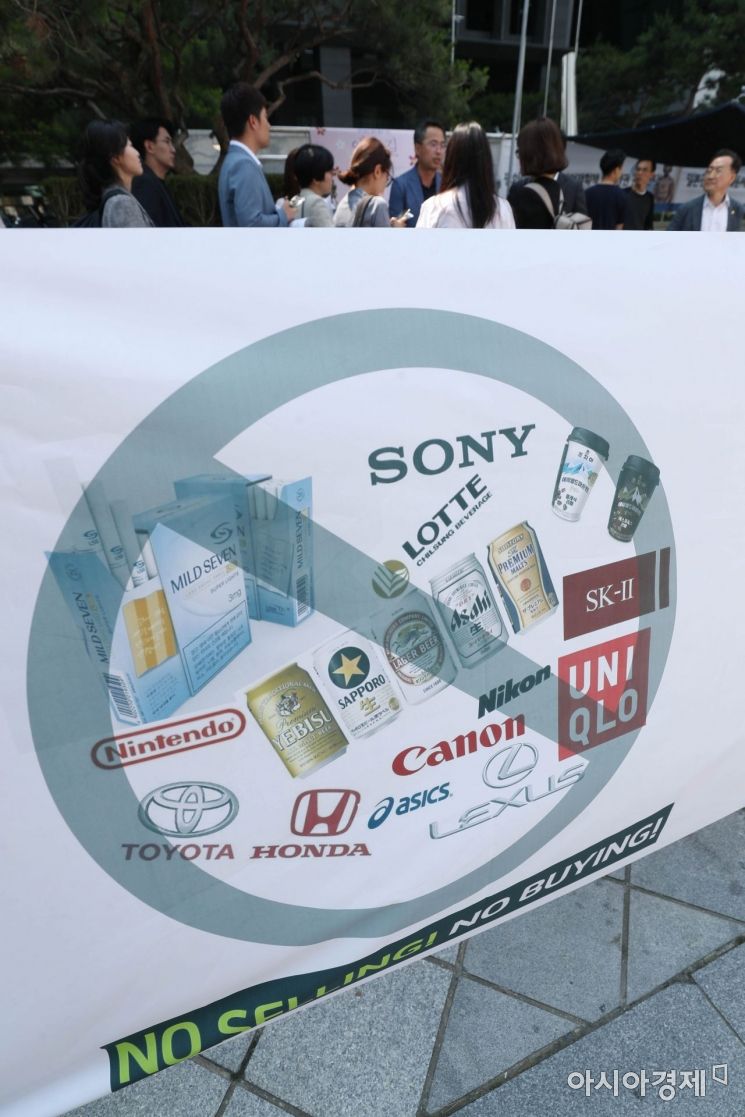 Officials from the Korea Federation of Small and Medium Business Owners are installing a banner on the 5th in front of the Embassy of Japan in Jongno-gu, Seoul, to hold a press conference declaring a boycott of Japanese products. Photo by Moon Honam munonam@
[Asia Economy Reporter Junho Hwang] Since Japan's export restrictions against South Korea in July last year, a boycott of Japanese products by South Korean citizens has continued for one year, but a survey shows that there has been little inconvenience in daily life. Respondents reported using Korean products as substitutes and expressed their intention to continue the boycott for more than two years. The Korea Broadcast Advertising Corporation (KOBACO) announced these results on the 12th regarding the consumer behavior survey conducted in August.
More than 7 out of 10 say 'NO Japan'
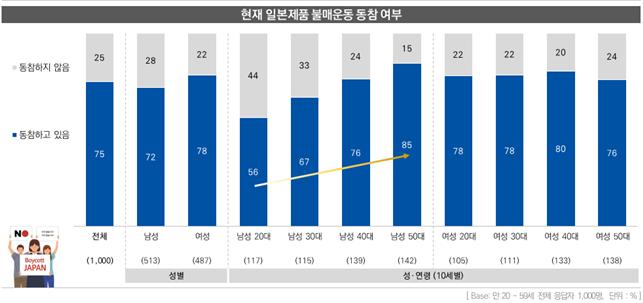
In this survey conducted on the first anniversary of the boycott of Japanese products, more than 70% of respondents said they are participating in the boycott.
Women participated at a rate of 78%, higher than men at 72%. By age group, those in their 50s showed the highest participation, while those in their 20s showed the lowest. Married respondents were more active in the boycott than unmarried ones, and among occupations, full-time housewives showed the highest participation rate.
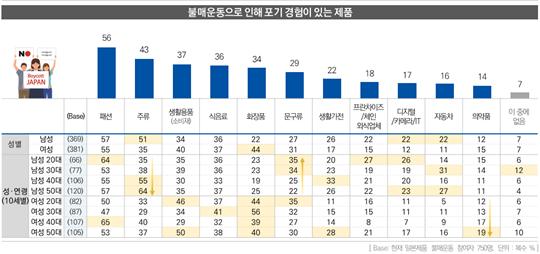
Regarding the sectors where respondents had experience giving up purchases due to the boycott, the fashion sector was the highest at 56%, meaning they did not buy Japanese clothing such as Uniqlo. This was followed by alcoholic beverages (43%) such as Asahi beer, daily necessities (37%), food and beverages (36%), and cosmetics (34%). By gender, men were more likely to have given up purchasing alcoholic beverages, digital/camera/IT products, and automobiles, while women more often gave up cosmetics and daily necessities.
NO Japan, for more than 2 years ahead
Consumers continue the boycott but answered that they do not feel inconvenience in daily life (69%).
This is because they actively purchased domestic products as substitutes for Japanese products. In the case of beer, 70% of respondents said they purchased Korean beer as a substitute. This was followed by stationery at 47%, casual clothing at 46%, and cosmetics at 38%.
Regarding whether they plan to continue participating in the boycott in the future, 70% answered "yes." More than half of the respondents (53%) said they would continue the boycott for more than two years. The proportion of respondents who said they felt "positive" toward advertisements of Korean companies due to the boycott also reached 58%.
The survey was conducted online from the 13th to the 16th of last month, with 1,000 men and women aged 20 to 59 nationwide participating.
Actual sharp decline in imports of Japanese products
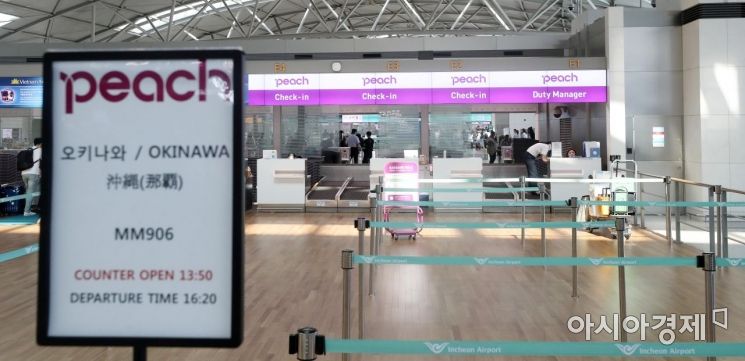 On the 9th, amid the ongoing boycott of Japanese products following the Japanese government's export restrictions, the check-in counters for flights to Japan at Incheon International Airport appeared quiet.
 Yeongjongdo - Photo by Kim Hyun-min kimhyun81@
This survey is meaningful in that it provides insight into the will of South Korean citizens to boycott Japanese products. In fact, imports of Japanese products have sharply declined over the past year.
According to data received by Kim Young-bae, a member of the Democratic Party of Korea, from the Korea Customs Service, the import value of Japanese consumer goods in July this year (provisional) was $25.257 million, down 23.4% from a year earlier.
By item, imports of beer, cigarettes, and passenger cars sharply declined. The import value of Japanese beer was $685,000, down 84.2% from a year earlier. Until 2018, South Korea was the largest overseas market for Japanese beer. The import value of Japanese cigarettes was $6,000, down 89.0%. The import value of Japanese passenger cars was $52.352 million, down 51.6%.
© The Asia Business Daily(www.asiae.co.kr). All rights reserved.



















