Seoul Nationwide Apartment Sale Prices
Increase Rate Slows but Upward Trend Continues
Jeonse Prices Actually See Wider Increase
Regulatory Bodies Infringe on Personal Freedom
Limitations in Management and Supervision Raise Effectiveness Doubts
Ignoring Market Voices Amplifies Disconnect
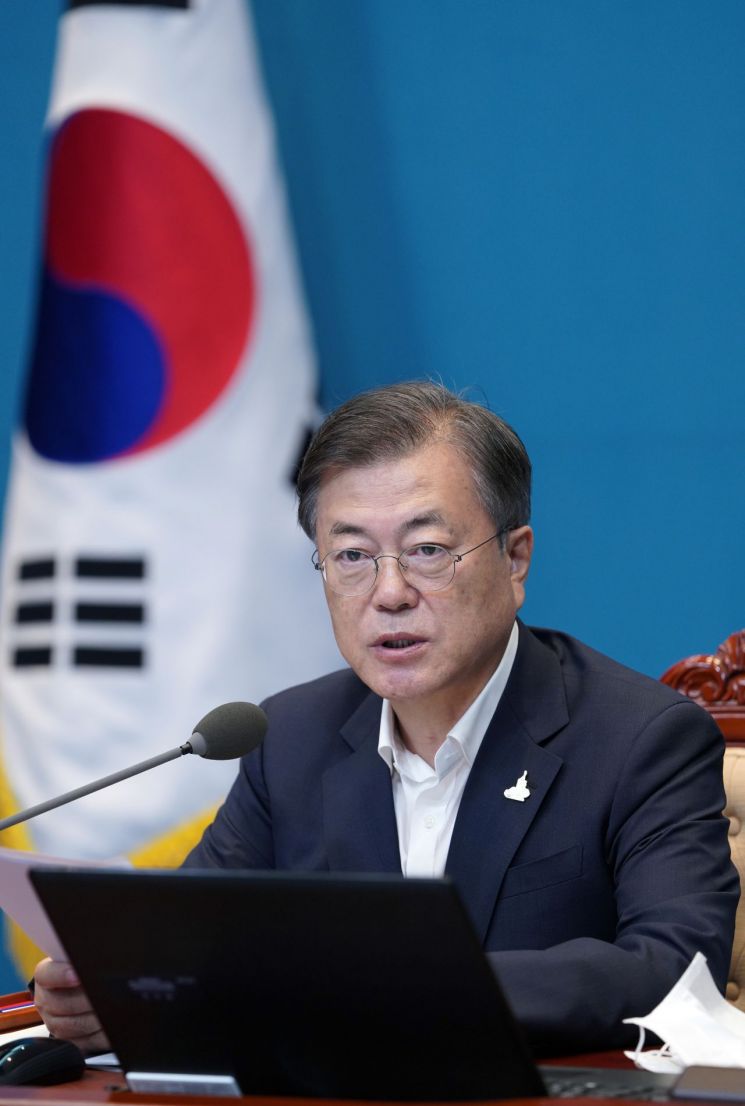 President Moon Jae-in speaking at the Chief Secretary and Senior Secretary meeting. [Image source=Yonhap News]
[Asia Economy Yoo In-ho and Choi Dong-hyun, Sejong=Kim Hyun-jung·Jang Se-hee] The government's perception of the real estate market has come under scrutiny. Just earlier this month, not only ministers of related departments but also the ruling party leader apologized for the failure of real estate policies, yet within just over a month, they concluded that "housing prices have stabilized."
This controversy was triggered on the 10th when President Moon Jae-in stated, "The overheated housing market is stabilizing, and the upward trend in housing prices is showing signs of calming down." At the senior secretaries and aides meeting that day, President Moon expressed this view and self-assessed that the effect of real estate measures on stabilizing housing prices would begin in earnest. However, experts point out that making such a judgment based on just over a month of price trends is premature and that the rapid rise in jeonse (long-term deposit lease) and monthly rent prices, which is expanding housing insecurity, was not taken into account.
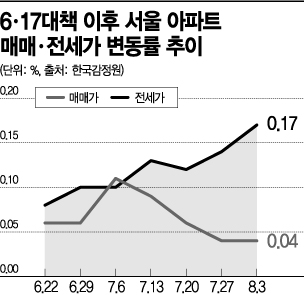
Is the upward trend in apartment prices really calming down?
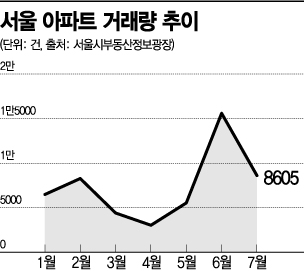
In the market, the evaluation that housing prices have stabilized due to government measures is widely considered premature. According to the Korea Real Estate Board on the 11th, since the June 17 measures focusing on loan regulations, apartment prices in Seoul have risen by 0.46% (as of the 3rd). Although the magnitude of the increase has slowed after the July 10 measures that strengthened tax burdens on multi-homeowners, housing prices in Seoul are still on the rise. The nationwide weekly apartment sales price increase rate also rose slightly by 0.13% in the fourth week of July and the first week of August.
The jeonse and monthly rent market is becoming even more unstable. Nationwide, apartment jeonse prices rose by 0.2%, the highest increase since 2016. Jeonse prices have been rising for 58 consecutive weeks since last year. The consensus is that the implementation of the Lease Protection Act (Jeonse Rent Cap and Contract Renewal Right) has further increased the rise in jeonse prices. Lee Eun-hyung, senior researcher at the Korea Construction Policy Institute, said, "President Moon's statement about the calming of housing price increases shows a lack of realistic understanding," adding, "The president seems to think that since loans have been restricted and comprehensive real estate taxes increased, prices should naturally go down, which led to his statement about housing price stabilization."
Questions about the effectiveness of the real estate supervisory body
Meanwhile, President Moon has intensified controversy by mentioning the establishment of a 'real estate supervisory body.' It is being considered as a plan to consolidate related tasks, functions, and personnel scattered across the Ministry of Land, Infrastructure and Transport, the Financial Supervisory Service, the National Tax Service, and the Ministry of Strategy and Finance. It is expected to have comprehensive investigation and sanction functions, including market monitoring, tax evasion and loan regulation, and capital flow oversight.
However, an independent and permanent real estate supervisory body is rare worldwide, and there are concerns that it would infringe on individual freedoms by overseeing and scrutinizing citizens' real estate transactions, which are in the private sector. In fact, similar bodies are hard to find globally. The closest comparison might be Venezuela's Superintendence of Fair Prices (SUNDDE). Venezuela regulates prices of all goods distributed through SUNDDE comprehensively. In 2006, then-President Hugo Chavez set fair prices for private housing and even forced multi-homeowners to dispose of their properties.
Even within the government, there are concerns that such a body would have difficulty operating without overlapping duties. A government official said, "There is a possibility that existing roles of related ministries and agencies such as the Ministry of Land and the Financial Supervisory Service will be maintained while acting as overlapping supervisors," adding, "The effect of strengthening additional sanctions is doubtful."
Experts also pointed out the limitations and effectiveness issues of management and supervision through such a supervisory body. Seo Jin-hyung, president of the Korea Real Estate Society (professor at Gyeongin Women's University), said, "The government keeps citing foreign cases, but these are mostly adopted by socialist countries, and the policies are ineffective and overly restrictive."
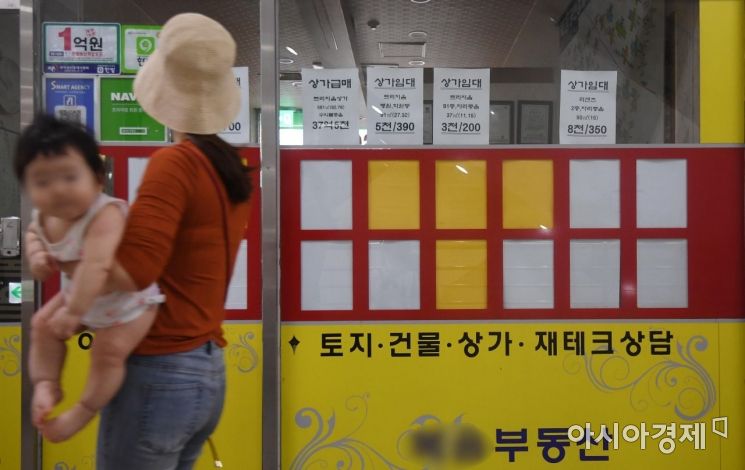 After the real estate measures, as jeonse prices rose and jeonse listings disappeared, the real estate listings at a real estate agency in an apartment in Songpa-gu, Seoul, are completely empty.
Policies increasingly diverging from the market
Government policies and perceptions surrounding real estate are moving in the opposite direction to the market, increasing the sense of disconnect. On the 10th, Deputy Prime Minister and Minister of Strategy and Finance Hong Nam-ki expressed confidence in expanding supply through 'public reconstruction' announced in the August 4 measures, but the market's voice was ultimately ignored, leading to criticism that it was 'self-promotion.' Deputy Prime Minister Hong repeatedly emphasized that "public participation high-density reconstruction is not a disadvantageous method compared to existing reconstruction," but he failed to present what incentives are relatively available. Regarding the 'some associations' that have shown interest, he did not provide specific examples but only expressed the general intention that "the additional supply of 50,000 households is not a fictitious number." The '50,000 households' figure is an estimate based on arbitrarily cutting 20% of the 260,000 households in Seoul that have not yet received reconstruction project approval.
© The Asia Business Daily(www.asiae.co.kr). All rights reserved.
!["The Woman Who Threw Herself into the Water Clutching a Stolen Dior Bag"...A Grotesque Success Story That Shakes the Korean Psyche [Slate]](https://cwcontent.asiae.co.kr/asiaresize/183/2026021902243444107_1771435474.jpg)


















