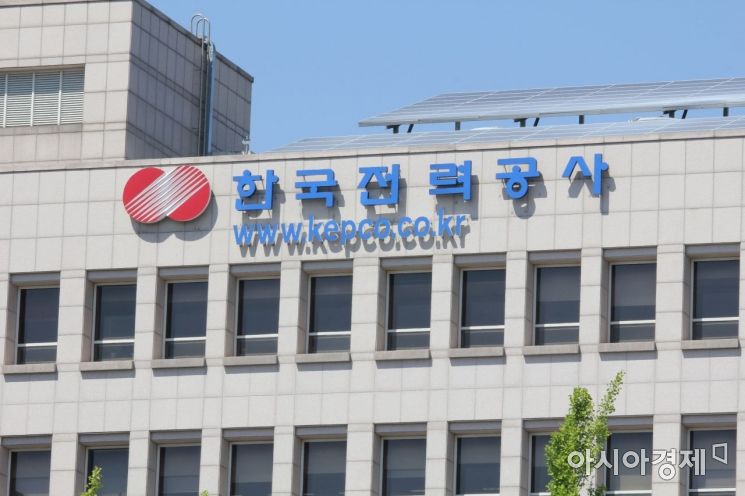
[Asia Economy Reporter Jang Sehee] Korea Electric Power Corporation (KEPCO) will announce its second-quarter earnings this week. Thanks to low oil prices, KEPCO posted a surprising profit in the first quarter and is expected to present an improved performance compared to last year in the second quarter as well. Attention is also focused on whether discussions to reform the electricity tariff system will gain momentum. Since KEPCO's earnings fluctuate with oil prices, there are growing calls to fundamentally revise the tariff system.
KEPCO recorded an operating profit of 430.6 billion KRW on a consolidated basis in the first quarter of this year. After achieving an operating profit of 1.2392 trillion KRW in the third quarter of last year, KEPCO turned to a loss in the fourth quarter but returned to profitability in the first quarter of this year.
The first-quarter profit was largely due to a significant drop in international oil prices, which reduced fuel and purchase costs required for power plant operations by 1.6005 trillion KRW, despite a 133.1 billion KRW decrease in electricity sales revenue caused by the impact of COVID-19.
When KEPCO’s second-quarter results are announced, the issue of electricity tariff reform is expected to resurface. There are criticisms that KEPCO must move away from management solely dependent on international oil prices to ensure stable power supply and other factors.
Inside and outside KEPCO, there are strong calls for the introduction of a fuel cost linkage system. This system directly reflects the prices of fuels such as oil used in electricity generation in the electricity tariffs.
To adjust public electricity tariffs, KEPCO’s board of directors must propose changes, which then require review and approval by the Ministry of Trade, Industry and Energy. The government has kept electricity tariffs frozen for seven years citing price stability. The last increase was in November 2013 (2.7% for residential use, 6.4% for industrial use).
With the linkage system, electricity tariffs would rise when oil prices increase and fall when oil prices decrease, enabling a stable revenue structure.
Meanwhile, most OECD (Organisation for Economic Co-operation and Development) countries have adopted this system. In Korea, it is currently applied to city gas tariffs and district heating. City gas tariffs are adjusted every two months (in odd-numbered months) if the import price of natural gas, the raw material, fluctuates by more than 3% due to changes in international oil prices and exchange rates.
© The Asia Business Daily(www.asiae.co.kr). All rights reserved.

















