[Asia Economy Reporter Kim Eunbyeol] Economic indicators affected by the novel coronavirus infection (COVID-19) are gradually showing signs of recovery. With the transition to a daily quarantine system and the effects of emergency disaster relief funds, domestic demand is rebounding from the worst situation in the first half of the year. As major countries around the world resume economic activities, positive signs such as a reduction in the decline of exports have been observed, raising expectations for economic recovery in the second half of the year.
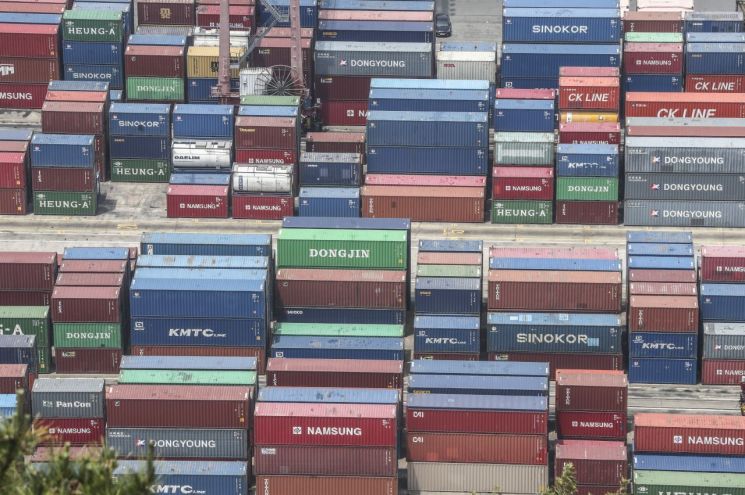
According to the 'June Balance of Payments (provisional)' statistics released by the Bank of Korea on the 6th, the current account balance in June recorded a surplus of $6.88 billion, the largest in eight months since October last year. Compared to the same month last year ($5.67 billion), it increased by $1.21 billion. Both exports ($40.02 billion) and imports ($34.15 billion) decreased for the fourth consecutive month. However, the deficit in the service balance shrank as the travel balance improved due to a sharp decline in overseas travel caused by COVID-19. This effect led to the current account surplus reaching its highest level in eight months.
The current account surplus for the first half of this year was $19.17 billion, a 15.3% decrease compared to the previous year, marking the lowest value in eight years since the first half of 2012 ($9.65 billion). However, it exceeded the Bank of Korea's forecast of $17 billion.
Park Yang-su, Director of the Economic Statistics Department at the Bank of Korea, stated, "The current account balance with China turned to a surplus in June, and the United States also switched to a surplus in July. The decline in exports is slowing down rapidly." He added, "Although we cannot lower our guard, we believe we have passed through the tunnel of uncertainty." The Bank of Korea also expects that the annual current account target of $57 billion can be achieved.
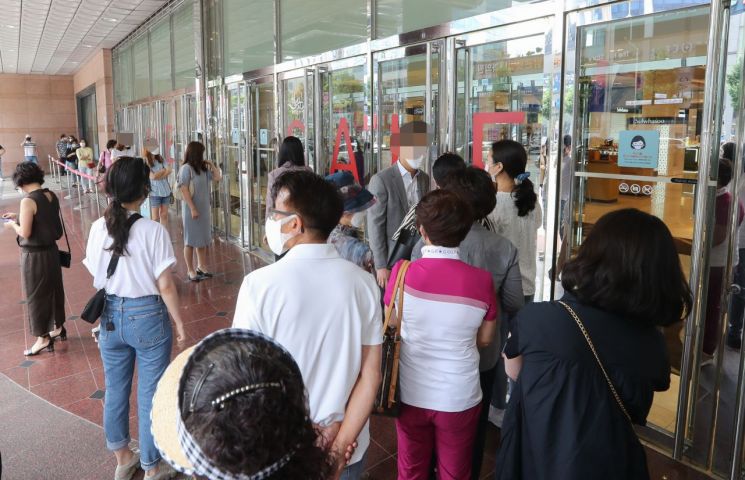
According to the Ministry of Economy and Finance and Statistics Korea, clear signs of economic recovery are also evident in the June industrial activity trends and July export-import trends announced on the 31st of last month and the 1st of this month. The three major indicators of industrial activity in June?total industrial production, retail sales, and facility investment?increased by 4.2%, 2.4%, and 5.4% respectively compared to the previous month. This simultaneous increase in these indicators is the first in six months since December last year, before COVID-19.
Production and retail sales in the service sector continued their improvement trend since April. Facility investment rose by 5.4%, supported by a 7.2% increase in investment in transportation equipment such as automobiles. Particularly welcome news is the rebound in the manufacturing industry, a key domestic sector. Manufacturing production increased by 7.4% compared to the previous month, which Statistics Korea attributes to increased exports due to the resumption of economic activities in major countries. Industrial production including manufacturing rose by 7.2%, marking the largest increase since February 2009 (7.3%).
In fact, exports in June decreased by 10.9% year-on-year, significantly less than the declines in April (-25.5%) and May (-23.6%). July exports fell by 7.0% compared to a year earlier, showing a single-digit decrease rate for the first time in four months since COVID-19. Major markets such as the United States (7.7%) and China (2.5%) experienced positive growth simultaneously for the first time in 21 months since October 2018.
Supported by the slowdown in export decline, manufacturing shipments increased by 8.4% compared to the previous month, and inventories decreased by 1.4%. The average operating rate (68.3%) turned upward after three months. The coincident index cyclical component, which reflects the current economic situation, and the leading index cyclical component, which predicts future economic phases, rose by 0.2 points and 0.4 points respectively, rebounding for the first time in five months.
As economic indicators collectively rebound, expectations for growth in the second half of the year are increasing. South Korea's GDP growth rate for the second quarter recorded -3.3%, but compared to other countries, it performed relatively well. According to the Organisation for Economic Co-operation and Development (OECD), South Korea's growth rate in the second quarter ranks second among 14 countries, including 13 OECD member countries that announced real GDP and non-member China.
However, there are also cautions against premature optimism. LG Economic Research Institute recently released a report forecasting that the economy will rebound rapidly until early third quarter but then enter a stagnation phase. Senior Researcher Lee Geuntae pointed out, "The recovery shown in indicators such as the current account balance is merely an optical illusion caused by the initial shock of COVID-19," adding, "It is too early to discuss a genuine recovery."
© The Asia Business Daily(www.asiae.co.kr). All rights reserved.
!["The Woman Who Threw Herself into the Water Clutching a Stolen Dior Bag"...A Grotesque Success Story That Shakes the Korean Psyche [Slate]](https://cwcontent.asiae.co.kr/asiaresize/183/2026021902243444107_1771435474.jpg)

















