More than 40% of Job Seekers Have "No Summer Vacation Plans"
Economic Hardships Due to COVID-19
Experts Say "Youth Pain Index at All-Time High... Active Corporate Investment Needed to Solve Problems"
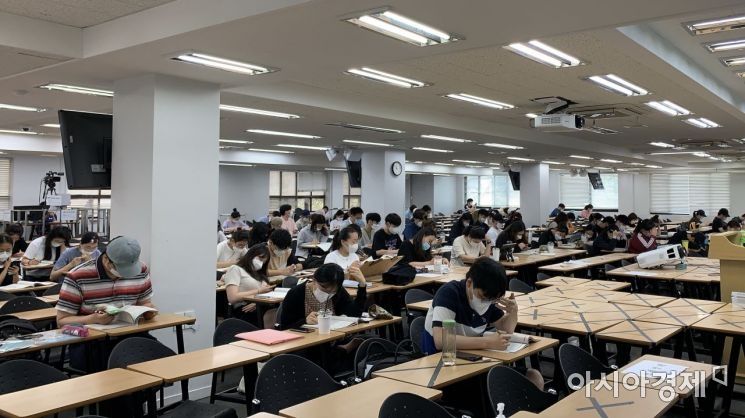
[Asia Economy Reporter Kim Suwan] "Summer vacation? From now on, I'm only worried about how to make a living."
Kim (24), a university student, said, "Now is not the time to think about summer vacation. I don't know when I'll get a job, so I can't think about resting leisurely," adding, "Even at this moment, many job seekers are studying to get TOEIC scores or certifications." He continued, "The job market is already bad due to the novel coronavirus disease (COVID-19), so I think it's necessary to build up qualifications during this period. I believe it's not too late to take a vacation after entering the company I want."
Recently, it has been found that the number of job seekers giving up vacations due to economic difficulties and job preparation is increasing. In some cases, as the job market narrows due to the impact of COVID-19, 'chipoja' have emerged as a social issue. 'Chipoja' is a newly coined term referring to young people who give up on finding a job, reflecting the harsh reality of job hunting.
According to a survey, more than 40% of job seekers have no plans for summer vacation this year. Alba Heaven, a part-time job portal specializing in recruitment and job seeking, surveyed 1,060 university students and job seekers on the 3rd about their 'summer vacation plans,' and 45.8% said they have 'no plans for summer vacation this year.'
The reasons they cited for having no summer vacation plans were △'vacation costs are burdensome' (45.8%) △'to focus on studies and job preparation' (32.7%) △'difficulty adjusting part-time work schedules' (21.4%).
Along with economic burdens, anxiety about employment has affected job seekers.
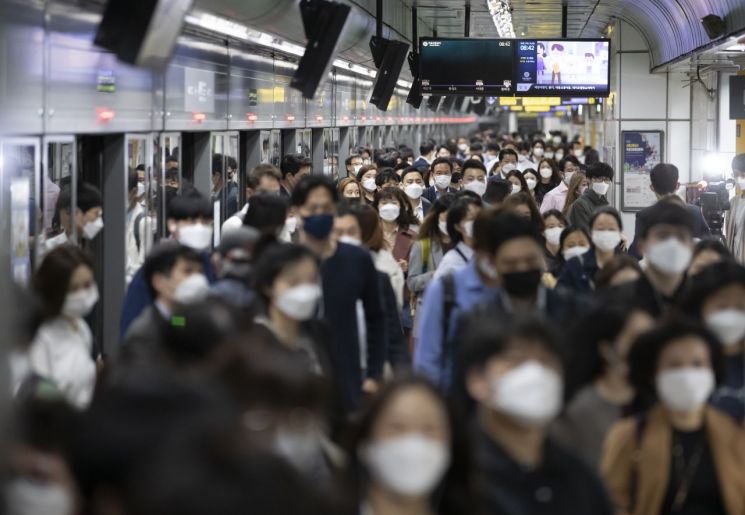
In particular, it was found that many feel there is a change in this summer vacation compared to last year. This seems to be greatly influenced by social distancing due to COVID-19.
Some said they did not plan summer vacations to prevent COVID-19 infection. A job seeker in their 20s, A, said, "Life has completely changed due to COVID-19. Wearing a mask every day has become routine. For prevention, I plan to study at home this summer," adding, "I'm not the only one. Many friends around me also do not take vacations."
Meanwhile, as the COVID-19 pandemic prolongs and the job market rapidly freezes, many young unemployed people who have graduated from school are unable to find jobs.
According to the 'May 2020 Economic Activity Population Survey Youth Supplement (ages 15-29)' released by Statistics Korea last month, the number of unemployed this year reached 1.66 million, a 7.7% increase compared to the same month last year (1.541 million).
Moreover, the number of job seekers preparing for employment exams after graduating or dropping out of school reached 804,000. The number of young people unable to find jobs for a long time due to the impact of COVID-19 is increasing.
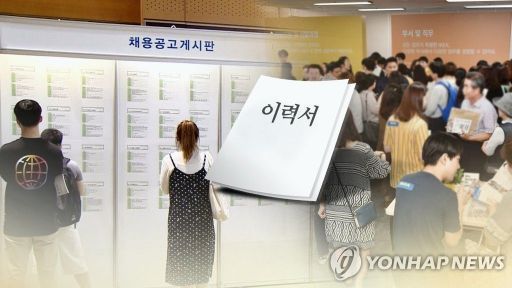 A survey found that 3 out of 10 job seekers aim for quick employment regardless of their target company or whether the job is permanent. Photo by Yonhap News
As a result, 3 out of 10 job seekers aim for quick employment regardless of the target company or regular employment status.
According to a survey conducted by Job Korea last month targeting 1,817 job seekers on the 'second half employment preparation status,' 31.0% responded that since the spread of COVID-19, they have felt an urgent need to get a job quickly regardless of the target company or regular employment status.
On the other hand, due to the impact of COVID-19, as companies delay or cancel hiring, cases of giving up job seeking itself are rapidly increasing. In fact, the number of people 'just resting' despite having the ability to work reached 2.36 million in March, the highest ever recorded since statistics began.
According to the 'March Employment Trends' released by Statistics Korea, the number of people 'resting' among the economically inactive population was 2.366 million, an 18.3% increase compared to the same month last year. The increase in the 'resting' population was highest among those aged 20-29, with 410,000 unemployed people in their 20s.
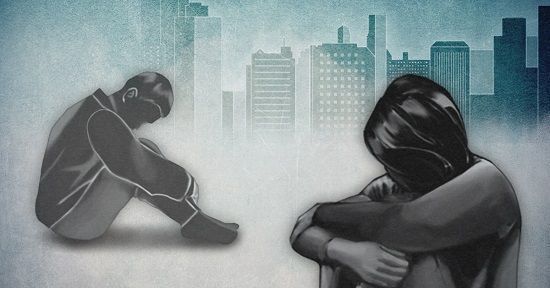 There is also expert analysis suggesting that the learned helplessness caused by COVID-19 should be transformed into a sense of accomplishment and reinforced. Photo by Yonhap News
Experts suggested that active investment by companies is necessary to solve the youth unemployment problem.
Professor Kim Taegi of Dankook University's Department of Economics said, "Currently, the perceived youth unemployment rate has risen to 27%. According to statistics, 3 out of 10 are unemployed," pointing out, "Large companies are not hiring. Even if they do, the situation is completely different from the past."
He continued, "There are no part-time jobs now, so it's fierce competition, and from the job seekers' perspective, they cannot even think about vacations. Even if they go on vacation, they need pocket money, and that all costs money. Because of this, they have no choice but to prepare for employment," adding, "The pain index of young people is expected to be at its highest. The only way is for companies to invest and increase hiring. For this, the government must provide a lot of support."
There is also expert analysis that the learned helplessness caused by COVID-19 should be transformed into a sense of accomplishment and reinforced.
Professor Kwak Geumju of Seoul National University's Department of Psychology said, "Due to COVID-19 and other factors, an uncertain future has come, and job seekers are expected to be experiencing tremendous stress and fatigue," analyzing, "This causes anxiety and even the loss of hope for the future."
She added, "Furthermore, there are young people called the N-po generation who give up everything. It is necessary to gain confidence by solving small things one by one so that helplessness can be transformed into a sense of accomplishment."
© The Asia Business Daily(www.asiae.co.kr). All rights reserved.



















