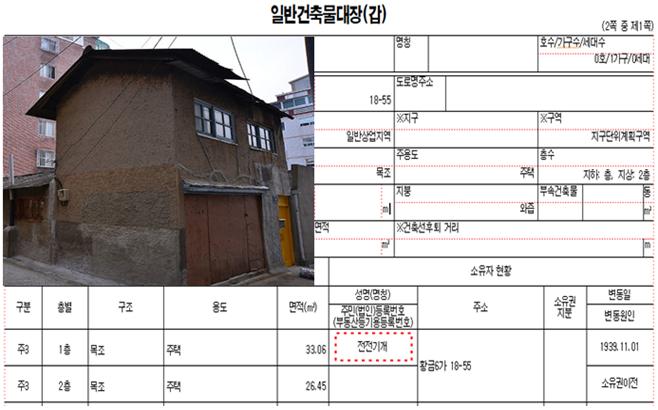
[Asia Economy Reporter Donghyun Choi] The Seoul Metropolitan Government announced on the 6th that it will organize approximately 3,000 land and buildings registered under the names of Japanese individuals and Japanese companies in land and building registers to eliminate remnants of Japanese colonial rule.
If the buildings or land no longer exist but are still recorded in the registers, they will be deleted. The plan includes organizing not only the public real estate registers but also the registries at the Supreme Court registry office. Additionally, if the land or buildings physically exist but are still registered under Japanese names, they will be transferred to the Public Procurement Service for possible nationalization.
This project is part of the "Erasing Japanese Colonial Traces in Public Real Estate Registers" initiative, promoted through organic cooperation between the central and local governments to commemorate the 75th anniversary of Liberation Day. The project originated from Jung-gu District in Seoul, which in 2018 became the first in the nation to thoroughly erase 1,056 Japanese colonial traces remaining in building registers and registries, sparking a nationwide movement to remove such remnants.
The city will investigate and organize a total of 3,022 cases, including 262 land parcels and 2,760 buildings registered under Japanese names, through information sharing with related agencies such as the Ministry of Land, Infrastructure and Transport, the Public Procurement Service, and the Court Administration.
After on-site verification of all cases by September, followed by detailed investigations including aerial photo analysis and tax status checks, cases with no actual existence in the public registers will be deleted. To benefit citizens, the city plans to provide free registration requests to delete all corresponding registry entries.
Kim Hak-jin, Deputy Mayor for Administration of Seoul, stated, "This project is being carried out to identify and eliminate remnants of Japanese colonial rule that still exist in our daily lives," adding, "We will continue to promote this initiative in cooperation with the government to erase Japanese colonial traces and enhance the reliability of administrative information for the convenience of citizens."
© The Asia Business Daily(www.asiae.co.kr). All rights reserved.

















