Ministry of Employment Announces Legislative Notice for 'Basic Labor Welfare Act' Amendment on 6th
Reintroduced in the 21st National Assembly... Regulatory Relaxation and System Improvements
"Cooperation Between Large and Small-Medium Enterprise Workers, Reducing Welfare Gaps"
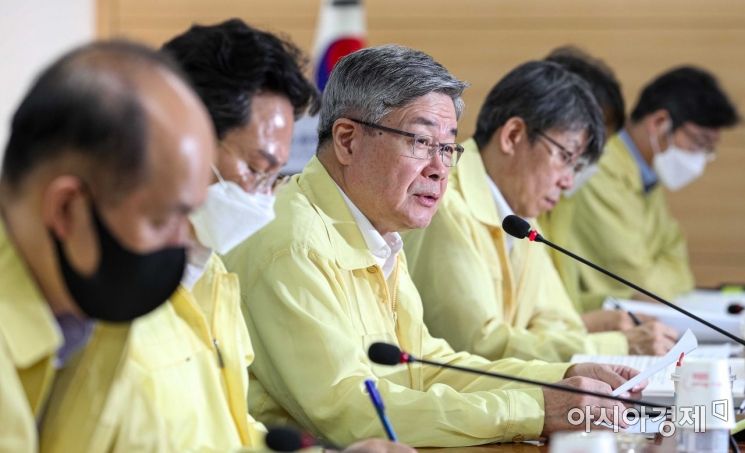
[Asia Economy Reporter Kim Bo-kyung] The government is revising the Joint Employee Welfare Fund system to promote win-win cooperation between primary and subcontractors and to reduce welfare disparities. The goal is to pass the related law within this year. The bill was proposed during the 20th National Assembly but was automatically discarded due to the expiration of the assembly's term, prompting efforts for re-legislation.
On the 6th, the Ministry of Employment and Labor announced a legislative notice for the amendment of the Framework Act on Employee Welfare, focusing on deregulation and system improvements related to the establishment and operation of the Joint Employee Welfare Fund.
Introduced in January 2016, the Joint Employee Welfare Fund system allows two or more business owners to jointly establish a fund to implement welfare projects. It aims to overcome the limitations of company-level in-house employee welfare funds and to strengthen welfare for workers in small and medium-sized enterprises (SMEs) through cooperation between primary and subcontractors.
However, there have been criticisms that insufficient regulations and rigid rules regarding the establishment and operation of the Joint Employee Welfare Fund have hindered the system's activation.
This amendment supports the "Joint Employee Welfare Fund Activation Measures" announced in September last year. Since the bill proposed in the 20th National Assembly was discarded due to the expiration of the assembly's term, re-legislation is being pursued in the 21st National Assembly.
Expansion of Usage Limits for Primary-Subcontractor Joint Funds... Securing Resources for Welfare Projects
The main amendments are as follows. When a large company (primary contractor) that already has an in-house employee welfare fund establishes a new joint fund with small and medium-sized partner companies, the dissolution of the large company's in-house employee welfare fund is permitted.
Previously, dissolution was only allowed in cases such as the abolition of the relevant business, but with this amendment, the in-house employee welfare fund can be dissolved on the premise of participating in the joint fund.
In this case, the dissolved large company's in-house employee welfare fund can be transferred to the Joint Employee Welfare Fund established together with the small and medium-sized partner companies.
The usage limit of contributions for the fiscal year is expanded for Joint Employee Welfare Funds established including SMEs.
The business resources of the fund corporation are limited to the profits from fund operation and 50% of the contributions for the fiscal year (80% for SMEs, etc.), but the usage limit will be expanded for joint funds including SMEs.
The amendment provides the basis for expanding the usage limit, and through the revision of enforcement ordinances, it plans to expand the limit to 90% of the contributions for the fiscal year.
This is to respond to the current generation's welfare expenditure demands of underprivileged SMEs and to secure resources for welfare projects.
Establishment of Regulations for Mid-term Participation and Withdrawal from Joint Funds... Strengthening Worker Protection
New business owners can join an operating joint fund mid-term, and withdrawal is possible through certain procedures if necessary.
However, upon withdrawal, to ensure continuity of welfare projects, the assets corresponding to the withdrawing company's contribution ratio must be transferred to that company's in-house employee welfare fund.
Until now, there were no regulations on mid-term participation, withdrawal, and asset handling upon withdrawal, causing confusion and hindering participation in joint funds.
If an individual company participating in the joint fund abolishes its business, the assets corresponding to its contribution ratio will be used to protect the company's workers. Priority will be given to paying overdue wages, and remaining assets will be provided to workers as living stabilization funds.
Until now, even if an individual company participating in the joint fund abolished its business due to financial difficulties, contributions could not be recovered or used, resulting in insufficient worker protection.
The government plans to promptly submit the amendment to the National Assembly after the legislative notice process and support its passage within the year.
According to the Ministry of Employment and Labor, since the announcement of the Joint Employee Welfare Fund activation measures last year, the establishment of joint funds has sharply increased.
While there were only about 80 joint funds until last year, 116 new funds have been established and are operating this year. It is analyzed that joint fund establishment between large companies and small subcontractors, especially in the shipbuilding industry, is active.
Kim Dae-hwan, Director of Labor Standards Policy, stated, "As the prolonged COVID-19 pandemic has brought our economy to an unprecedented crisis, the difficulties are concentrated on workers in SMEs and partner companies. We expect the joint fund to increase the real income of workers in SMEs and partner companies, accelerate overcoming the crisis, and greatly help reduce welfare disparities between large and small-medium enterprises."
© The Asia Business Daily(www.asiae.co.kr). All rights reserved.
!["The Woman Who Threw Herself into the Water Clutching a Stolen Dior Bag"...A Grotesque Success Story That Shakes the Korean Psyche [Slate]](https://cwcontent.asiae.co.kr/asiaresize/183/2026021902243444107_1771435474.jpg)

















