Trump "Generals Think It's an Attack"
US Defense Department "No Signs of Attack Detected"
Israel Behind-the-Scenes Theory Circulates in Lebanon
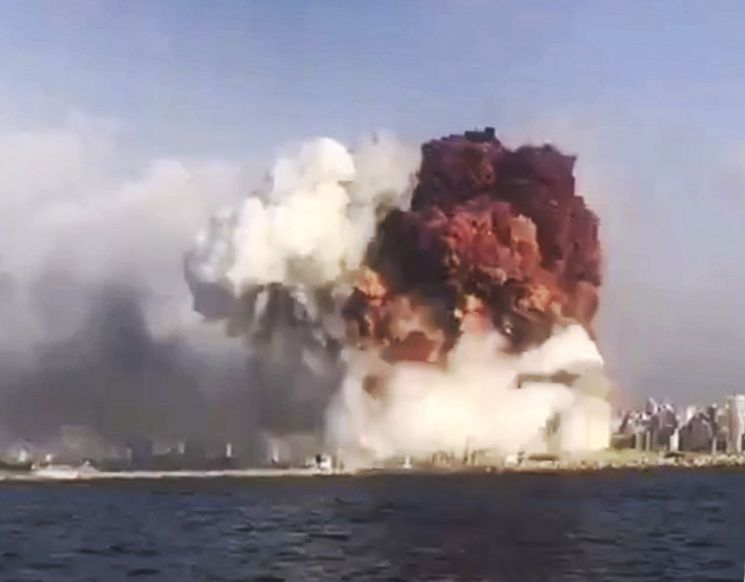
[Asia Economy Reporter Hyunwoo Lee] U.S. President Donald Trump’s statement that the Beirut explosion disaster appears to be a "bomb attack" rather than an accident has intensified various suspicions and conspiracy theories. Within Lebanon, amid escalating clashes between Hezbollah, the largest armed faction, and Israel, strong allegations have emerged suggesting Israeli involvement in the incident. The Israeli government has denied any connection to the explosion and expressed its intention to provide humanitarian aid to Lebanon. Concerns over increased geopolitical instability in the Middle East, regardless of who is identified as responsible, have driven international oil prices upward.
According to foreign media including The New York Times (NYT), on the 4th (local time), during a briefing on the novel coronavirus (COVID-19), President Trump mentioned the Beirut explosion, stating, "It looks like a terrible bomb attack," and added, "I met with some generals, and they seemed to think it was an attack. It was a kind of bomb." This contradicts the Lebanese government's announcement that the explosion was an accident. Earlier, the Lebanese government had reported that the explosion occurred due to ammonium nitrate stored in a warehouse at the Beirut port.
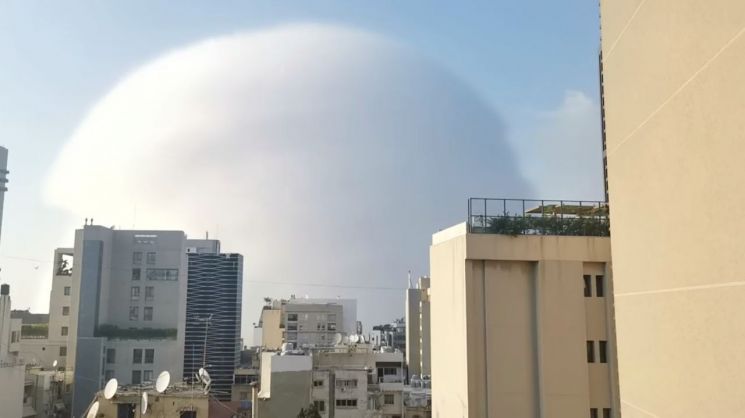
Contrary to President Trump’s remarks, the U.S. Department of Defense drew a line, stating that no signs of an attack were found in Beirut. CNN quoted a U.S. Department of Defense official saying, "We do not know on what basis President Trump made the attack statement," and "No evidence has been found that the massive explosion in Beirut was an attack." Both the U.S. Department of Defense and the State Department have said they are closely monitoring the Beirut explosion incident but have not officially commented on the cause of the explosion.
In Lebanon, separate from the government’s official announcement of the accident’s cause, speculation is rising that Israel might be behind the explosion. Israel and Lebanon have maintained a hostile relationship since 2006, when Israel invaded Lebanon in retaliation for armed clashes with Hezbollah. Hezbollah, Lebanon’s largest armed faction, recently engaged in skirmishes with Israeli forces near the Golan Heights, the border area between Syria and Israel.
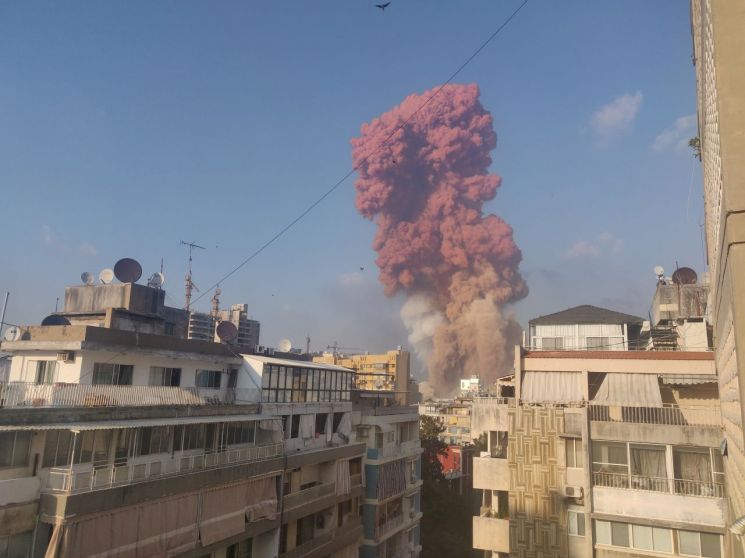
According to Israeli local media such as The Times of Israel, the Israeli military announced that the previous day it had conducted airstrikes with fighter jets on Syrian army observation posts and anti-aircraft facilities. Israeli Prime Minister Benjamin Netanyahu stated, "This was retaliation for Hezbollah’s attempt to plant explosives at our military facilities in the Golan Heights area." Earlier, the Israeli military had reported killing four Hezbollah operatives who attempted to plant explosives near Israeli security posts in the Golan Heights, a border area with Syria.
Within the Lebanese government, some have raised the possibility of an Israeli airstrike. The Washington Post (WP) cited a senior Lebanese official saying, "Many witnesses in Beirut heard the sound of military aircraft flying overhead at the time of the explosion," and added, "While a full investigation is pending, suspicions that Israel is behind the incident continue to be raised." In recent weeks, Israeli fighter jets and drones have reportedly been frequently spotted around Beirut amid ongoing clashes with Hezbollah.
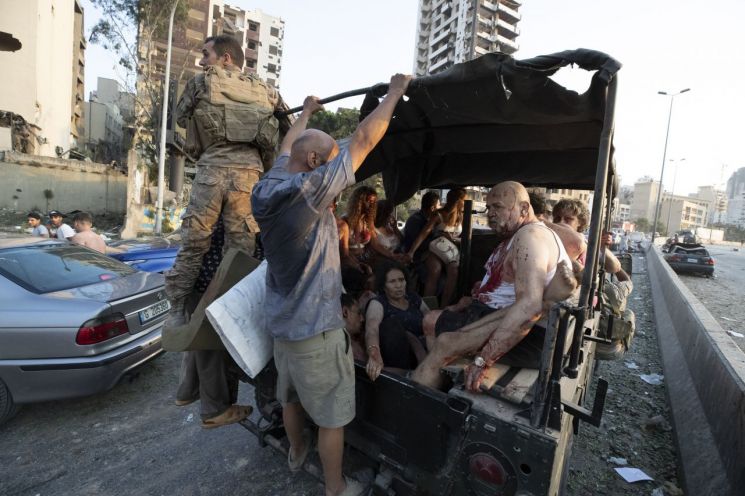
However, Israel maintains that it has no connection to the explosion. An Israeli official, speaking anonymously in an interview with Al Jazeera, stated, "Israel has nothing to do with this incident." Israeli Foreign Minister Gabi Ashkenazi also appeared on an Israeli local TV channel the same day, saying, "This explosion is likely an accident caused by a fire." Although diplomatic relations between Israel and Lebanon have been severed since 2006, the Israeli government announced it would provide humanitarian aid to Lebanon through separate diplomatic channels.
Whether Israel or any other party is identified as responsible for the incident, concerns over heightened geopolitical tensions in the Middle East have led to a rise in international oil prices. On the day, West Texas Intermediate (WTI) crude oil for September delivery closed at $41.70 per barrel, up 1.7% from the previous day. Brent crude for September delivery also rose 0.6% to $44.43 per barrel, marking the highest level since March 6.
© The Asia Business Daily(www.asiae.co.kr). All rights reserved.













