Kwon Jun-wook "Some Advanced Countries' Vaccine Pre-purchases Show Lack of Leadership"
Low Probability of Vaccine Development Success and Uncertain Supply After Development
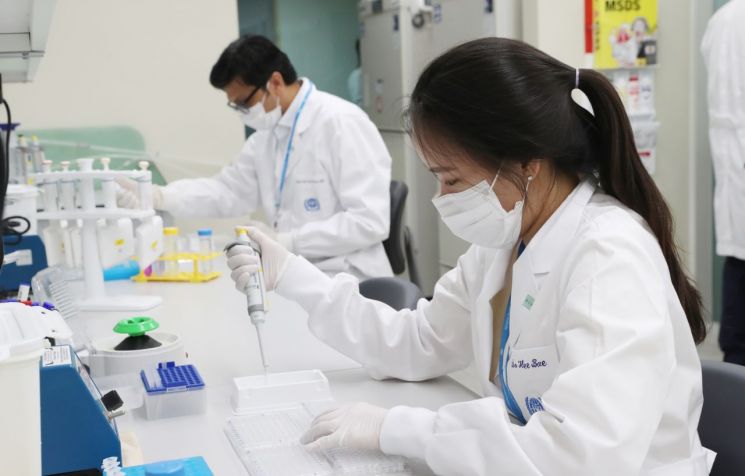 Researchers are conducting vaccine development experiments at the International Vaccine Institute (IVI) in Gwanak-gu, Seoul.
 [Asia Economy Reporter Choi Dae-yeol] "It is truly a regrettable moment for international leadership when we see reports of vaccine pre-purchasing, or to put it more directly, so-called hoarding tendencies, especially among some advanced countries where the outbreak is currently at its peak."
This was a remark made by Kwon Jun-wook, Deputy Director of the Central Disease Control Headquarters, during the regular briefing on the 1st. As the Deputy Director of the Central Disease Control Headquarters leading the COVID-19 response measures and concurrently serving as the Director of the National Institute of Health, he oversees domestic COVID-19 vaccine and therapeutic development and supply. He is also the chief representative of the Korean government in negotiations related to the global vaccine supply mechanism, the COVAX Facility.
The point Deputy Director Kwon criticized is the fierce competition among some advanced countries, such as the United States, which has the highest number of confirmed cases and deaths worldwide, and the United Kingdom, where the resurgence is in full swing, to secure vaccines currently under development in advance. The U.S. government is leveraging its enormous financial resources to support development funds for global pharmaceutical companies and research institutions currently developing vaccines. It has signed contracts to receive a certain amount of doses in advance after development, providing funding for major projects including the Oxford University-AstraZeneca vaccine, which is considered the most advanced with 300 million doses, as well as Novavax, Moderna, and Johnson & Johnson.
The intense jockeying over vaccines is due to the fact that successful development is not easy, and even if developed, it will take considerable time before actual vaccination can begin. There are not many countries or companies worldwide capable of large-scale vaccine production. Due to the nature of the manufacturing process, it is difficult to produce large quantities in a short period like synthetic drugs. In Korea’s case, the vaccine self-sufficiency rate is around 50%, meaning a significant portion of vaccines are still imported from abroad.
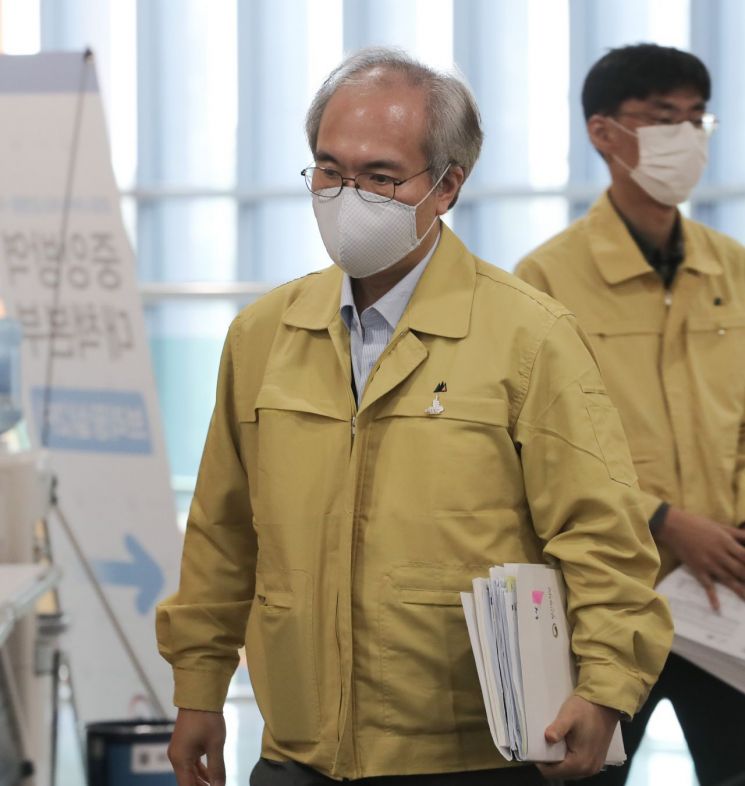 Kwon Jun-wook, Deputy Director of the Central Disease Control Headquarters (Director of the National Institute of Health)
 Vaccines Are Not Easy to Mass Produce, Increasing Likelihood of Priority Vaccination for High-Risk Groups
"Humanity Needed to Utilize Vaccines and Therapeutics as Public Goods"
During the 2009 H1N1 flu outbreak, our health authorities also visited overseas pharmaceutical companies to request vaccine supply. In the current COVID-19 pandemic situation, some European countries have pledged to avoid competition for vaccine procurement and to engage in joint purchasing, but it cannot be ruled out that their stance may change if the situation worsens.
More than 70 countries worldwide, including Korea, have expressed their intention to participate in the COVAX Facility, which guarantees 'fair access' after vaccine development. The World Health Organization and the Global Alliance for Vaccines and Immunization (GAVI) are urging participation in this equitable supply system, which conversely implies that competition to secure vaccines after development is expected to be intense.
Domestically, SK Bioscience and Genexine are developing COVID-19 vaccines as government national projects. GC Green Cross is also reviewing a universal coronavirus vaccine. Given the current development pace, it is likely that vaccines will be developed overseas first. Since safety is paramount for vaccines, it is expected that Korea will monitor vaccination situations abroad while managing domestic supply.
Deputy Director Kwon said, "In the face of a historic health crisis humanity has encountered for the first time in 100 years, it is a time when humanity must unite and respond to control infectious diseases and minimize damage, share information to overcome the crisis, and utilize vaccines and therapeutics as public goods." He added, "As a practitioner, I reflect on the hope that Korea can leap forward as a global leader after COVID-19."
© The Asia Business Daily(www.asiae.co.kr). All rights reserved.


















