Impact of COVID-19 Remote Work and Reduced Outings... Increase in 'Homludensjok'
6 out of 10 Adults Say "I Belong to Homludensjok"
Transaction Amount for Interior Products Increased 4.6 Times Compared to Last Year
Experts Say "It Will Partially Affect Economic Revitalization"

[Asia Economy Reporter Kim Ga-yeon] # Office worker A (25) has recently been enthusiastic about home decorating. This is because the time spent at home has increased due to refraining from going out amid the novel coronavirus infection (COVID-19). A said, "Since I sometimes work from home and spend longer hours at home, I started to pay attention to various parts of the house," adding, "Maybe because it's the space where I spend most of my day, I felt like 'I want to rest in a more comfortable and better-decorated space'." She continued, "Recently, with summer approaching, I bought rattan and wooden interior accessories and also got some companion plants," adding, "As the atmosphere of the house changed, everything feels more enjoyable."
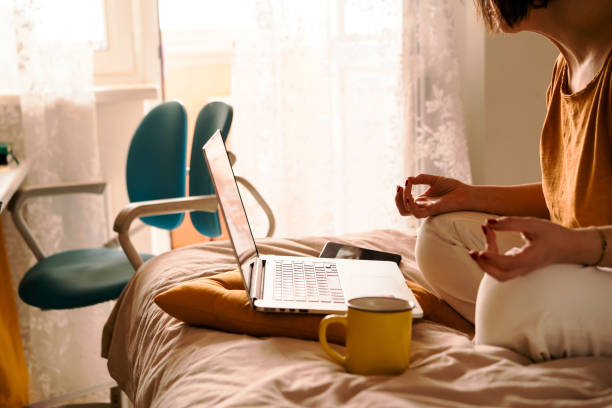
Recently, as the spread of COVID-19 has prolonged the time spent at home, the number of 'Home Ludens' who find joy at home is increasing. The term Home Ludens is a neologism derived from 'Homo Ludens,' meaning 'playing human,' combined with 'Home' and 'Ludens,' which means play or recreation. It refers to those who enjoy leisure activities in their living spaces.
The interests of Home Ludens are expanding beyond simply enjoying hobbies at home to include home interior, home parties, home cafes, home cinemas, and more. This trend is due to the prolonged social atmosphere of working from home or refraining from going out.
Six out of ten adults consider themselves Home Ludens.
According to the '2020 Home Ludens and Home Interior Related Survey' by Embrain Trend Monitor, a market research firm, 66.9% of 1,000 adults responded that "due to increasing social anxiety these days, people's interest in their homes seems to be growing." In particular, 41.6% of respondents said that "the time spent at home has increased this year compared to last year."
65.3% of respondents answered that they "belong to the Home Ludens group," and 72.6% said that "the time spent at home during the day feels the most comfortable."
This phenomenon can also be confirmed through the transaction amounts of interior-related products.
According to Bucketplace, which operates the interior information sharing platform app 'Today's House,' the app's downloads have exceeded 10 million. This means it doubled in one year after surpassing 5 million downloads in April last year.
Especially, as of March, the monthly transaction amount reached 70 billion KRW. This is 4.6 times higher compared to the same period last year. The cumulative transaction amount has exceeded 530 billion KRW.
B, a person in their 30s who runs an interior-related retail business in Mapo-gu, Seoul, also stated, "Sales have actually increased a little since the spread of COVID-19."
He added, "There are more customers who come to buy simple interior accessories, and many customers purchase the interior decorations exactly as displayed in the store," adding, "Since everyone is staying at home, they tend to notice parts they don't like here and there, so they pay more attention."
Experts predict that such consumption may help overcome depression caused by COVID-19 and partially contribute to revitalizing the economy.
Yook Sung-pil, Chair of the COVID-19 Special Committee of the Korean Psychological Association, said on YTN Radio on the 24th regarding the growing interest in home interior, companion animals, and companion plants, "If there is an object with which emotional empathy can be formed or someone to care for, there is a mutual exchange of feelings," adding, "Just forming a relationship with an object can greatly improve a person's mental state."
Kim Tae-gi, a professor in the Department of Economics at Dankook University, told Asia Economy in a phone interview, "Such durable goods consumption can have a positive effect on economic revitalization," but analyzed, "The effect is not large. It is hard to say that the total consumption increased, as people who had consumption plans just spent in advance due to policies like credit card income deductions."
© The Asia Business Daily(www.asiae.co.kr). All rights reserved.


















