Discussing Details Such as Target Industries and Extension Period... "Consulting with Financial Authorities"
Extending Subsidy Payment Period May Worsen Financial Shortage of Employment Insurance Fund
8 Special Employment Support Industries Request "Support Extension"... Conclusion After Analyzing Employment Situation
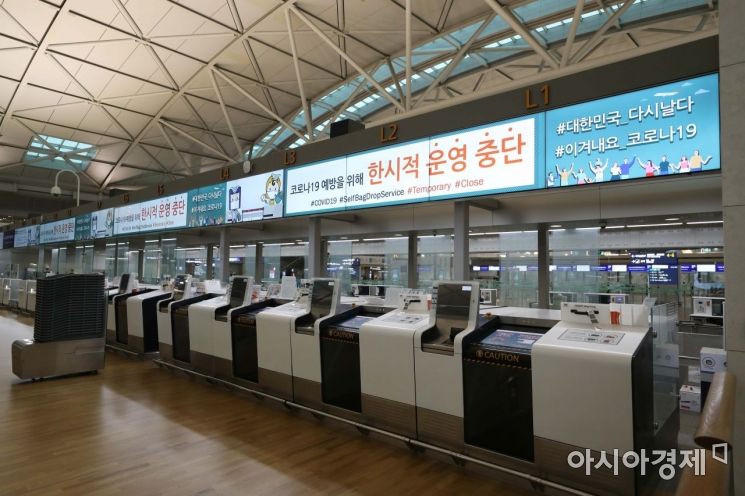 The departure hall at Terminal 1 of Incheon International Airport is quiet on the 22nd amid the ongoing COVID-19 pandemic. Photo by Moon Honam munonam@
[Asia Economy Reporter Kim Bo-kyung] As the COVID-19 pandemic prolongs, the government is expected to extend the payment period of the 'Employment Retention Subsidy,' which covers up to 90% of wages for business suspensions and leaves, to more than 180 days. This measure aims to prevent employment instability and a surge in unemployment that could occur if the subsidy is discontinued. The designation period for eight special employment support industries, including tourism and performance sectors, is also likely to be extended.
On the 24th, the Ministry of Employment and Labor is positively reviewing a plan to expand the payment period of the Employment Retention Subsidy, which supports up to 90% of paid leave and suspension wages paid by companies to workers, to more than 180 days. This comes as the employment crisis caused by COVID-19 continues, with recent visits by low-cost carrier (LCC) executives to the National Assembly requesting an extension of the subsidy period, reflecting an outpouring of SOS calls from the business community. The government has also prioritized 'employment retention' as a top task since the employment shock became apparent earlier this year.
An official from the Ministry of Employment and Labor stated, "Although the payment period for the Employment Retention Subsidy is legally fixed at 180 days, we are considering extending it in response to industry demands. The required budget size varies depending on which industries and how many additional days are extended, so consultation with the fiscal authorities is necessary." They added, "There is also a possibility that this will be discussed in social dialogue bodies such as the Economic, Social and Labor Council."
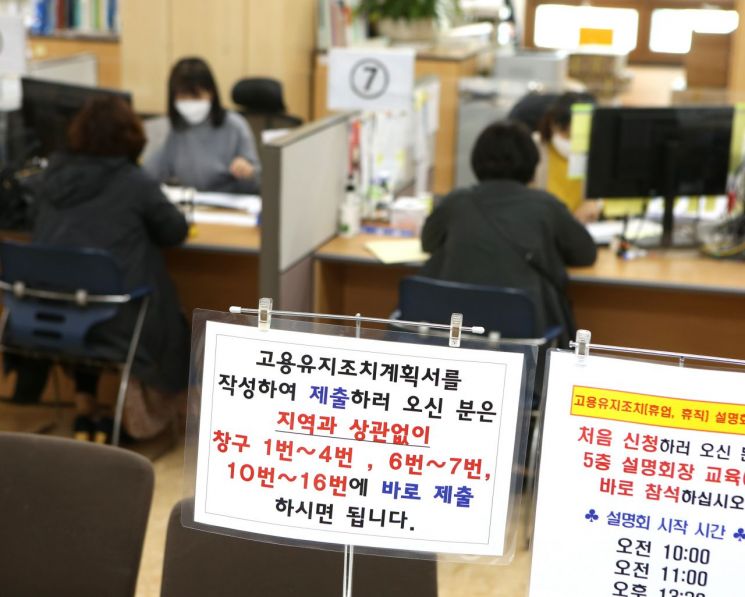
Currently, the Ministry of Employment and Labor operates the Employment Retention Subsidy system, which pays up to 90% of wages to employers who implement paid leave or suspension without reducing the number of workers due to difficulties caused by COVID-19. However, the period during which companies can receive support is stipulated as 180 days under the Enforcement Decree of the Employment Insurance Act. As the payment end date approaches, concerns about a surge in unemployment have arisen, especially among businesses struggling to cover labor costs (wages), leading to numerous requests for subsidy extensions. In particular, the airline and travel industries have reportedly exhausted their 180-day support period due to the ongoing impact of the Japan boycott since last year.
The issue lies in funding. This year, the Employment Retention Subsidy budget totals 2.1632 trillion won, an amount secured by pooling contingency funds and supplementary budgets. If the subsidy payment period is extended, additional budget expenditures will be inevitable. The financial status of the Employment Insurance Fund, which has recorded deficits in recent years, is expected to worsen further. So far, about 890 billion won has been spent on the subsidy, with 850 to 1,000 applications received daily recently. A Ministry of Employment and Labor official said, "Companies that have exhausted the 180-day Employment Retention Subsidy can receive continuous support for 180 days through the unpaid leave support program. While there are measures companies can take, there is demand for paid leave, so we are seeking countermeasures through tripartite dialogue."
If the subsidy payment period is extended only for special employment support industries, the fiscal burden could be somewhat alleviated. Also, extending the payment period for all industries would require revising the Enforcement Decree, but applying it only to special employment support industries can be done relatively simply without amending the decree. Due to the severe deterioration of employment conditions caused by COVID-19, the designated special employment support industries are ▲travel industry ▲tourism accommodation industry ▲tourism transportation industry ▲performance industry ▲aircraft handling industry ▲duty-free shops ▲exhibition and international conference industry ▲airport buses, totaling eight sectors. These special employment support industries receive broader support than general industries.
The decision on whether to extend the special employment support designation for these eight industries, which is set to expire on September 15, is expected to be made next month. Currently, all eight industries have requested the Ministry of Employment and Labor to extend the support period. An official from the ministry said, "We plan to conclude the extension decision by August to give companies advance notice." The ministry will analyze the overall business conditions, employment status, and outlook of these industries, gather opinions from the field, experts, and related ministries, and then decide on the extension of the special employment support period through the Employment Policy Deliberation Committee.
© The Asia Business Daily(www.asiae.co.kr). All rights reserved.


















