Domestic Development of Air Force Electronic Warfare Aircraft Capable of Radar Jamming
R&D Budget Alone Reaches 2.5 Trillion KRW... Challenging Advanced Aviation Nations
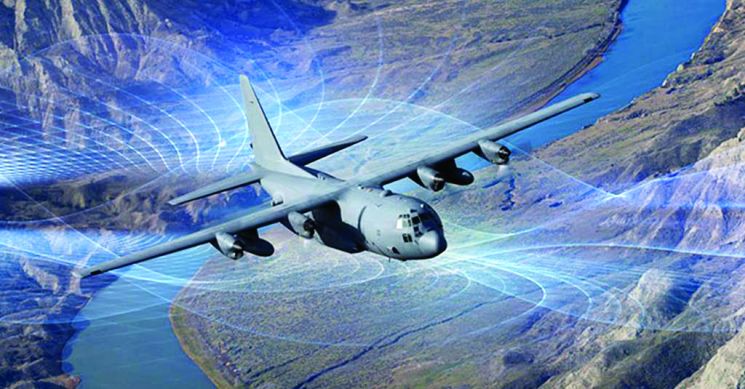
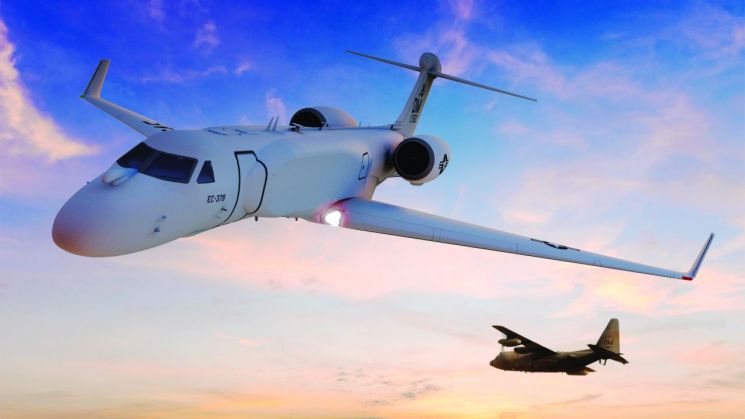
[Monthly Aviation Editor-in-Chief Kim Jae-han] The Air Force's electronic warfare aircraft acquisition project is effectively settled on domestic research and development. The electronic warfare aircraft project involves acquiring four electronic warfare aircraft capable of disrupting enemy radio wave usage to neutralize radar, communication networks, and more. Following preliminary research conducted last year by the Defense Acquisition Program Administration through the Defense Technology Quality Institute, the plan was to decide the project implementation strategy within this year. However, sources inside and outside the industry say the conclusion has already been reached in favor of domestic R&D.
▲ Settled on domestic research and development = With the project direction effectively decided as domestic R&D, the project is expected to be led by the Agency for Defense Development (ADD), which will develop the mission equipment and integrate it into aircraft procured from overseas. Until early this year, the possibility of overseas procurement could not be ruled out, but ultimately, as expected, the focus shifted to domestic R&D.
According to industry sources, the Korea Institute for Defense Analyses (KIDA) is currently conducting requirements verification, and the project budget has been significantly increased from the initial approximately 2 trillion won to about 2.5 trillion won. Initially, about 500 billion won was planned for mission equipment development, but with a substantial increase in development costs, the overall project budget has also risen accordingly.
▲ Agency for Defense Development to lead development = This decision is expected to place a heavy burden on the ADD. As is well known, electronic warfare equipment requires advanced defense technology, and so far, leading aviation countries such as the United States, Russia, and Europe have almost monopolized the technology, with a significant technological gap, according to general assessments.
In fact, according to the
Domestic development based on electronic warfare technology developed since the 1970s
Disagreement between Air Force 'jet aircraft' and ADD 'transport aircraft' as platforms for electronic warfare aircraft
Despite the technological gap with advanced countries in electronic warfare systems, South Korea has continuously developed various electronic warfare equipment since the 1970s, including electronic warfare support, electronic attack, and cyber electronic warfare. For example, starting with the ULQ-11K/12K electronic warfare system developed in the 1970s and applied to domestically produced escort ships, followed by the ALQ-88K electronic warfare pod applied to F-4 Phantom II aircraft from the 1980s, the SLQ-200K electronic warfare equipment applied to escort and destroyer ships from the 1990s, the ALQ-200 electronic jamming equipment applied to F-16 and F-4 aircraft, electronic jammers applied to Baekdu reconnaissance aircraft, the KHP survival system, and electronic warfare equipment currently under development for the Korean Fighter Experimental (KF-X). These efforts have continuously accumulated key technologies necessary for electronic warfare equipment development. Thanks to these efforts, the electronic warfare aircraft acquisition project has also concluded with research and development.
▲ Electronic warfare aircraft platform = While the mission equipment will be developed domestically, the platform that will carry the mission equipment and perform actual flight missions has not yet been decided. Platforms under consideration include transport aircraft, business jets, and single-aisle commercial aircraft, with all possibilities remaining open for detailed review in the future.
However, experts predict differing opinions between business jets and transport aircraft among these options. According to industry sources, the Air Force prefers business jets, which offer high speed and operation at high altitudes, whereas the ADD favors transport aircraft like the C-130, which provide spacious interiors and ease of equipment integration and expansion.
In this regard, various types of aircraft are used today as special mission platforms like electronic warfare aircraft. These include single-aisle commercial aircraft, turboprop transport aircraft, business jets, and even helicopters. Recently, however, there has been a growing trend toward adopting commercial aircraft or business jets as platforms.
Meanwhile, once the ADD develops the electronic warfare equipment and the platform is selected, the selection of a domestic system integrator to integrate these will follow, with competition expected between Korea Aerospace Industries (KAI) and Korean Air.
© The Asia Business Daily(www.asiae.co.kr). All rights reserved.
![User Who Sold Erroneously Deposited Bitcoins to Repay Debt and Fund Entertainment... What Did the Supreme Court Decide in 2021? [Legal Issue Check]](https://cwcontent.asiae.co.kr/asiaresize/183/2026020910431234020_1770601391.png)
















